

Ethics & Spirituality
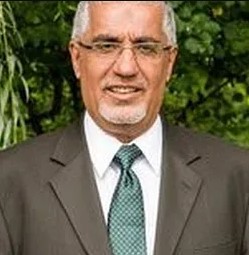 Mohammed Khaku (Allentown, USA) is the past president of Al Ahad Islamic Centre in Allentown. He is a Social and criminal justice writer and regularly writes for several international publications
“That Day, shall we set a seal on their mouths. But their hands will speak to us, and their feet bear witness to all that they did.
(Yasin, 36: 65.) Islamic scholars (Mufassirin) have explored the meanings of the terms
Al-Amanat and Khyanat.
In the Islamic context, Al-Amanah refers to trust, honesty, and sincerity. The phrase “Amanat e Khyanat” translates to “Abuse of Trust” in English, describing the act of violating trust or neglecting responsibilities owed to the community, often involving dishonesty and deceit.
The concept of Al-Amanah (Trustworthiness) and Al-Mas’uliyyah (Responsibility). Are the concepts of trustworthiness and responsibility relevant to leaders of faith communities, and if so, why?
Al-Amanah and Al-Mas’uliyyah are tied to a person’s moral character. These values hold special importance for leaders of Islamic Centres, as they embody the fundamental principles of Islamic teachings and ethics.
Al-Amanah and al-Mas’uliyyah are key values that embody truth, transparency, integrity, responsibility, and accountability, while steering clear of recklessness. These traits are essential for building trust and strengthening unity within the community. Leaders who uphold these values set a strong example, demonstrating honesty, integrity, and a commitment to safeguarding the community’s resources.
Trustworthiness is a vital aspect of faith, not just as a personal virtue but also as a crucial trait for leaders. It plays a big role in maintaining the success and stability of the Islamic Centre and helps prevent Fitna and Fasaad.
Leaders entrusted with al-Amanah hold full responsibility and will be held accountable for their actions on the day of reckoning. They should uphold the values of al-Amanah and al-Mas’uliyyah in managing property, carrying out organisational duties, and maintaining accountability, always acting with honesty and steering clear of any form of betrayal.
What is an example of Al-Amanah?
A great example of Al-Amanah in practice is seen in the life of Prophet Muhammad (SAW), who was well-known as Al-Amin, meaning The Trustworthy. Al-Amanah and Al-Mas’uliyyah are essential values for every Muslim, highlighted in the Qur’an and reinforced through numerous teachings of the Prophet Muhammad (SAW) and the Ahlul Bayt (AS). Islam inspires the Muslim Ummah to practice trust and responsibility in all areas of life, whether it’s managing an Islamic centre, running a household, or leading a nation. Al-Amanah and Al-Mas’uliyyah should be upheld with dedication and care, ensuring they are free from any hint of nepotism or favouritism toward groups based on class or wealth, as reflected in the narration of Muslim ibn Aqil and Imam Ali (AS).
Managing institutional activities is closely linked to Islamic law, culture, and values. Sadly, breaches of trust often become the centre of community discussions, sparking fitna and causing division. Khatibs, Imams, and Muslim scholars should honour Al-Amanah and Al-Mas’uliyyah by sharing the true message with the community, while also protecting the rights of their congregation members.
Parents are entrusted with the responsibility of providing religious education and guidance for their children, as are the Imams of the Islamic Centre.
Al-Amanah and Al-Mas’uliyyah take many shapes, from family and financial responsibilities to business dealings and the bonds between community members and their leaders. As a trust from Allah (SWT), we’re entrusted to protect ourselves from His punishment and care for the environment by avoiding pollution. Leaders of Islamic institutions should embrace Al-Amanah and Al-Mas’uliyyah with dedication to truth and fairness. Leadership is a trust, much like serving as a judge, running an organisation, caring for family, orphans, or those in need. Failing to uphold that trust is seen as a sign of hypocrisy.
In Islam, betraying someone’s trust is not just a sin – it’s regarded as a serious major sin.
What is Al-Amanat-e-Khyanat?
In Shia traditions, it refers to a community leader’s duty to manage governance with care and integrity. Leaders are expected to act with fairness, honesty, and humility, guided by the belief that everyone shares responsibility not just for themselves, but for the well-being of the entire Muslim Ummah. Qur´anic verse 33:72 speaks about al-Amanah, highlighting the link between trust and hypocrisy. Violating this trust is seen as hypocrisy in actions rather than in beliefs. Being a community leader centres on trust, making it essential to lead with honesty and transparency.
The Prophet (SAW) said,
“Four traits define a hypocrite, and anyone possessing any of them carries a part of hypocrisy until they abandon it: when trusted, they betray; when they speak, they lie; when they promise, they break it; and when they argue, they act unjustly.”
If the Muslim world embraced the Divine Trust and truly practised trustworthiness both locally and globally, it could open the door to a new era of justice and unity. Without this, humanity will keep chasing the illusion of Justice. Sadly, when the Muslim Ummah remains silent in the face of wrongdoing, it turns into a real tragedy. The concept of Khamoshi, meaning “Silence,” carries the belief that staying silent is never an option.
In Islam, the idea of a curse on those who stay silent about the actions of oppressive rulers comes from the belief that such silence can be seen as supporting or enabling injustice, unlawful authority, or occupation. This view suggests that staying quiet – except in cases of Taqiyya, where life is at risk – can make someone morally responsible, especially if they’re aware of wrongdoing.
Philosophers often note that in oppressive settings, silence often works to uphold unjust systems. Elie Wiesel once said,
“Neutrality helps the oppressor, never the victim. Silence and indifference are the great betrayers of humanity.”
Holding onto this mindset can lead to cynicism and resignation, leaving people numb to others’ suffering and unwilling to care for their community or speak out against violations of the Constitution, the Bill of Rights, and wrongdoing.
Let me conclude with a few verses from Ziyarat e Nahiya, our beloved 12th Imam. Revealed the truth with clear evidence, spread and upheld justice.
O Allah, protect me from mistakes, keep me steadfast in words and actions, grant me a long life, forgive my faults, make my words impactful among people, cleanse me from sins and burdens, shield me from the Hellfire, grant me a place in the House of Peace (Paradise), and forgive me along with all my faithful brothers and sisters. In the struggle for peace through justice!
More from this Author
Writers Panel | A Simple Thought | Obituaries | Ziarat Ashura | Islamic Calendar | Facebook | Instagram