
Aáshura
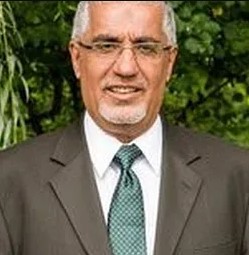 Mohammed Khaku (Allentown, USA) is the past president of Al Ahad Islamic Center in Allentown. He is a Social and criminal justice writer and regularly writes for a number of international publications
H
istorian Edward Gibbon remarked on the Battle of Karbala, stating, “In a distant age, the tragedy of the death of Hussein will awaken the sympathy of the coldest reader.”
A’zamallahu Ujurana wa Ujurakum bi Musaabinaa bil Husayn (as)
May Allah Make Great our reward and your reward for our Grief on Imam Husayn (as).
The month of Muharram, signifying the Islamic New Year, commenced on June 27th. The 10th of Muharram, referred to as Aáshura, was on July 6th.
Muharram marks the beginning of the twelve months in the Islamic calendar. It is a period of not joy, or celebration, but rather observed as a time of sorrow and mourning.
Ashura differs from one city to another, yet a profound, silken unifying thread that connects them all is Imam Hussein. Each city is adorned with unique rituals, collectively known as Azadari of Hussein, but the universal and heartfelt cry of “Ya Hussein” echoes consistently and remains unchanged.
The martyrdom of Imam Al-Hussein transcends the confines of a single day of battle marked by epic heroism and self-sacrifice, where truth triumphed over falsehood. It embodies a universal and eternal divine message for humanity, relevant and applicable across all times.
Today, we are as far away from this Qur´anic order as possible, and the result is the situation that we see in the status of Muslims. The message of Karbala is for all Muslims; ‘Be a Hussaini and not a Yazidi.’
What is the Battle of Karbala?
The day of the Battle of Karala, known as Aáshura, holds profound significance even after fourteen centuries of history. What has preserved the enduring relevance of Aáshura? What inspires Muslims across the globe to unite annually in commemoration and mourning for Al-Hussein and his companions?
The Battle of Karbala occupies a deeply significant place in the history of Islam. Unfortunately, many individuals, both Muslims and non-Muslims, often lack sufficient awareness of Islamic history, especially concerning Aáshura and Arbaeen.
Six to ten million people gather in Karbala, Iraq, on the Day of Aáshura, while fourty days after the martyrdom, during Arbaeen, approximately thirty million assemble in Karbala, Iraq.
Aáshura holds immense significance for Muslims due to a profound tragedy that took place in the year 680 AH.
During this event, Al-Hussein, accompanied by his immediate family and seventy-two loyal companions, was tragically massacred by the Umayyad army on the plains of Karbala in Iraq.
The mosques are jam-packed and adorned with black wall coverings, flags (a’alam), and replica shrines (Taziyas). Majalis (assemblies) take place every evening during the first twelve days, featuring poetry recitations and speeches commemorating the martyrdom of the grandson of the Prophet Muhammad.
The assemblies to commemorate the death anniversary of Imam Hussain and the tears that roll down our cheeks stand as a testament to the oppressed, and each droplet is a challenge and symbolises defiance against tyranny.
We are not a nation defined by weeping, yet these acts of lamentation and mourning have preserved the legacy and the school of martyrdom.
The annual retelling of the tragedy has preserved Al Hussein’s message of justice and strengthened the global resistance movement against oppression.
“Each time one stands up against injustice, they send forth a tiny ripple of hope. Those ripples build into a current strong enough to sweep down the mightiest walls of oppression.” – Robert F. Kennedy.
Muharram is the month of epic heroism and self-sacrifice – a period when truth prevailed over falsehood, marking disgrace upon the foreheads of all oppressors and tyrannical occupying regimes.
The events of the Day of Aáshura represent one of the most heinous atrocities in human history. Despite the passage of 1,400 repeated and numerous efforts by the Caliphate to suppress its commemoration, the event remains indomitable, gaining momentum and presenting a considerable challenge to the stability of the Arab regime
The hearts of Muslims are grieved, and their eyes are filled with tears upon hearing horrific accounts of the persecution endured by the family of the Holy Prophet Muhammad (SAW).
Islamic history offers valuable insights for addressing present and future challenges, serving as a crucial guide to understanding the past. The study of history encompasses the essence of cultures, traditions, and the rise and fall of civilisations.
History is frequently conveyed through various media, including drawings, video, and photographs from centuries ago. Even today, it is to be passed down to future generations through storytelling and preaching.
In nearly every community, children are introduced to significant stories of their culture, rituals, and history early in life, often through their parents, preachers, or missionaries.
Among Shi´a Muslims, the history of Karbala is introduced at a very early age, often before children acquire the ability to read or write.
In my childhood, I remember my parents and the preacher narrating the story of Karbala profound tale in which Hussain exemplified and the sacrifice he and his seventy-two companions made in the face of the overwhelming forces of Yazid’s army.
The history of Karbala holds enduring significance not only for Muslims but for humanity as a whole. Its message is universal, serving as a timeless beacon of hope and resilience for all oppressed individuals across the ages.
More from this Author
Writers Panel | A Simple Thought | Obituaries | Ziarat Ashura | Islamic Calendar | Facebook | Instagram


