
Inequality
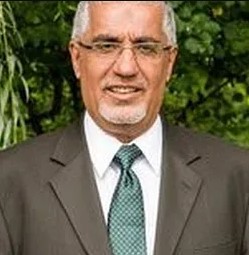 Mohammed Khaku (Allentown, USA) is the past president of Al Ahad Islamic Center in Allentown. He is a Social and criminal justice writer and regularly writes for a number of international publications
T
he first night of Ramadan falls on, February 28th, and the day Saturday, March 1st.
The sighting of the crescent moon on February 28th signifies the commencement of Ramadan, a sacred month of fasting observed by billions of Muslims around the globe. Ramadan is a period of spiritual reflection, fostering a sense of responsibility, discipline, control over evil desires, communal prayers, acts of generosity, and family gatherings for IFTAR, the time of breaking fast at sunset. Fasting has been obligatory for successive generations of Prophets and Messengers since the creation of humanity, from Adam to Noah, Ibrahim, Moses, Isa (Jesus), and finally Muhammad.
Ramadan is a significant month during which all the holy books of the Prophets, such as the Torah (Ta’wrat), Zabur (Psalms), and Injil (Gospel), were revealed. Muslims believe that these books were all revealed during the month of Ramadan and have divine significance as guides and lamps for mankind. The Torah was revealed on Mount Sinai on 6th night (6th of Sivan), the Gospel was revealed on the 13th of Ramadan, the Zabur (Psalms of David) were revealed on the 18th of, and the Holy Qur’an was revealed on the 23rd of Ramadan.
Fasting is much more than merely abstaining from food and drinks, challenging as it may be especially in the long hours. The primary philosophy behind fasting is to address and empathize with the issues of hunger, poverty, and homelessness around the world. As Muslims embark on the blessed month, they should not only endure their own long hours without food and drink, but also consider the millions of needy, hungry, and homeless people the world. Our abstinence from food and drink should enable us to empathize with millions that go hungry or are homeless because of inbuilt inequalities, despite plenty of food and resources available.
As American Muslims, we are fortunate to have abundant supplies of food and clean drinking water. However, we are aware that millions of people around the world live in refugee camps or worse, desperately hoping for a morsel of bread and a sip of water. As Muslims, we must endeavor to change the fortunes of the unfortunate masses struggling to survive. The profound inequality of income and wealth in the world, and within the United States, is deeply troubling.
A very significant tweet from Pope Francis “Inequality is the root of social evil.”
Inequality of wealth:
Famine is the most severe consequence of global wealth inequality. According to worldwide famine statistics, millions of people die every year due to a lack of food and water. In most Western countries, food is discarded as daily waste in homes, hotels, and restaurants. In the United States, 30-40% of the food supply is wasted, according to the USDA. This amounts to approximately 92 billion pounds of food annually, valued at over $473 billion. This is a thought-provoking consideration for Ramadan.
Many Muslim communities host lavish Iftars where hungry fasting Muslims fill their plates to the brim. Later, the extra food they cannot finish, ends up in the trash can. “Fill your stomach with one third food, one third water, and one third air,” is attributed to the Prophet Muhammad, peace be upon him (PBUH). Please place the photo of the vulture and the child on the lids of your garbage bins in your mosques and homes where excess food is discarded. This will enable everyone to comprehend reality and cultivate empathy towards less fortunate children.
As of April 2024, there were 2,781 billionaires worldwide, according to Forbes. This marks a record high, with the total net worth of these billionaires amounting to $14.2 trillion. Additionally, World Bank data indicates that Saudi Arabia’s foreign assets reached a record $480 billion as of November 2024. Indeed, a one percent contribution from the world’s billionaires or the Saudi foreign assets would be sufficient to eradicate extreme poverty.
To comprehend the extent of wealth inequality and the magnitude of food scarcity in the third world, it is essential to examine the statistics related to the significant disparities that prevail globally today. Of eight billion people worldwide, at least millions, or one in eight, do not have enough to eat. Most of the poor reside in Africa and Asia. Over three billion people live on $2.50 a day and 80% of the world lives on $10.00 a day. It is the plight of women and children that should provoke the greatest empathy. More than 60% of the world’s hungry are women and children. Is it enough to feel ashamed and regretful about the pressing statistics in Ramadan?
Poverty cannot be eradicated until all wars have ceased and military spending has been curtailed or halted. Military expenditure and perpetual proxy wars are the primary causes of poverty. Poverty is not a localized issue; it is a widespread and significant global problem. However, it is also a problem that can be effectively addressed. Fulfilling the nutritional and health needs of all poor in the world requires a total of over $13 billion annually. This is truly an insignificant sum when one considers that over one trillion dollars annually is spent on global military expenditure.
· One billion people do not have enough to eat (World Bank).
· One fifth of the world population (1.4 billion) lives on less than $1.25 a day (World Bank).
· One child dies every five seconds from hunger-related diseases (UNICEF). These figures are from the websites below:
http://www.worldhunger.org/articles/Learn/world%20hunger%20facts%202002.htm
http://www.alarabiya.net/articles/2011/07/12/157247.html
http://themillenniallegacy.com/issues/poverty/ <THIS LINK DOES NOT WORK
Writers Panel | A Simple Thought | Obituaries | Ziarat Ashura | Islamic Calendar | Facebook | Instagram


