The writer, Sameer Murad Kermalli (Nairobi, Kenya) is a graphic designer, and photographer and has been involved in leadership and community service positions.
Examining methods implemented by the Prophet to resolve disputes and foster peace in the community using teachings and guidance from within the Holy Quran.
The Prophet who was the messenger of the Lord and tasked with bringing a religion, a way of life for mankind and the final word of the Lord was chosen for several reasons, or was chosen because the lord ordained him with several abilities. His greatest ability was to follow what his Lord wanted of him and from him without second guessing Him and beyond that, he knew how to implement the lessons from the Quran that would be, and should be the guide for mankind. In Surah 21 Verse 107, the Lord gives the reason for sending the Prophet to the people.
The Prophet was a good listener and a masterful communicator, giving him a specific edge when dealing with people. His ethical stance and moral compass were steadfast in servitude towards his Lord, whom he had understood thoroughly, and these characteristics made him an amazing judge and decision-maker, making him a leader easy to love.
Historically, the Prophet managed to bring cohesion to the community by building consensus. Muslims were introduced to the constitution of Madina, which made them responsible for the Jews and the Christians at the time, showing unity and understanding, and this came about the mutual respect and cooperation that was being preached as the word of the Lord, implemented perfectly using dialogue in diverse populations by the Prophet. There was justice and fairness in the Prophets’ ways, the justice that is one of the Lords’ characteristics. Pre-Islamic social injustices against women and orphans were not tolerated and these were solved using policy-level solutions.
In Surah 9 Verse 128 the lord mentions the Prophet’s characteristics and points out to him grieving for the people. He did not differentiate when it came to teaching. A woman who questioned inheritance laws carefully explained the wisdom and the rationale such that she left satisfied with the answer given by the Prophet, the mark of a wise, kind and understanding man. In Surah 3 Verse 155, the Lord forgives those who were weakened by the evil of the devil, and those who remained and followed what the Prophet suggested were at least at that moment brethren, when the black stone had to be placed where it belonged, and there was strife between themselves due to ego.
Despite being who he was, he listened to counsel and encouraged it. The environment around him was one of comfortability; to express opinions, to respectfully question and even challenge decisions. In Surah 7 Verse 199, the Lord is clear in his teaching, which the Prophet follows perfectly. During the Battle of Badr, Al Mudatthir suggests an alternate location that would be strategically advantageous to winning the battle; which the Prophet listens to, heeds and accepts. Alternatively, in the battle of Hudaibiyah, Omar Khattab questioned the terms and the decision the Prophet made about the treaty, and why the Prophet accepted these terms. In this case, the Prophet explains his thought process and maintains his decision. A good leader allows doubts and concerns, and in respectful dialogue, good decisions are made, even in tense times.
Kindness and forgiveness prevailed as an active part of peacebuilding. The Bedouin who urinated in the mosque was educated about the sanctity of a place of worship, and of the possibility of not being aware of the norms in place. He was kind to animals, giving water to a dog and punishing a man who starved his cat. He shortened congregational prayers when hearing a child cry, understanding the distress of the mother who would be offering her prayers at the time. He forgave Wahshi, the killer of Hazrat Hamza, his beloved uncle. His reaction remained the same regardless of the attitude of others towards him. Kindness was his nature and he was merciful when he had the power to take revenge. The Prophet’s actions reflected the teachings of the Quran, and he practised what he preached. Those close to him, Ali, Hassan and Husayn saw these qualities and emulated them throughout their lives, over and over again.
His non-violent approach to many things was the epitome of conflict resolution and peacebuilding. When there is no violence, conflict resolution is not needed and with peace prevailing, it is all in balance. The Prophet showed this very classically when he brought the Aws and the Khazraj issue to rest. He faced a lot of persecution and mistreatment, and yet, he prayed for the salvation of the people of Taif who rejected him, and despite the strong opposition from the Quraish, he understood Surah 2 Verse 153 so perfectly and had total unwavering faith. His decision at Hudaibiyah was beneficial for the Muslims, and this is mentioned in Surah 48 Verse 1-2, and victory comes to those who stay far from the conflict and practice peace.
Contains information related to marketing campaigns of the user. These are shared with Google AdWords / Google Ads when the Google Ads and Google Analytics accounts are linked together.
90 days
__utma
ID used to identify users and sessions
2 years after last activity
__utmt
Used to monitor number of Google Analytics server requests
10 minutes
__utmb
Used to distinguish new sessions and visits. This cookie is set when the GA.js javascript library is loaded and there is no existing __utmb cookie. The cookie is updated every time data is sent to the Google Analytics server.
30 minutes after last activity
__utmc
Used only with old Urchin versions of Google Analytics and not with GA.js. Was used to distinguish between new sessions and visits at the end of a session.
End of session (browser)
__utmz
Contains information about the traffic source or campaign that directed user to the website. The cookie is set when the GA.js javascript is loaded and updated when data is sent to the Google Anaytics server
6 months after last activity
__utmv
Contains custom information set by the web developer via the _setCustomVar method in Google Analytics. This cookie is updated every time new data is sent to the Google Analytics server.
2 years after last activity
__utmx
Used to determine whether a user is included in an A / B or Multivariate test.
18 months
_ga
ID used to identify users
2 years
_gali
Used by Google Analytics to determine which links on a page are being clicked
30 seconds
_ga_
ID used to identify users
2 years
_gid
ID used to identify users for 24 hours after last activity
24 hours
_gat
Used to monitor number of Google Analytics server requests when using Google Tag Manager


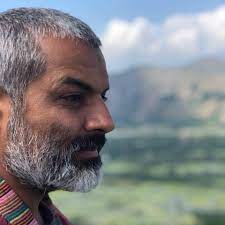 The writer, Sameer Murad Kermalli (Nairobi, Kenya) is a graphic designer, and photographer and has been involved in leadership and community service positions.