

Art of Decentering
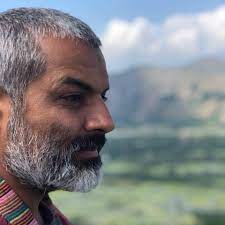 The writer, Sameer Murad Kermalli (Nairobi, Kenya) is a graphic designer, and photographer and has been involved in leadership and community service positions.
The Richness of Individual Experiences and Perspectives
[tta_listen_btn]
Humans are social beings who thrive in societies and communities; interaction and mingling culture is almost innate in human psychology. Though beyond this, is the notion of having me-time and time for mental breaks, personal rights, freedom and self expression. There is a fine line of tension that manifests, highlighting the ongoing struggle to find the right balance between personal autonomy and communal responsibility. The challenge lies in recognizing both perspectives—celebrating and empowering the individual ‘I’ while fostering a cohesive and supportive ‘We.’ This balance is crucial for addressing today’s societal challenges and ensuring progress that benefits everyone.
Contrary to this belief and stance made popular by the current generation, there is a perspective which could be considered to be on the other extreme; and yet it makes sense once a logical argument is presented. There is a flip side to the importance of We, that adopts a collective perspective that emphasizes collaboration, empathy and shared responsibility that encapsulates diversity and inclusivity, and that flip side again touch on the deeper human psychology of ego and pride, but more so about being able to assert oneself’s achievement. Humans have to learn how to work with others, learn how to delegate, and how to collaborate.
The individual psyche is strong and only through learning can they be altered. The fact that we are born alone, and die alone, and be tried alone during reckoning, there are several things we do alone and for the benefit of the I, and the only time we do it communally, is when we are told there is more merit in it – for example congregational prayers, and we ask for others before ourselves because this way your prayers are heard faster.
Decentering can have serious effects. In a work setting where the ‘We’ is adopted holistically, the ones who work hard to achieve results have their actions diluted in the larger group context where the leads who in their complex of inferiority feel undermined and usurp the success and call credits of a generalized ‘We’. Yet when the buck needs to be passed, the ‘We’ gets dropped, and fingers get pointed. This is where leadership comes in and becomes the sound of logic and reason. There are things where collaboration is needed and there, due to the objective achieved, success is shared, and then decentring is fair, however, when an individual has put the lion’s share in something, their energy cannot and should not be shared in a collective. The Arbinger Institute 2000 Leadership and Self Deception book published by Berrett-Koehler Publishers, Inc. includes amazing anecdotes about the self and solutions to problems caused due to the embodiment of the decentered ‘We’. [my personal opinion].
The ‘We’ has made newer generations nonchalant to an extent; not owning up and at times riding the ‘We’ wave that is generated by others. Creativity has died, as expectations are greater and hence disappointments are greater as well – causing regret to the extent that every little thing becomes a point of emotional dismay, and words that were meant to teach, develop and nurture are now considered rude or derogatory, to the extent that walking on eggshells has become norm.
A Ph.d, is never a ‘We’ thing, when pushing a envelope of knowledge, it is an ‘I’ thing. Writing a resume is when one realizes that the decentered ‘We’ is utterly useless, as HR managers want to know what ‘The I’ did, how the ‘I’ handled conflict and how the ‘I’ managed tasks and how the same ‘I’ was able to work with teams while outperforming their previous success. In the World Federation LDP program, a think that was rewired for the participants was being able to make ‘I’ sentences during reflection sessions, or even during introductions, not because it was royally incorrect, but rather because it was to bring out the inner ‘ftirat’ of who everyone was as themselves.
The ‘I’ can only become a ‘We’ when all the ‘I’ are strong – mentally, emotionally, physically and spiritually. Strong in a way that they can pause, think, sought a solution, bring it to the table, see it be broken down and recreated like it was not their own, and accept that their individualistic idea and work put in, crucial as it may be would only mean more when combined with all the other ‘I’s thoughts, and the group, team or cooperation benefits, but the greater benefit is for humanity. This requires nobility and humility, a trait of prophets and those who understood the scriptures and used it as a manual for learning, rather than for repetition.
More from this writer:
Writers Panel | A Simple Thought | Obituaries | Ziarat Ashura | Islamic Calendar | Facebook | Instagram


