
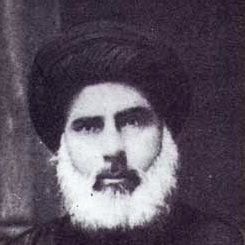
Sayyid ‘Abd al-Husayn Sharaf al-Din al-Musawi, also commonly spelt Abdel Hussein Sharafeddine or Sharafeddin, was a Shi’a Twelver Islamic scholar. He was born in 1872 in Kadhimiya in Ottoman Iraq to a Lebanese family of prominent religious scholars. At the age of 20, he went to Iraq in order to study at clerical seminaries in Samarra and Najaf, where he stayed for twelve years until he became a mujtahid (independent reasoning in legal issues) at the age of 32.
The Quality of his Traditions
In the study of hadith, precision and discernment are indispensable, for not every narration attributed to the Prophet (peace be upon him and his family) withstands the scrutiny of intellect, reason, and authentic transmission. From the Shia perspective, Abu Hurayra’s corpus of traditions has long been a subject of careful examination, as many of his reports appear inconsistent with established principles or lack the rigor demanded by sound scholarship. It is therefore essential to approach his narrations with a spirit of fairness and objectivity, weighing them against the standards of rationality and the guidance of the Ahl al-Bayt (peace be upon them). In the following pages, forty of his traditions are presented alongside annotations, inviting you to reflect thoughtfully and impartially before forming your own judgment.
1. Allah (SWT) Created Adam in His Own Image
The two sheikhs, al-Bukhari and Muslim, mentioned a tradition narrated by Abdur-Razak from Ma’mar from Humam bin Munabbih that Abu Hurayra had said: “The Prophet (S.) said: ‘Allah (SWT) had created Adam like His own image in sixty cubits long.” Ahmad added from another way by Sa’eed bin al-Musayyab that Abu Hurayra had said: “… and seven cubits wide. When Allah (SWT) had finished creating him, He said to him: Go and greet those sitting angels and listen to what they will greet you with. It will be your and your progeny’s greeting. Adam went and said to them: As-salamu alaykum (peace be upon you). They said: As-salamu alayk wa rahmatullah. They added (wa rahmatullah-and the mercy of Allah (SWT)). Everyone who entered Paradise was like Adam, sixty cubits long. Human beings began to grow less gradually until nowadays.”
This could never be ascribed to Prophet Muhammad (S.) or any of the other prophets, nor to their guardians. Perhaps Abu Hurayra learnt that from the Jews through his friend Ka’bul Ahbar or someone else. The content of this tradition is the same as the twenty-seventh paragraph of the first chapter of the Hebrew Scriptures (the Old Testament). Here is the text as it is: (Allah (SWT) had created man in His own image. Like the image of Allah (SWT), He had created him. Male and female, He had created them).
Glorified is Allah (SWT) than to describe Him with imaging, limitation and likeness. Be He exalted, and they lost who ascribed that to Him. They might interpret the tradition by ascribing the pronoun (his image) to Adam himself, not to Allah (SWT). Then the meaning would be that Allah (SWT) had created Adam in Paradise in an image similar to that when he descended to the earth. That Allah (SWT) had completed him in one time and made him sixty cubits long and seven cubits wide, the same image, which his offspring on the earth saw, and he did not advance from one state to another. Adam was not a seed, then became a clot, then a lump of flesh, then bones clothed with flesh, then a foetus, then a suckling infant, then a weaned child, then a teenager, then a man with the normal length and width.
This is what they, who glorify Allah (SWT) and deny embodying Him, can say to interpret this tradition. But it was narrated by Abu Hurayra in these words: “Adam had been created corresponding to the image of the Beneficent (Allah (SWT)).” Abu Hurayra had another tradition saying: “Prophet Moses (a.s.) beat the rock with his stick for the Israelites, and water gushed out. He said to them, “Drink water, donkeys.” Then Allah (SWT) revealed to him: “You intended to compare the human beings, whom I had created according to My image, to donkeys.”
This embarrassed those who defended Abu Hurayra and made them give in to this (pronoun), looking for another interpretation.
They interpreted Abu Hurayra’s sayings: (Allah (SWT) had created Adam according to His image) and (Adam had been created according to the image of the Beneficent) and in his tradition about Moses (I had created them according to my image) that Allah (SWT) had created Adam and his progenies according to the attributes of Allah (SWT).
Allah (SWT) is alive, hearer, seer, talker, aware, willing and disliker. So He had given these attributes to Adam and his progeny.
They fell into what they fled from, because the attribute of Allah (SWT) is far above comparison. This is agreed upon unanimously among those who believe in the transcendence of Allah (SWT). Especially when we say that His attribute is He Himself and that He is the Truth as it is fixed in our principles of jurisprudence.
Abu Hurayra advanced in this tradition. Sometimes he narrated it as above, and sometimes he said: “If one of you quarrels with another, let him avoid the face because Allah (SWT) had created Adam according to His image.” Sometimes he said: “If someone of you hits another, let avoid the face and not say: May Allah (SWT) uglify your face and the face of whoever looks like you, because Allah (SWT) had created Adam according to His image.”
It was clear that he had closed the way before his defenders could recede to either of the two interpretations. The pronoun his in (according to his image) could not refer to Adam in either of the two traditions, but it must refer to Allah (SWT) to correct the meaning of the traditions. One might justify forbidding to hit or uglifying of the face. Creating Adam as a living, hearing, seeing, talking, perceiving, willing and unwilling creature does not make it necessary to preserve the face rather than the other organs. To interpret the two traditions according to either of these interpretations was invalid. In fact, these two traditions had no meaning, unless they meant the face of man, for it looked like the face of Allah (SWT).
Glory be to Allah (S.w.T.), the Exalted, the Almighty!
Hence, the Sunni researchers who believed in the transcendence of Allah (SWT) became confused about the meaning of these traditions and resorted to Allah (SWT), the most Aware.
Notes
First: If Adam was sixty cubits long, then he must be, according to the conformity of his organs, seventeen and one seventh cubits wide. If his width was seven cubits, his length must be twenty-four and a half cubits, because the width of the normal man equals two sevenths of his length. Why did Abu Hurayra say that Adam was sixty cubits long and seven cubits wide? Did Adam have an unconformable structure and a disfigured form? Certainly not! Allah (SWT) said:
Certainly, we created man in the best make 95:4.
Second: The greeting of Islam was legislated when Islam came. Prophet Muhammad said: “The Jews didn’t envy you a thing as much as they envied you your greeting (salaam).” If Salaam did not concern this umma only, the Jews would not envy it. How did Abu Hurayra say: “When Allah (SWT) had created Adam, he said to him: Go to greet those angels and listen to what they will greet you with because it is your and your progenies’ greeting.” What would the prudent researchers say about this tradition? And what would they say about his saying that people began to grow less (in size) since then until now?
Recent posts
- True self-development
 True self-development by Asgar Jafferali Dhanji While physical growth is easy to see, your mind, character, and professional capability evolve in ways that are much harder to gauge. If you look back five years, you are likely not the same person you were then. You are constantly evolving, but reaching the next level of your personal development requires conscious, deliberate action.
 - Adl
 Adl by Sheikh Fattah The concept of justice (‘Adl) occupies a foundational position in Islamic theology and ethics, serving as a lens through which the relationship between the Creator and creation is understood. In his insightful essay, “Adl – Justice and Decree,” originally published in the spring 1984 issue of the journal Nuradeen, Sheikh Fattah provides a concise yet profound exploration of this multi-faceted principle. Drawing extensively from the Holy Quran and the narrative traditions (ahadith) of the Ahlul Bayt – specifically Imam Ali and Imam Ja’far as-Sadiq—the author dismantles the complexities surrounding divine decree, free will, individual morality, and structural social justice. The text functions not merely as an academic exposition of theological doctrine, but as an ethical manifesto that bridges metaphysical truths with practical human responsibility.
 - Eternal Life
 Eternal Life by Ayatullah Murtadha Mutahhari Ayatullah Murtadha Mutahhari’s Eternal Life is a concise but profound exploration of one of Islam’s central beliefs: that human life does not end with death. Drawing on the Qur’an, hadith, Islamic philosophy, and rational argument, Motahhari presents the Hereafter not as a distant abstraction but as the destination that gives meaning to every thought, choice, and action in this world. The book is especially valuable for readers seeking a clear, reasoned introduction to Islamic teachings on death, the soul, barzakh, resurrection, and eternal life.