
Islamic Studies
Abridged version in review format of the paper written by:
Abasali Aronaghi, Department of Humanities, Mashhad Branch, Islamic Azad University, Mashhad, Iran
Ardashir Asadbeigi, Corresponding author, Department of Humanities, Mashhad Branch, Islamic Azad University, Mashhad, Iran
Mohammad Baghestani, Department of Humanities, Mashhad Branch, Islamic Azad University, Mashhad, Iran
Mahmoud Khajehmirza, Department of Humanities, Mashhad Branch, Islamic Azad University, Mashhad, Iran
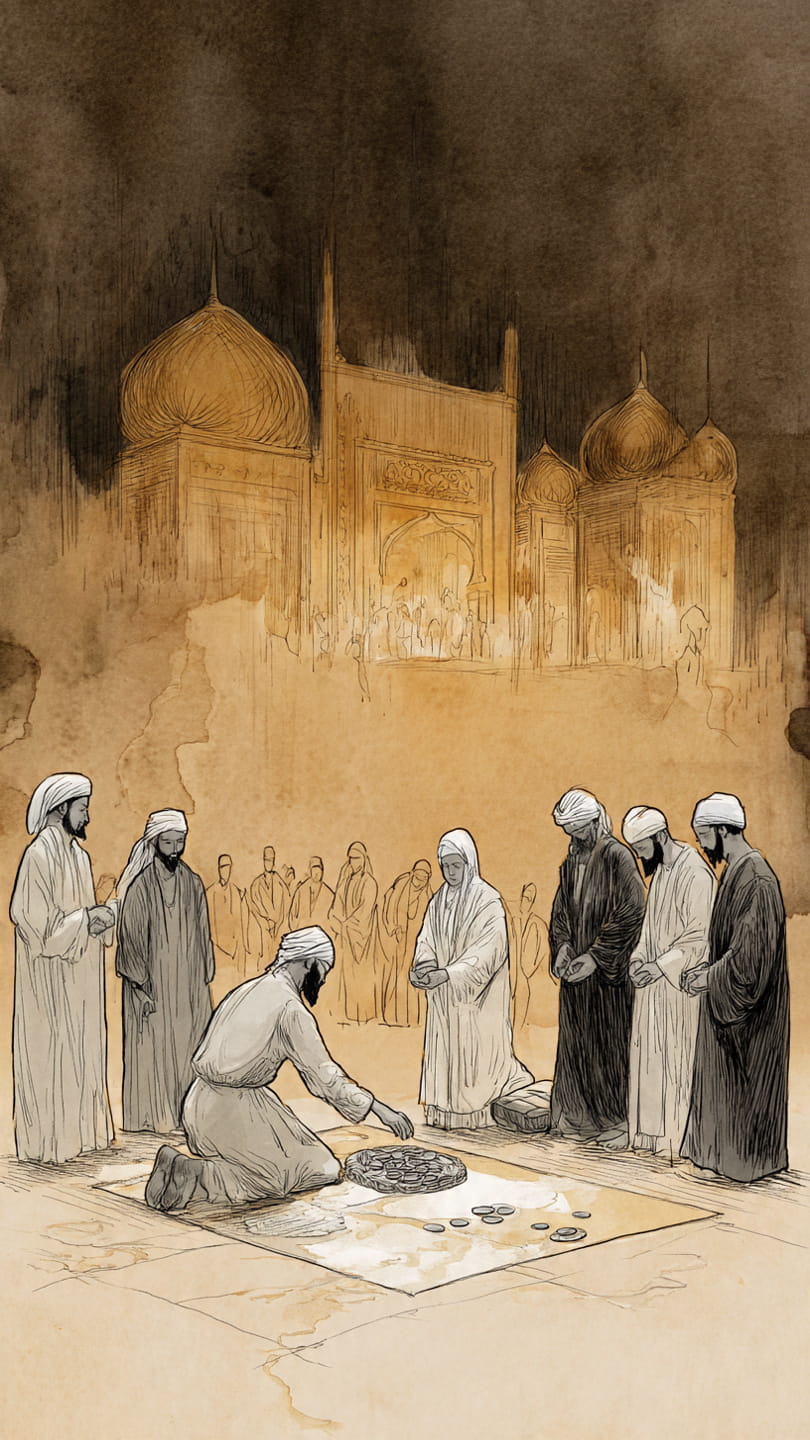
The relationship between divine guidance and human participation in decision-making presents a fascinating theological question, particularly within Shiite Islam. The paper “Explaining the Role of Consultation and Negotiation on the Life of Imam ´Ali despite Having Divine Knowledge and Infallibility,” authored by Abasali Aronaghi and colleagues, directly addresses this apparent paradox. Published in the Journal of History, Culture and Art Research in 2016, the study seeks to resolve a central ambiguity: why would Imam ´Ali (AS), believed by Shiites to possess divine knowledge and infallibility (Islamic Leadership), actively engage in consultation (shura) and negotiation with others? Through a careful examination of historical examples and theological reasoning, the authors argue that far from being unnecessary, consultation served critical pedagogical, social, and political functions that reinforced, rather than contradicted, his spiritual authority.
The paper first establishes consultation as a fundamental and revered principle within Islam, not merely a practical tool but a religious obligation. The authors cite the Qur´anic Surah Ash-Shura, where God commands the Prophet Muhammad (SAW) – himself infallible and directly connected to revelation – to “consult them in affairs” (Qur´an 3:159). They provide examples from the Prophet’s life, such as his acceptance of the majority opinion to fight outside Medina at the Battle of Uhud despite his own strategic preference, to demonstrate that consultation holds intrinsic value beyond the need for information. This foundation allows the authors to position Imam ´Ali’s behaviour within a continuous prophetic tradition, normalising consultation as an act of obedience and a source of divine blessing for the community.
Having established the Islamic legitimacy of consultation, the paper directly confronts the theological objection that an infallible Imam, protected from error and possessing comprehensive knowledge, does not need others’ opinions. The authors acknowledge that from a Shi´ite perspective, Imams derive their authority from divine appointment and possess superior knowledge transmitted from the Prophet (SAW).
However, they argue compellingly that the purpose of Imam ´Ali’s consultations was never to remedy his own ignorance. Instead, the paper identifies a multifaceted rationale: to set a binding and positive tradition for non-infallible followers, to draw people closer by involving them in decisions affecting their lives, to avoid any accusation of despotism or tyranny, to identify capable companions and test their loyalty, and to understand the hidden intentions of enemies. One of the paper’s strongest insights is that Imam ´Ali (AS) consulted precisely because he was infallible – his example taught that no rational person, no matter how wise, is needless of collective deliberation, as reflected in his famous statement, “No sane person is needless of consultation.”
The study is particularly valuable for its careful delineation of the limits of consultation. The authors do not advocate for absolute participatory democracy in all matters. They clarify that consultation has no role in areas already decisively settled by divine law, the Qur´an, or the explicit Sunnah of the Prophet (SAW). Furthermore, the paper asserts – from a Shi´ite theological stance – that the selection of the Imam or Caliph is not subject to council, as this is a divinely ordained position. Similarly, in judicial rulings and the issuance of fatwas, Imam ´Ali (AS) explicitly forbade judges from consulting others, because religious verdicts must derive from revealed sources, not from potentially fallible human opinion. This nuanced position prevents the paper from descending into simplistic relativism; it presents consultation as a principle for executive and social affairs, not for doctrinal or legislative matters.
The empirical strength of the paper lies in its extensive cataloguing of consultation instances across Imam ´Ali’s life. In personal matters, he consulted the Prophet (SAW) about his marriage to Fatima (SA) and sought advice on household responsibilities. In political and social governance, he openly invited his companions to criticise him, stating, “Do not be afraid of criticism, which I accept,” and insisted that his own oath of allegiance was legitimate precisely because it followed public consultation, unlike the secretive pledges of previous caliphs. During military campaigns – including the battles of Jamal, Siffin, and Nahrawan – he consistently convened councils, listened to dissenting opinions, and often accepted the majority view despite his own strategic foresight. Even more revealing is the paper’s documentation of how previous caliphs (Abu Bakr, Umar, and Uthman) repeatedly sought Imam ´Ali’s counsel on complex issues, which he provided faithfully to protect the interests of Islam and the Muslim community, though without ever endorsing the legitimacy of their caliphate. This demonstrates that consultation, in Imam ´Ali’s practice, was a mechanism for preserving the ummah (community) even under imperfect political conditions.
Finally, this paper succeeds admirably in resolving the apparent contradiction between infallibility and consultation in the life of Imam ´Ali. By shifting the focus from consultation as a tool for acquiring knowledge to consultation as a practice for building community, setting ethical traditions, and exercising compassionate leadership, the authors present a coherent and deeply instructive model. Imam ´Ali’s example demonstrates that leaders with absolute moral clarity can nonetheless embrace participatory processes – not because they are uncertain, but because involving others is itself a virtuous act that fosters trust, develops human potential, and safeguards against the isolation and arrogance that destroy rulers. The study thus offers valuable insights not only for Shi´ite theology but for any discussion of ethical leadership, showing that divine knowledge and human deliberation need not be adversaries; they can be partners in the service of a just and engaged society.
Latest posts



Writers Panel | A Simple Thought | Obituaries | Ziarat Ashura | Islamic Calendar | Facebook | Instagram