
Greed
 Dr Imranali Sibtain Panjwani (London, UK) has lived, studied and worked in the UK, the Middle East and Australia as an academic, lawyer, chaplain and community worker. He researches Islamic and Western Law, focusing on the subjects of law, scripture interpretation, moral development, and access to justice and human rights for minority communities. His country’s expert reports have been commented upon by judges and lawyers and draw upon his diverse legal, cultural and religious experiences. Dr Panjwani is the Head and Founder of Diverse Legal Consulting, a consultancy that specialises in country expert reports on the Middle East & North Africa (MENA) for asylum seekers. Drawing upon his seminary and university studies, his work cuts across scriptural exegesis, jurisprudence, philosophy, logic and metaphysics. By re-examining the subject of the law, a critical evaluation of how laws are derived from religious and non-religious sources can take place. This also means broadening our notions of evidence to understand other legal systems better so that the dignity of minorities can be recognised. In his spare time, he engages in interfaith dialogue in Muslim and faith communities worldwide and likes playing tennis and doing charity work. He enjoys spending time with family and, when possible, escapes into the world of fantasy football and all other idiosyncratic creative outlets.
In this tafsir session on Surah al-Layl (verses 4–10), Sh Dr. Imranali Panjwani explores the ethical and historical frameworks of the Quran. He introduces the literary concept of Chiasmus, illustrating how the Quran acts as a divine mirror by inverting its grammatical structures to contrast the traits of a godly, generous person with an ungodly, stingy one. Moving beyond language, Dr. Panjwani dives into the historical realities of Meccan society, discussing how the elite used exorbitant usury (riba) and selective, tribal generosity to oppress the lower classes. Ultimately, he challenges contemporary Muslims to view the Quran as a living text that inspires innovative socio-economic frameworks to protect the poor and oppressed today.
This tafsir covers a number of key themes:
1. The Quran as a Divine Mirror
A major portion of the lecture focuses on how the Quran uses a literary device called Chiasmus (pronounced kai-az-mus).
- Dr. Panjwani explains that a chiasmus is a figure of speech where the grammar or concepts of one phrase are inverted or reversed in the next to create a powerful psychological and emotional effect. He uses historical examples like John Milton’s Paradise Lost and JFK’s famous speech (“Let us never negotiate out of fear, but let us never fear to negotiate”).
- He demonstrates that verses 5–7 and verses 8–10 are exact mirror opposites of one another in rhyme, word count, and structure:
- Verses 5–7: Giving (a’ta), being conscious of God (ittaqa), and testifying to the best reward (saddaqa) leads to the Path of Ease.
- Verses 8–10: Being stingy (bakhila), hoarding/self-sufficiency (istaghna), and denying the truth (kadhaba) leads to the Path of Hardship.
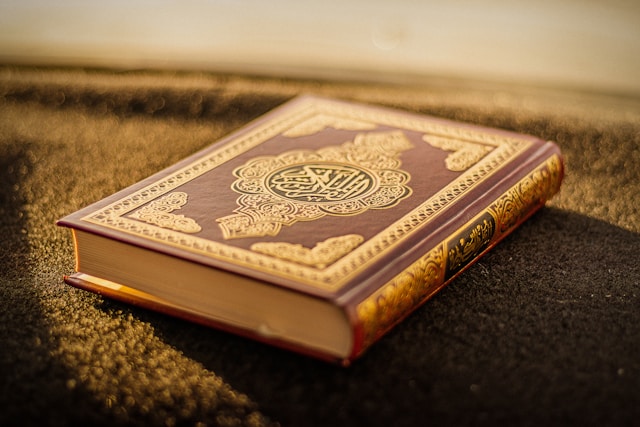
- The speaker notes that the page of the Quran acts as a physical mirror. It shows the reader a reflection of what they could become and what they must avoid.
2. The Crucial Role of Intention (Niyyah) in Ethics
Dr. Panjwani highlights that in the Islamic ethical framework, doing good out of habit or social obligation is not enough.
- Believing in the ultimate reward (saddaqa bil-husna) requires a conscious intention before performing an action.
- Citing the famous prophetic tradition, “Deeds are only judged by their intentions,” he emphasizes that making a conscious niyyah removes internal reluctance and ensures the individual knows exactly who they are serving, creating an upward movement in the soul.
3. Classism and Selective Generosity in Pre-Islamic Arabia
The lecture challenges a common historical narrative that pre-Islamic Arabs were entirely ungenerous.
- Dr. Panjwani clarifies that while ancient Arabs were famous for hospitality, it was highly selective. They were generous only to their own elite social classes and tribes to build political leverage.
- This generosity completely excluded the truly marginalized—the poor, orphans, and slaves. The Quran was revealed to break this class-based hoarding and establish universal charity based on human need, not tribal status.
4. Systemic Oppression Through Exorbitant Usury (Riba)
To understand why the Surah fiercely condemns stinginess, the speaker provides historical economic context from the work of historian Sayyid Ali Asghar Razawy.
- To participate in the highly lucrative trade caravans, ordinary Meccans with modest incomes had to borrow capital from wealthy merchants who acted as loan sharks.
- These money lenders charged predatory interest rates, often demanding double (riba’an mada’afah) or quadruple the original loan.
- Just like in ancient Athens, usury was the primary tool used by the wealthy elite to strip ordinary people of their financial freedom. Surah al-Layl’s warning against hoarding (jam’) directly targeted this predatory system.
5. Intellectual Honesty and Hadith Verification
In a notable pedagogical detour, Dr. Panjwani shares a traditional story (Asbab al-Nuzul) regarding a stingy orchard owner who snatched dates out of the mouths of a poor man’s children, which supposedly triggered the revelation of this Surah.
- Rather than accepting the story blindly, he exercises academic rigor. He notes that the narrator of the story is considered weak by some scholars, and geographically, the story involves date-palm orchards, meaning it likely happened in Medina, whereas Surah al-Layl is a Meccan surah.
- He explicitly tells his audience that it is the duty of the community to question speakers, research sources, check chains of narration, and evaluate the geographical context of historical anecdotes rather than accepting everything heard from the pulpit (minbar).
Dr. Panjwani concludes by asserting that the Quran is not a historical artifact to be mindlessly chanted. Because the text deals so heavily with systemic economic injustice, he challenges modern Muslims to use it as inspiration to build creative, modern frameworks, whether through improving Islamic finance or other economic styles, to actively uplift the poor and oppressed in modern conflict zones like Gaza, Yemen, and parts of Africa.
More from this Author
Latest posts


Writers Panel | A Simple Thought | Obituaries | Ziarat Ashura | Islamic Calendar | Facebook | Instagram


