

Contemporary Islamic Thought
 The writer, Dr Hasnain Gulamali Walji (Texas, USA), is the Head of the Khoja Heritage Project of The World Federation of KSIMC. A lifelong educator and historian, he has dedicated over three decades to documenting the rich, socio-religious journey of the Khoja Shia Ithna-Asheri community. His landmark documentary, The Khojas – A Journey of Faith, traces this evolution across 600 years. Over the past 30 years, he has been collecting care Gujarati and Khoji history books housed at the Mulla Asghar Memorial Library in Toronto, which he co-founded with Raza-Aly Hiridjee.
Serving for almost half a century, he had been the former Secretary General, Vice President, and President of The World Federation. Professionally, he is a nutritionist and has also authored 26 books on naturopathic medicine, translated into several languages. As Executive Director of the United Global Initiative and a Trustee of the Jaffer Family Foundation, he leads the CodeGirls project, which empowers underprivileged girls to pursue technology careers. He has also been instrumental in facilitating the ‘Ashura at Harvard’ study track at Harvard Divinity School, promoting academic discourse on Shi’ism through the fully funded Family Foundation.
Across continents and cultures, I have met followers of Fethullah Gülen who, like my friend Dr Tekalan, reflect the essence of Hizmet in every word they speak and every action they take. In these encounters, I have witnessed something quietly powerful – a philosophy that goes beyond lofty ideals or well-spoken beliefs. There’s a depth to their commitment that transforms simple acts into living proof of leadership based on compassion, empathy, and tireless service. It’s a rare kind of leadership, one that goes beyond inspiring others to merely admire, inviting them instead to live a shared vision of service and humanity.
Meeting Dr Tekalan and being introduced to Gülen’s philosophy has shifted my own journey in ways I hadn’t anticipated. Hizmet speaks not as a distant ideal but as a deeply human path, a call to embody one’s faith through actions that have a real impact on the lives of others. It resonates in my heart as a call to action, realigning my values and amplifying my own sense of purpose. There is something transformative about finding an approach that not only aligns with my beliefs but elevates them, connecting me to a larger community bound by compassion and shared responsibility.
Fethullah Gülen, often known as the *Hizmet* philosopher, has developed a model of “service to others” rooted in the principles of Islamic spirituality. His teachings extend beyond personal piety, urging that faith must reach out into the world and actively respond to its needs. Gülen’s concept of faith is not a passive one; it’s an urgent call to step forward, to recognise the needs of those around us, and to uplift the suffering with humility and care. The term Hizmet, meaning “service” in Turkish, encapsulates this vision. This movement has grown to touch countless lives through education, humanitarian aid, and interfaith dialogue, breaking down barriers and fostering understanding.
At the heart of Hizmet lies a profound spiritual understanding: that true spirituality is embodied in altruism that acts rather than simply intends. For Gülen, those who genuinely embody their faith do not retreat into isolation or dwell solely on their own salvation. Instead, they take responsibility for the welfare of their communities, prioritising justice, promoting education, and alleviating suffering wherever possible. This approach to service provides a powerful response to humanity’s most pressing issues, positioning acts of faith-driven kindness as the cornerstones of a world built on peace and mutual respect. Gülen’s philosophy goes beyond the confines of personal worship, calling believers to take on the roles of agents of positive change, strengthening social bonds and standing as defenders of the vulnerable.
This philosophy resonates deeply with the timeless teachings of the Prophet Muhammad, who exemplified the spirit of compassionate service in every aspect of his life. The Prophet’s message has long conveyed that the best among humanity are those who bring the most benefit to others. In the words attributed to him, “The best of people are those that bring the most benefit to mankind.” This vision of service and selflessness, reflected in Hizmet, encourages us to live our faith not merely in contemplation or isolation, but as an offering of genuine benefit to society. It is a call to cultivate a legacy built on empathy, resilience, and an unwavering commitment to the welfare of others.
In a world fraught with division, conflict, and the suffering of so many, Hizmet stands as a timeless reminder that real strength and real courage lie in service. The essence of faith, Gülen teaches, is best realised not in words alone but in tangible acts of kindness and solidarity that bind us together, even across vast distances and diverse backgrounds. This enduring philosophy speaks to something universal- a belief that by serving others, we ultimately draw closer to the Divine and bring humanity a step closer to harmony and justice.
Through Hizmet, Gülen has offered a path that invites us to become instruments of change, fostering a culture where compassion is not an afterthought but a guiding principle, where humanity flourishes through actions rooted in kindness, and where our differences dissolve in the light of shared purpose. In every individual moved by this philosophy, I see the ripples of a vision that transforms lives, inspires hope, and reminds us that, together, we can build a world where service and solidarity are not only ideals but realities
More from this Writer
Latest posts
- True self-development
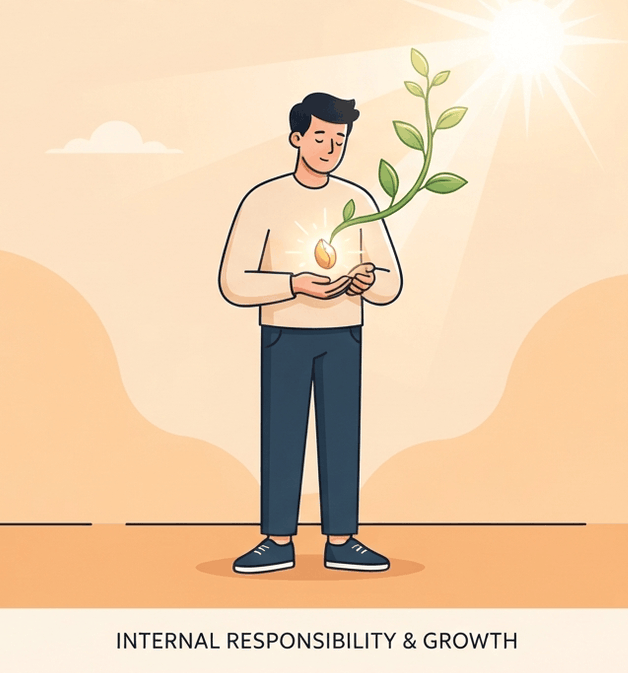 True self-development by Asgar Jafferali Dhanji While physical growth is easy to see, your mind, character, and professional capability evolve in ways that are much harder to gauge. If you look back five years, you are likely not the same person you were then. You are constantly evolving, but reaching the next level of your personal development requires conscious, deliberate action.
 - Adl
 Adl by Sheikh Fattah The concept of justice (‘Adl) occupies a foundational position in Islamic theology and ethics, serving as a lens through which the relationship between the Creator and creation is understood. In his insightful essay, “Adl – Justice and Decree,” originally published in the spring 1984 issue of the journal Nuradeen, Sheikh Fattah provides a concise yet profound exploration of this multi-faceted principle. Drawing extensively from the Holy Quran and the narrative traditions (ahadith) of the Ahlul Bayt – specifically Imam Ali and Imam Ja’far as-Sadiq—the author dismantles the complexities surrounding divine decree, free will, individual morality, and structural social justice. The text functions not merely as an academic exposition of theological doctrine, but as an ethical manifesto that bridges metaphysical truths with practical human responsibility.
 - Eternal Life
 Eternal Life by Ayatullah Murtadha Mutahhari Ayatullah Murtadha Mutahhari’s Eternal Life is a concise but profound exploration of one of Islam’s central beliefs: that human life does not end with death. Drawing on the Qur’an, hadith, Islamic philosophy, and rational argument, Motahhari presents the Hereafter not as a distant abstraction but as the destination that gives meaning to every thought, choice, and action in this world. The book is especially valuable for readers seeking a clear, reasoned introduction to Islamic teachings on death, the soul, barzakh, resurrection, and eternal life.
Writers Panel | A Simple Thought | Obituaries | Ziarat Ashura | Islamic Calendar | Facebook | Instagram



Leave a Reply
You must be logged in to post a comment.