Karbala and Social Issues
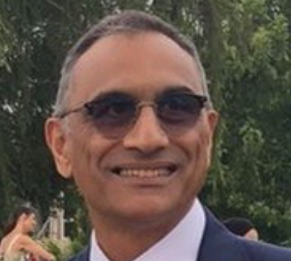 Aziz Kader’s (Cape Town, South Africa) community activism spans many decades. He was active in the anti-apartheid revolution as a founder member of the Qibla Movement. He is an ex-political prisoner, having spent 3 years in apartheid prisons. Aziz Kader is a scholar specialising in behavioural strategy, with a particular emphasis on the cognitive and social underpinnings of behavioural approaches among key decision makers in complex real-world environments. Professionally, Aziz has extensive international experience in guiding and facilitating strategic leadership teams at major multinational corporations in insurance and banking in over 16 countries across Africa and Asia. This international outlook offers a distinctive comparative perspective on how institutional and cultural contexts influence the development and application of strategy, a theme he actively integrates into his research, practice and teaching.
This is the transcript of a speech made at the Ahlulbayt Mosque in Cape Town, South Africa.
THE QUESTION THAT DEFINES US
In the name of God, the Most Beneficent, the Most Merciful. And peace and blessings of Allah be upon Muhammad and his pure Ahlul Bayt. During holy month of Muharram, we remember the greatest movement ever to reform society… this is none other than the blessed Hussaini movement. Today, we gather to honour this legacy and reflect on it. Let’s say salawat.
My brothers and sisters, my comrades in struggle, my fellow travellers on the path of devotion— Assalamu alaykum. Peace be upon you all. We have a choice to make. We can gather as spectators of history, where we recount the tragedy of Karbala, and eulogise the immense bravery and character of Imam Hussain AS and his Ahlul Bayt and his companions. And there is nothing wrong with that. We need to be reminded annually to carry the memory and tradition into our lives generation after generation. For these are noble deeds in themselves, because they nourish a culture of sacrifice and awareness. OR we can become participants in a story that began long before us and will continue long after we are gone. We are not mere observers of the human condition—we are also its authors, its witnesses, and its redeemers.
The Prophet Muhammad, peace be upon him, gave us a teaching that cuts through all pretence, all excuse, all cowardice. He said, “The best jihad is a word of truth before an unjust ruler.” Let us think about that for a second or two. The best jihad is not even a physical struggle in the conventional sense. The best struggle is a WORD OF TRUTH spoken in the face of illegitimate power. Why? Because war, or physical violence, does not emerge from a vacuum. It is preceded by a single brave individual, who has the courage, the temerity, the audacity to say to the powerful what everyone is afraid to say.
A word of truth.
How many of us have the courage for that? How many of us can look injustice in the eye and speak? How many of us can stand before the powerful and name what is wrong? It is not a philosophical act or a theoretical meander of the issues.
That would be for the privileged, who can afford to ponder existence from a position of safety. Those who can afford to have the luxury of abstraction. No. Our question is different. Our question is this: HOW DO WE LIVE?
How do we live when society faces catastrophe, and the elites are either fearful or complicit? How do we live when religious practice has become ritual without substance—when we go through the motions while the world burns around us?
How do we live when the poor are told to sacrifice everything—their wages, their homes, their food, their dignity, their very lives—so that banks may be rescued and shareholders protected?
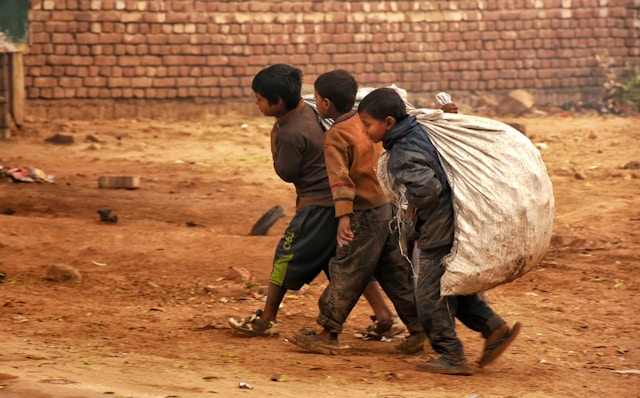
How do we live when the poor are living in ghettoised townships, ravaged by drugs, gangsters, and insecurity? Where boys and girls are ritually raped, sexually abused and blackmailed to become drug mules, gang members and, believe it or not, electioneering agents for certain politicians.
How do we live when truth has become rare, and falsehood is the currency? We, like Hussain ibn Ali, exist in the space between obligation and inability.
THE SPACE BETWEEN OBLIGATION AND INABILITY
Think about that space. It is not a comfortable space. It is not a space of certainty or ease. It is a space of tension—a space of decision.
Imam Hussain, may Allah be pleased with him, observed his society. He did not live in a bubble. He did not retreat to his prayer mat while the world collapsed. He looked. He saw. He witnessed.
He saw communities immobilised by indecision—people who knew what was right but lacked the courage to act.
He saw sincere followers isolated and afraid—good people who had been silenced by fear, who had been convinced that their voices didn’t matter, that resistance was futile.
He saw the despair of youth—young people who looked at the future and saw only darkness, who had been robbed of hope by a system that told them there was no alternative.
He saw the audacity of the corrupt—how evil had become bold, how wrong had become normalized, how the wicked no longer even bothered to hide their wickedness.
He saw truth distorted beyond recognition—how the very meaning of words had been corrupted, how justice had been redefined to serve the powerful, how the oppressor called himself the victim.
And then he saw Yazid. The embodiment of everything wrong. The tyrant. The oppressor. He saw those who had hijacked the caliphate and turned it into a monarchy.
And Imam Hussain faced a choice.
The question that haunted Hussain is the question that haunts us today: COULD HE REMAIN SILENT?
Could he? Could he watch injustice and do nothing? Could he see oppression and offer excuses? Could he witness the destruction of everything sacred and claim that he was unable? Could he stay in Mecca, safe and comfortable, while tyranny spread?
No. He could not. And neither can we.
We are not here to worship history. We are here to live it. We are here to make it. We are here to stand where Hussain stood and ask ourselves: What would he do? What must we do?
THE CRISIS WE FACE
Look at our world. Look at our country. Look at our communities. We confront the erosion of fundamental rights. Every day, another right is chipped away—the right to water, to housing, to healthcare, to dignity.
We see the degradation of ethical values. What was once shameful is now celebrated. What was once sacred is now mocked. What was once forbidden is now encouraged.
Hunger has become normal. Deprivation has become normal. We scroll past images of starving children on our phones and feel nothing. We have been anaesthetised.
Organised crime, substance abuse, gambling, profiteering, theft. We see the homeless under bridges, in parks, on plots of open spaces—these have become so normal that we barely flinch anymore. We have accepted a world where the corrupt thrive and the righteous struggle.
And from our religious platforms, manipulation of the hearts and minds masquerades as guidance. Preachers who should be speaking truth to power instead justify what the powerful do. They tell the poor to be patient while the rich feast. They promise the oppressed Paradise while the oppressors build their kingdoms on earth.
Ethno-racism and Zionism permeate our communities through the control of what we see and what we hear. Our minds are colonised long before our bodies are. We are taught to hate the wrong enemies. We are taught to fear the wrong threats. We are taught to divide ourselves.
Through our colonised minds, we witness the exploitation of our cultures, our traditions, our histories, our identities—all commodified, all packaged and sold back to us at a profit.
SO HOW SHOULD WE RESPOND? WHOSE ISLAM?
Let me be absolutely clear about something.
Our understanding of Islam—the Islam that guides us, the Islam that sustains us, the Islam that we are willing to live and die for—our Islam does not align with that of “palace” scholars. Yet, when these palace scholars tour our country, mosques overflow with the gullible to hear the syrup of uselessness dripping from their tongues. About heaven and hell, about stories of companions who prayed through the night, and the pious scholars who managed to recite 7 khatams a night. But never a word about the fighting for justice, speaking a word of truth to power.
Our Islam does not align with privileged entrepreneurs or influential politicians. It does not align with those who advocate patience for the poor while serving the interests of the wealthy.
Our Islam is the Islam of Abu Dharr, may Allah be pleased with him—the companion who spoke truth to power when the powerful were his own people occupying the green palace.
It is the Islam of Hujr ibn ‘Adi—who was martyred for his witness, who refused to abandon the truth even when his life was on the line.
It is the Islam of Husayn and Zaynab—who stood in the face of tyranny and overwhelming violence—and did not blink.
It is the Islam of tawhid—the absolute oneness of Allah—in opposition to idolatry. And yes, I mean including the idolatry of associating capitalism with Islam. When we worship the market, when we bow before profit, when we sacrifice human beings to economic systems—that is shirk.
It is the Islam of justice against oppression—not justice for some, but justice for all. Not justice when it’s convenient, but justice when it costs us.
It is the Islam of zakah against hoarding—of wealth that must circulate, that must serve the community, that cannot be accumulated while others starve.
It is the Islam of shura against authoritarianism—of consultation, of participation, of the collective voice against the single tyrant.
It is the Islam of bearing witness against silence. Because silence in the face of injustice is not neutrality. Silence is complicity.
Allah commands us clearly:“Stand firmly for justice as witnesses for Allah, even if it is against yourselves, your parents, or close relatives.”
EVEN IF IT IS AGAINST YOURSELVES.
Even if it costs you comfort. Even if it costs you status. Even if it costs you safety. Even if it costs you your family. Even if it costs you your life.
NAMING THE SYSTEM
We live in an age of war. Not a war of armies and borders alone, but a war of class—a war waged every day against the poor, against the vulnerable, against the marginalised.
The economic logic of the past 50 years—is a period of imposed sacrifice. And I want you to hear this clearly. The poor are told to sacrifice their wages. Sacrifice your homes. Sacrifice your food, your electricity, your water. Sacrifice your dignity, your land, your time, your very life.
And for what?
For what?!
So that banks may be rescued? So that landlords may be paid? So that anonymous corporate shareholders may be protected? So that ruling parties may be praised for their “realism.”? So that the rich can accumulate more, hoard more, and the poor can be told to be grateful for the for not being eviscerated.
We reject this false sacrifice. We reject this counterfeit righteousness.
Our deep problems are not because we transformed from Apartheid. Some of us in this room remember Apartheid. Some of us lived through it. Some of us fought against it. And many of us believed that the end of Apartheid would mean the beginning of justice.
But on the contrary, our problems stem from the NON-TRANSFORMATION of racist capitalism. But we say: NO.
THE WORD OF TRUTH
Professor Ali Mabruk, may Allah have mercy on him, used to say: Betrayal is from within, not without.
Betrayal is from within. Look for the source of your discomfort amongst your own historical blindfolds. Look at what you have accepted. Look at what you have normalised. Look at what you have excused. Once you see the manifestations of betrayal, it can never be turned back. The hands under the table outnumber those on top.
If we are to follow Imam Husayn and Sayedah Zaynab. We must speak truth to power. And we must speak truth to the powerless.
I said we must speak truth to the powerless—and I meant it. Because the powerless—we keep these elites in power. We elect them. We enable them. We make excuses for them. We tell ourselves they’re the best we have. We tell ourselves there’s no alternative.
We do not accuse them, and we do not excuse them. We are truth-tellers.
Imam Hussain could not remain silent. He was compelled to act. Although he could have claimed inability—and how easy that would have been! He could have stayed in Mecca. He could have said, “I am too old. I am too weak. I am outnumbered. It is not my time.” He could have made a thousand excuses, and we would have understood.
But he did not. He recognised his duty. He recognised his responsibility. He recognised that obligation is not optional.
And we too are confronted with this choice:
Will we align ourselves with Hussain or with Yazid? Will we choose silence or struggle?
Today, Lady Zaynab, the daughter of Ali and Fatimah, the sister of Hussain, the one who witnessed the horror of Karbala and still stood tall—she would say the word of truth is this:
Water, electricity, housing, land, healthcare, education, food, and safety are not utilities for only the rich to enjoy. They are trusts. They are rights. They are part of the common provision of Allah. They belong to the people, not to the market.
The Prophet said:“The Muslims are partners in three things: water, pasture (land and farming), and fire (energy and power generation).”
There are certain things that should never be privatised, commodified, or monetised for profit. They must be held in public ownership as waqf—as sacred trust, as common inheritance.
CLOSING: WE WILL CHANGE EVIL
The Prophet, peace be upon him, said:“Whoever among you sees an evil, let him change it with his hand; if he cannot, then with his tongue; if he cannot, then with his heart—and that is the weakest of faith.”
This is our roadmap. This is our instruction. This is our obligation. We will change evil with our hands—by organising our people. We will build the world we want to see.
We will change evil with our tongues—by naming the oppressor, exposing false moderation, challenging unjust rulers, refusing the lie that the poor must wait while the rich feast. We will speak, and we will not be silenced.
We will change evil with our hearts—by refusing despair, refusing cynicism, refusing to let the market colonise our imagination. We will dream and believe in the possibility of another world.
This month, we honour the martyrs— Imam Hussain, his family, his companions, and all those who have fallen in the struggle for justice. We honour them not by transforming their deaths into spectacle, not by only mourning them and forgetting their mission. We honour them by advancing their unfinished work.
True sacrifice is not allowing the poor to die in silence to sustain an unjust system. True sacrifice is the disciplined offering of self, resources, time, courage, and struggle to secure a more productive life for all.
We remind ourselves that we need to mobilise a new broad front: rooted in tawhid, accountable to the oppressed, disciplined by justice, hostile to capitalism, free of colonised minds, opposed to imperialism, and committed to building a common world beyond one dominated by profits for its own sake.
We do not worship the market. We do not bow before tyrants, bullies, in our country or beyond its borders. We do not confuse moderation with justice. We do not call the martyrs dead.
WE BEAR WITNESS.
Hasbunallahu wa ni’mal wakeel—Allah is sufficient for us, and He is the best Protector. And remember: WE exist in the space between obligation and inability. Choose obligation.
Choose struggle. Choose truth.
Allahu Akbar! Allahu Akbar! Wa lillahil hamd!
God is the Greatest. God is the Greatest. And all praise belongs to God.
More from other authors:
Latest posts

Writers Panel | A Simple Thought | Obituaries | Ziarat Ashura | Islamic Calendar | Facebook | Instagram
