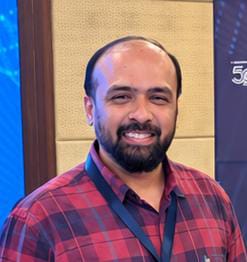
The writer is the Country Manager for The World Federation of KSIMC in India, where he plays a key role in humanitarian aid and community development. Known for his strong public relations skills, he is also a passionate content creator with a growing presence on Instagram and YouTube, sharing engaging insights across technology, travel, and the food industry.
Using Technology Without Losing the Purity of Knowledge
Let me start with a simple thought.
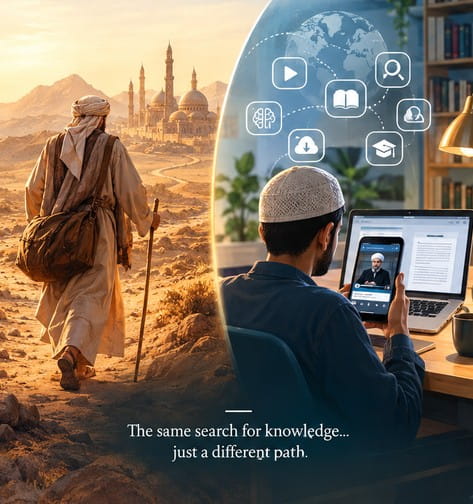
Previous generations had to travel miles in search of knowledge, and today, knowledge travels to us.
A smartphone can put a lecture from a scholar thousands of kilometres away, right in front of us in a flash.
A book that once required a journey to a library can now be downloaded in seconds.
A question that once required finding the right teacher can now be searched instantly.
And with technology, and especially artificial intelligence, the possibilities are even greater.
But that brings us to an interesting question: When knowledge has become so easy to access, what does it actually mean to be a seeker of knowledge? Because there is a difference between having knowledge at our fingertips and actively pursuing knowledge. And that pursuit has always been at the heart of our faith.
Hadith
The Holy Prophet (saws) said: “Seeking knowledge is incumbent upon every Muslim, male and female.” [Al-Majlisi Bihar al-Anwar, vol. 1, p. 177].
There is a well-known hadith (widely quoted but unverified) attributed to the Holy Prophet (saws): “Seek knowledge, even if it is in China.”
Just pause for a moment and think about that. For someone living in seventh-century Arabia, China wasn’t a Google search away. There were no flights, no trains, no YouTube lectures, no PDFs, no WhatsApp groups forwarding religious quotes at 2 in the morning! If you wanted knowledge, you had to go and get it in person.
You had to travel, you had to leave your comfort zone, you had to spend time and effort, and perhaps that is the real message behind this tradition: If knowledge is valuable, don’t wait for it to come to you. Go looking for it.
Today, we don’t have to cross deserts to find knowledge; sometimes we don’t even have to leave the comfort of our homes. Knowledge is coming to us!
So, the question has changed; it’s no longer simply: “Where can I find knowledge?” It is: “Am I seeking it?”
Another famous tradition (widely quoted but unverified) says: “Seek knowledge from the cradle to the grave.”
I love the simplicity of that quote. It doesn’t say: Seek knowledge until you finish school, until you get your degree or until you get a job. It says: Keep seeking. From the cradle… to the grave. That means you are never too old to learn. Never too experienced to ask a question. Never too knowledgeable to discover something new. And perhaps one of the greatest signs of knowledge is recognising just how much we don’t know.
Ask Questions
And when we talk about the pursuit of knowledge within our tradition, we have an extraordinary example in Imam Ja‘far al-Sadiq (as). Look at the intellectual legacy associated with the Imam. His teachings encompass faith, ethics, jurisprudence, spirituality and intellect.
People came to him with questions. And questions were not something to be afraid of. They were part of the journey towards increasing knowledge. There is something very relevant here for us today. Sometimes we are uncomfortable with questions. We think asking a difficult question means our faith is weak. But genuine questions can actually be the beginning of deeper faith.
If you don’t understand something, ask!
If something doesn’t make sense, investigate!
If someone gives you a quotation attributed to an Imam, ask where it came from.
If you don’t know the answer… say you don’t know. There is no shame in not knowing. The real problem is pretending to know.
Smartphone
And Then Came the Smartphone.
We carry a device in our pocket that gives us access to more information than most people in history could ever have imagined. We can listen to a lecture while driving. Read a book while sitting in a café. Attend an online class from another country. Search through thousands of pages in seconds. And we now have artificial intelligence that can help us translate, manage, explain and explore.
The tools are incredible. But here’s the catch: information is not knowledge. And knowledge is not wisdom.
I can watch 50 Islamic reels today. Another 100 tomorrow. I can bookmark hundreds of quotes. I can forward dozens of lectures. But the question here is: Have I actually learned? Or have I simply consumed content? That’s the red flag!
We can become very good at consuming religious content without actually becoming more knowledgeable.
We can know the quote… but understand nothing. Hear the lecture… but understand nothing. Read the terminology… and again understand nothing. We can become consumers of knowledge without becoming seekers of it.
Social Media
And then there is social media. Let’s be honest. The algorithm doesn’t necessarily care whether something is true. It cares whether you will stop scrolling. It doesn’t ask, “Is this authentic?” It only asks, “Will this get engagement?” And that creates a very real challenge. The controversial statement can outperform the accurate one. The emotional clip can outperform the thoughtful lecture. The person with the biggest following can appear more authentic than someone who has spent decades studying.
So, we need to remember: Going viral doesn’t make something true. Followers don’t automatically make someone a scholar (Psst: Most of the time, followers can be bought). A beautifully designed Islamic post doesn’t make its content authentic. And just because something has been forwarded 10,000 times doesn’t mean it came from the Prophet (saws) or the Ahlul Bayt (as).
Digital Amanah!
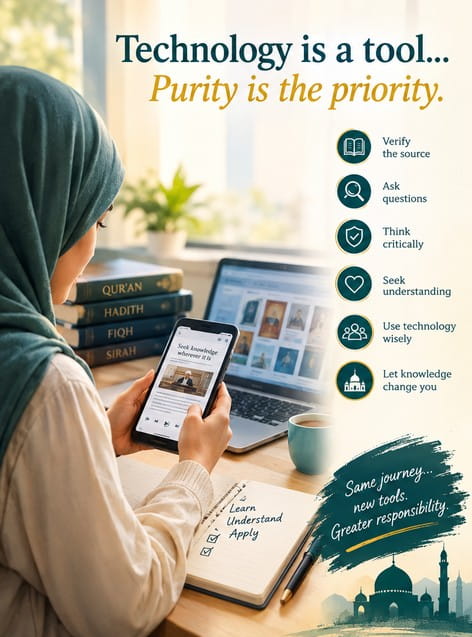
When We Share Religious Knowledge, We Carry an Amanah. This is where I think we must be particularly careful. If I, as a Travel Vlogger, share a random fact about travel and get it wrong, perhaps the consequences are limited. But when I write: “The Prophet (saws) said…” or “Imam Ali (as) said…” or “Imam Ja‘far al-Sadiq (as) said…” I’m not simply sharing content. I’m attributing words to our faith. And that comes with great responsibility. So, before we share… Verify. Ask questions: Where is it from? What is the source? Is the attribution reliable? What is the context? And if we can’t verify it? Don’t be afraid to say, “I couldn’t verify this.”
In a world where everyone wants to be the first person to share something… sometimes the most responsible thing you can do is wait. Because when it comes to religious knowledge, Accuracy should matter more than speed.
Afraid of Technology?
So, Should We Be Afraid of Technology? No!
I actually think we should do the opposite. We should use it to our advantage. Use your phone to read books. Use YouTube to listen to scholars. Use podcasts to learn while travelling. Use online libraries. Use translation tools. Use AI responsibly to help organise information, explore concepts and point you towards further learning. Use technology to preserve our Majalis. Record our scholars. Archive our history. Make our heritage accessible to the next generation. Reach young people in the language and formats they understand. There is nothing wrong with using a modern tool to deliver an age-old message. The problem is not the tool. The problem is when the tool starts controlling the message.
Be authentic
Don’t Change the Message Just to Get Views. And this, for me, is where the idea of purity becomes important. There is absolutely nothing wrong with making religious content engaging. Make it beautiful. Do engaging storytelling. Use good production. Make young people watch with a language that they understand, but there is a line. If the truth doesn’t fit into a 30-second reel… don’t distort the truth to make it fit. If something needs context… give it context. If something is complicated… don’t pretend it’s simple just because simple gets more views. And if the authentic message isn’t as exciting as the sensational version… choose authenticity. Our responsibility is not to make the message viral at any cost. Our responsibility is to deliver the message faithfully. Technology should amplify the message. It should never rewrite it.
Knowledge shapes our character
So perhaps the real issue isn’t technology at all. It is us. We have been given tools our ancestors could never have imagined. They travelled to seek knowledge. We can bring knowledge to our bedroom. They searched through manuscripts. We have search engines. They waited for books. We can download them in seconds. They sat with teachers for hours. We can listen to lectures while on the train. We have been given an incredible opportunity. So what are we doing with it? Are we using our phones to learn… or just to scroll?
Are we collecting information… or developing understanding? Are we saving quotes… or changing our behaviour? Are we following knowledge… or simply following influencers? And perhaps the most important question: Has all this access to knowledge actually made me a better human being? Because ultimately, that is the test. Knowledge isn’t supposed to remain inside our phones. It is supposed to change our hearts. It should change the way we speak. The way we treat our parents. The way we conduct our business. The way we treat people who disagree with us. The way we respond to injustice. The way we worship. Knowledge should show up in our character.
Conclusion
The Prophet (saws) taught us to seek knowledge. The legacy of Imam Ja‘far al-Sadiq (as) shows us the extraordinary intellectual and spiritual tradition that grew from that pursuit. And today, technology has given us tools that make seeking knowledge easier than ever. So, let’s use them. Let’s read more. Let’s ask better questions. Let’s listen. Let’s verify. Let’s learn from people who have genuinely studied. Let’s use technology to take knowledge further… without allowing technology to dilute it. Because ultimately: A phone can put knowledge in front of your eyes. But only you can put it into your heart. AI can give you an answer. But only you can pursue understanding. A lecture can inspire you. But only you can allow it to change you. And maybe that is what reviving the Prophetic pursuit of knowledge looks like in our generation. It doesn’t necessarily mean travelling to China. It means refusing to stop seeking. It means having the humility to ask. The discipline to study. The patience to understand. The responsibility to verify. And the sincerity to let knowledge transform us.
Because the journey of knowledge doesn’t end with a degree.
It doesn’t end with a job.
It doesn’t end with age.
It ends… at the grave.
And until then, keep seeking.
Recent posts
- Blowing Of The Trumpet And Annihilation Of Everything
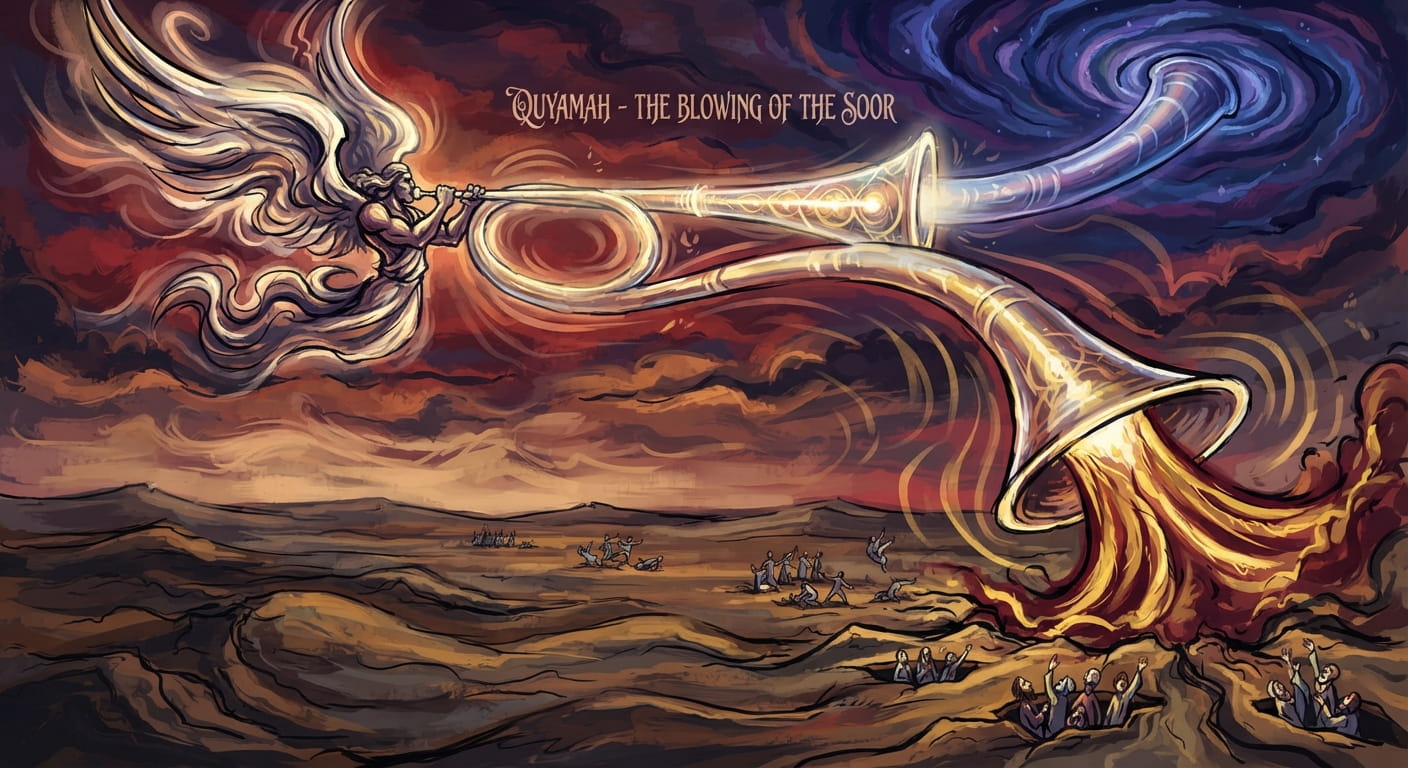 Blowing Of The Trumpet And Annihilation Of Everything by Allama Mohammad Baqer Majlesi Many verses prove the blowing of the trumpet. In Shi’a and Sunni channels, many traditions say that the Almighty Allah created Israfil and, along with him, a great trumpet, with one end in the east and the other in the west. From the day Israfil was created, he has been waiting for the command of Allah, with his mouth touching that trumpet.
 - True self-development
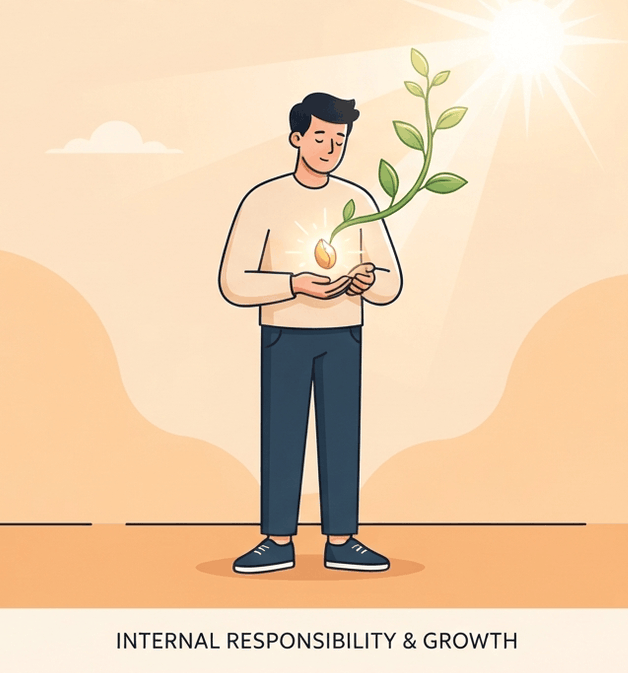 True self-development by Asgar Jafferali Dhanji While physical growth is easy to see, your mind, character, and professional capability evolve in ways that are much harder to gauge. If you look back five years, you are likely not the same person you were then. You are constantly evolving, but reaching the next level of your personal development requires conscious, deliberate action.
 - Adl
 Adl by Sheikh Fattah The concept of justice (‘Adl) occupies a foundational position in Islamic theology and ethics, serving as a lens through which the relationship between the Creator and creation is understood. In his insightful essay, “Adl – Justice and Decree,” originally published in the spring 1984 issue of the journal Nuradeen, Sheikh Fattah provides a concise yet profound exploration of this multi-faceted principle. Drawing extensively from the Holy Quran and the narrative traditions (ahadith) of the Ahlul Bayt – specifically Imam Ali and Imam Ja’far as-Sadiq—the author dismantles the complexities surrounding divine decree, free will, individual morality, and structural social justice. The text functions not merely as an academic exposition of theological doctrine, but as an ethical manifesto that bridges metaphysical truths with practical human responsibility.


