A digital marketing specialist and an Educator-cum-Trainer, he has been involved in community organisations and matters from a young age, and through his writings, continues to speak of social and cultural reform to this day.
His community service began in his youth, when he pioneered the Brain of the Madrasah Quizzes in Dar es Salaam and Nairobi, co-founded and chaired the Debating Society, edited Knowledge Magazine, and served as a Public Speaking trainer. In his middle years, he took on the roles of Secretary of the AFED Tabligh Committee, Secretary of the Haydari Madrasah, Secretary of the Nairobi Jamaat, and member of the Education Board. More recently, he has served as a member of the SSC Committee, Federation Samachar Editor, and member of the CRC.
He is also the founding moderator of this forum (1996).
Resurrection of Bodies and Souls Reunited
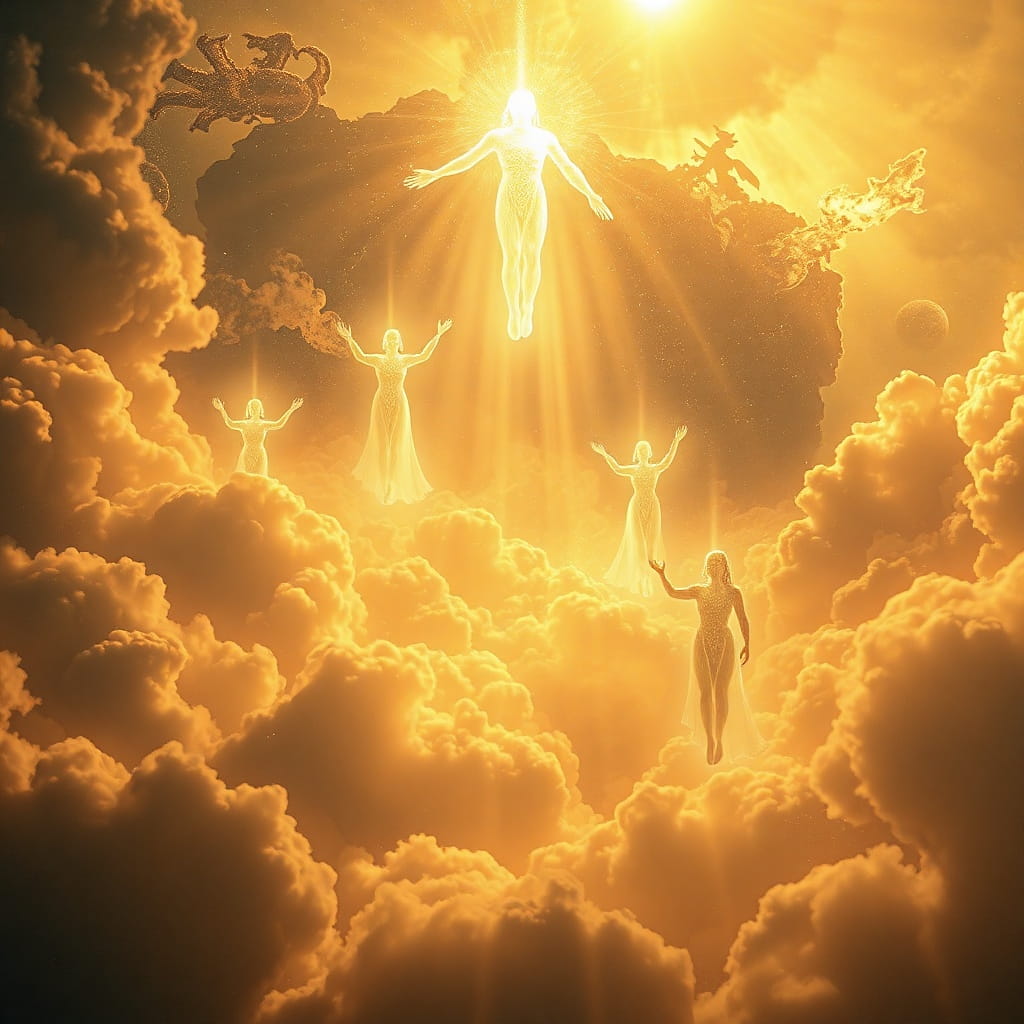
Every believer eventually returns to the same question: when this life ends, what remains of us? The Shia Imami tradition answers with clarity. On the Day of Judgement (Yawm al-Qiyaamah), human beings will be raised as whole persons, body and soul reunited, to stand before their Creator. Theology calls this belief ma’aad jismaani, bodily resurrection, and it is one of the pillars of Islamic faith, listed among the usool al-din alongside tawhid, prophethood, and divine justice.
The Noble Qur’an addresses the doubt that has always accompanied this teaching: how can scattered, decayed remains be made whole again?
In Sura al-Qiyaamah, Allah asks whether man thinks that He will never gather his bones, and answers that He is able to reassemble even his fingertips (75:3-4) [1].
The fingertip is a deliberate choice. It is the mark of individual identity (i.e., fingerprints), so the verse promises not merely a new creation but the return of this person, unmistakably himself.
Sura Yaseen tells of a man who brings a decayed bone to the Prophet and asks who can revive it. The reply is that the One who created it the first time will give it life again, and that He has knowledge of every creation (36:78-79) [1].
The argument is simple: whoever originated life can restore it. Sura al-Hajj (22:5-7) and Sura al-Mu’minun (23:12-16) make the same case by tracing the stages of human creation, from dust and a drop of fluid to a fully formed being, and then pointing to death and resurrection as the next stage of that same journey. The verse about the man who was made to die for a hundred years and then raised (2:259) [1] offers narrative proof, since his food and drink remained unspoiled while his donkey’s bones were restored before his eyes.
The Imams of the Ahl al-Bayt gave this teaching depth and urgency. In Nahj al-Balaagha, Imam Ali (AS) speaks of the Last Day with unforgettable force: the sounding of the trumpet, the emptying of the graves, and the gathering of people for reckoning [2]. His sermons do not treat the Hereafter as an abstract doctrine. They use it to awaken the conscience, reminding the listener that this world is a passage and that every deed will be weighed.
The hadith collections preserve many narrations on the subject. Shaykh al-Kulayni’s al-Kaafi includes chapters on death, the grave and the Day of Resurrection, and on the barzakh, the interval between death and resurrection in which the soul continues to exist and to experience the consequences of its life [3].
Allamah Majlisi’s Bihaar al-Anwaar gathers these reports on a vast scale [4], devoting a volume to barzakh and death and another to ma’aad. Together they establish that the soul does not perish with the body, and that the resurrection is a real and universal event rather than a metaphor.
Shaykh al-Sadooq’s creed, Risaalat al-I’tiqaadaat (available in English as A Shi’ite Creed), condenses the classical position. He states that the believer must affirm the resurrection, the reckoning and the final recompense, and treats them as settled articles of belief [5]. Written in a concise, almost catechetical style (a structured method of teaching and learning), it shows how settled the doctrine was in early Imami scholarship.
Later scholars asked how the doctrine could be defended rationally. Naseer al-Deen al-Toosi, in Kashf al-Muraad, with the commentary of Allamah al-Hilli, argued that bodily resurrection is both possible and certain: possible because Allah’s power is not limited by the dispersal of matter, and certain because the prophets have reported it with one voice [6]. Reward and punishment, in this view, are owed to the whole human being, who acted through both body and soul. It would be incomplete justice for only one part of the person to be recompensed [6].
The philosophical tradition carried the question further. Mulla Sadra, in the Ma’aad section of al-Asfaar al-Arba’a, proposed that personal identity rests chiefly on the soul rather than on the particles of the body, which change throughout life in any case. The body we have at forty shares few of its atoms with the body we had at four, yet we are the same person [7]. On this reasoning, the resurrected body is truly ours because it is the form that our soul, shaped by our beliefs and conduct, brings with it into the next world. Sadra’s account is demanding, but its conclusion is consistent with the older sources: the person raised is the person who lived.
Allamah Tabataba-i, in al-Mizaan, treats these verses with careful attention to their internal logic, noting that the Qur’an frames resurrection not as an exceptional miracle but as the natural continuation of the creation it asks us to observe daily [8]. Contemporary scholars such as Ayatollah Ja’far Subhaani in Doctrines of Shi’i Islam and Ayatollah Murtada Mutahhari in his writings on the Hereafter have presented these arguments in language accessible to the modern reader, stressing that belief in resurrection gives moral coherence to life [9][10].
The doctrine of resurrection is not only a point of theology; it shapes how a believer lives. If death were the end, justice would remain incomplete, for the oppressor and the oppressed would share the same oblivion. The Shia tradition, with its deep concern for justice (‘adl), sees the Day of Judgement as the moment when every account is settled and no deed, however hidden, is lost.
It also gives consolation. Those who have lost parents, children or friends are told that separation is temporary and that the bond of faith and love continues beyond the grave. For a community with a long memory of loss and martyrdom, this hope is central. The mourning gatherings that honour Imam Husayn (AS) rest on the conviction that sacrifice made for Allah is never wasted, and that its reward is realised in the Hereafter.
Finally, it calls for accountability. Imam Ali’s words remind us that we are travellers who will be questioned about how we spent our time, our wealth and our influence. A believer who keeps the Day of Judgement in view is encouraged to deal honestly, to treat others with fairness, and to prepare for a meeting that no one can avoid.
In practice, most of us live as though the account will never be opened. We rush through the week, put off the phone call to a relative, and treat a promise to a colleague or a customer as something we can renegotiate when it suits us. Yet the small choices are where this belief is tested: whether we pay what we owe on time, speak fairly of someone who is not in the room, or give our full effort when no one is checking. Keeping the Day of Judgement in mind need not make us fearful. Used well, it makes us steadier, because we begin to ask a simple question before we act: could I stand behind this when it is weighed?
Sources
The Qur’an: Sura al-Qiyaamah (75:3-4); Sura Yaseen (36:78-83); Sura al-Hajj (22:5-7); Sura al-Mu’minun (23:12-16); Sura al-Baqarah (2:259).
Sharif al-Radi (compiler), Nahj al-Balagha: Imam Ali’s sermons on the Last Day, in any standard English translation.
Muhammad ibn Ya’qub al-Kulayni, al-Kafi: chapters on death, barzakh and the Day of Resurrection.
Muhammad Baqir al-Majlisi, Bihar al-Anwar: the volumes on death and barzakh (vol. 6) and ma’aad (vol. 7).
Shaykh al-Sadooq, Risaalat al-I’tiqadat, translated by Asaf A. A. Fyzee as A Shi’ite Creed.
Nasir al-Din al-Tusi, Kashf al-Murad fi Sharh Tajrid al-I’tiqad, with the commentary of Allamah al-?illi: the discussion of ma’aad.
Mulla Sadra, al-Hikma al-Muta’aliya fi al-Asfaar al-‘Aqliyya al-Arba’a: the section on Ma’aad.
Muhammad Husayn al-Tabataba-i, al-Mizan fi Tafsir al-Qur’an: commentary on the verses cited above.
Ja’far Subhani, Doctrines of Shi’i Islam, translated by Reza Shah-Kazemi: the chapter on the Hereafter.
Murtada Mutahhari, Ma’aad (English titles vary by edition, for example, Life after Death).
Recent posts
- The Day of Judgement
 The Day of Judgement by Mohamedarif Suleman Every believer returns to the same question at some point: when this life ends, what remains of us? The Shia Imami tradition answers with clarity. On the Day of Judgement (Yawm al-Qiyaamah), human beings will be raised as whole persons, body and soul reunited, to stand before their Creator. This belief is known in theology as ma’aad jismaani, bodily resurrection, and it is one of the pillars of Islamic faith, listed among the usool al-din alongside tawhid, prophethood and divine justice.
- Blowing Of The Trumpet And Annihilation Of Everything
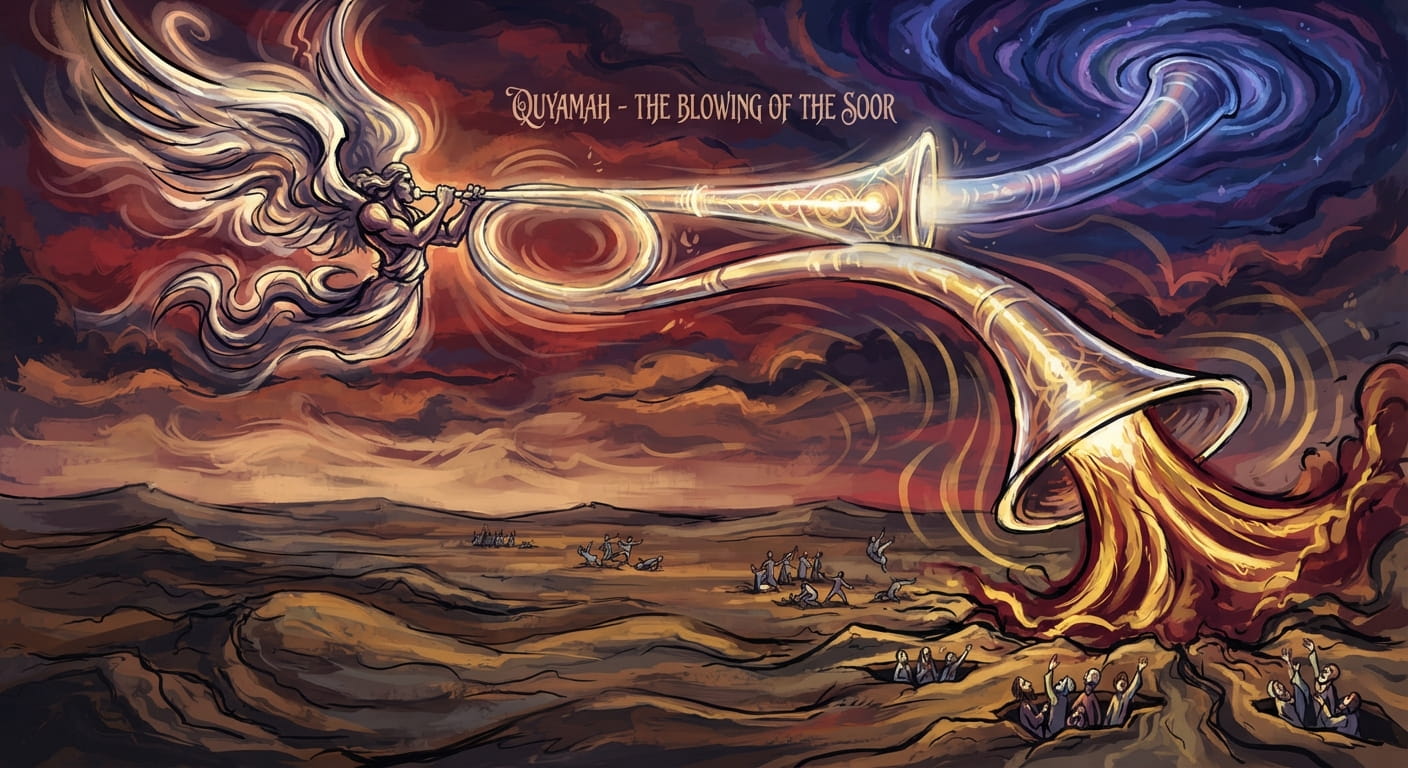 Blowing Of The Trumpet And Annihilation Of Everything by Allama Mohammad Baqer Majlesi Many verses prove the blowing of the trumpet. In Shi’a and Sunni channels, many traditions say that the Almighty Allah created Israfil and, along with him, a great trumpet, with one end in the east and the other in the west. From the day Israfil was created, he has been waiting for the command of Allah, with his mouth touching that trumpet.
- True self-development
 True self-development by Asgar Jafferali Dhanji While physical growth is easy to see, your mind, character, and professional capability evolve in ways that are much harder to gauge. If you look back five years, you are likely not the same person you were then. You are constantly evolving, but reaching the next level of your personal development requires conscious, deliberate action.


