

A medical doctor turned teacher. He pursued his medical degree in India and took the United States medical licensing exams in the USA. He also has a postgraduate diploma in education from the University of Dar es Salaam. He is the author of the book, “Learning How to Learn: Doing well in school, college and beyond”. He is passionate about education and teaching, with interests also in philosophy, science, theology and spirituality.

Exploring how revelation and reason unite in the pursuit of knowledge.
I recall seeing this quote of the Prophet Muhammad when I was a young lad. The wisdom of these words has been a reminder to me ever since of the importance of knowledge in the religion of Islam.
How is knowledge attained by us humans? Well, the answer varies depending on whom you ask. For several of the world’s major religions, especially the Abrahamic faiths, Knowledge from the other realm is brought to this realm via revelation. So, for the Jewish people, the Torah, the five books of Moses, are revelations from God to him. For the Christians, while the Gospels are accounts by the witnesses of what Jesus said and did, they nonetheless contain his words which are considered Divine. For Muslims, the Quran is the word of God revealed to the Prophet Muhammad by the Archangel Gabriel.
The non-Abrahamic faiths may not necessarily have the same notion of revelation as those of the Abrahamic ones, but sometimes there can be a similarity. For instance, the Upanishads are considered ‘darshanas’, which means they are insights that were seen and experienced by the Indian Rishis during the depths of meditation, and the words of the Upanishads relate what the Rishis saw and experienced with regard to the nature of reality and existence.
In addition to the above, humanity has continuously attained knowledge of the world through experience, testing, trial and error, and questioning. We thus enter the world of Philosophy. From the ancient Indians, Chinese and Greeks to the Arabs and the Europeans, the beautiful world of Philosophy has posed many wonderful questions and attempts at answering those questions by the great thinkers of human civilisation.
Philosophy deals with asking questions ranging from the nature of existence and reality to the notions of ethics and morality, as well as pretty much anything you can ask a question about. Science branched out of philosophy as Natural Philosophy, and the scientific method has revolutionised our world ever since. The scientific method involves postulating a hypothesis and then looking at the evidence to see if the hypothesis holds up or not. If it holds up, great. If not, the hypothesis must be revised or discarded altogether. An essential component of this method is critical thinking.
Now, when we turn our attention to the Quran, the words that the Prophet uttered as revelation, we see something truly beautiful. The first verses of revelation are in Surah 96, verses 1 to 5:
“Read! In the name of your Lord who created; He created the human being from that which clings. Read! And your Lord is most generous. The one who teaches by the Pen; He teaches the human being what he never knew.”
The very first words that Muhammad receives are about God teaching the human being via the written word! How powerful is that, how honourable for you and I!
In the second chapter of the Quran, the story of Adam from Genesis is recounted. Adam is taught the ‘Names’ which the angels do not know. The ‘Names’ have been seen to mean the ability of Adam to know and understand the universe around him.
In Surah 3, verse 190, we read:
“In the creation of the heavens and the earth, and the alternation of the night and day, there are signs for those who possess intelligence.”
Verse 191 of the same Surah goes on to tell us that these possessors of intelligence say, “Our Lord, you did not create all this in vain…”
In chapter 12, verse 7, we are told that, “verily in Joseph and his brothers are lessons for those who ask questions.”
The Quran is sprinkled with several verses that encourage reflection and critical thinking, which discourage people from accepting things blindly, even in the name of religion. Let us read these verses:
(Quran 2:170) When they are told, “Follow what GOD has revealed herein,” they say, “We follow only what we found our parents doing.” What if their parents did not understand and were not guided?
(Quran 2:171) “The example of such disbelievers is that of parrots who repeat what they hear of sounds and calls, without understanding. Deaf, dumb, and blind; they cannot understand.“
These verses speak for themselves.
(Quran 17:36) “And follow not that of which thou hast no knowledge. Verily, the ear and the eye and the heart – all these shall be called to account.“
It is no wonder then that following the Prophet’s establishment of the system of Islam, at the heart of which is critical thinking and the pursuit of knowledge, the Muslims entered what has been called the Golden Age of Islam, where Muslim thinkers and philosophers, scientists and physicians, were studying the great works of the Indians and the Greeks, translating and preserving their works, and contributing significantly to the fields of philosophy, mathematics, astronomy, medicine, geography and economics.
The Prophet is said to have emphasised the holiness of the ink of the scholar over the blood of the martyr. His words are a reflection of the words of the Quran. Islam is a life-affirming religion which places the seeking of knowledge as an act of worship – a perspective that is consistent with the natural human disposition of critical thinking and questioning, which has placed the human being even higher than the angels.
Recent posts
- True self-development
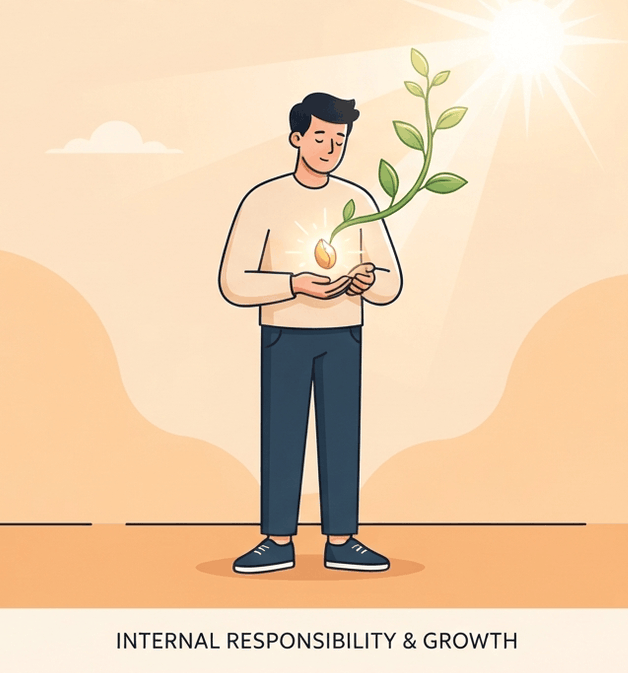 True self-development by Asgar Jafferali Dhanji While physical growth is easy to see, your mind, character, and professional capability evolve in ways that are much harder to gauge. If you look back five years, you are likely not the same person you were then. You are constantly evolving, but reaching the next level of your personal development requires conscious, deliberate action.
 - Adl
 Adl by Sheikh Fattah The concept of justice (‘Adl) occupies a foundational position in Islamic theology and ethics, serving as a lens through which the relationship between the Creator and creation is understood. In his insightful essay, “Adl – Justice and Decree,” originally published in the spring 1984 issue of the journal Nuradeen, Sheikh Fattah provides a concise yet profound exploration of this multi-faceted principle. Drawing extensively from the Holy Quran and the narrative traditions (ahadith) of the Ahlul Bayt – specifically Imam Ali and Imam Ja’far as-Sadiq—the author dismantles the complexities surrounding divine decree, free will, individual morality, and structural social justice. The text functions not merely as an academic exposition of theological doctrine, but as an ethical manifesto that bridges metaphysical truths with practical human responsibility.
 - Eternal Life
 Eternal Life by Ayatullah Murtadha Mutahhari Ayatullah Murtadha Mutahhari’s Eternal Life is a concise but profound exploration of one of Islam’s central beliefs: that human life does not end with death. Drawing on the Qur’an, hadith, Islamic philosophy, and rational argument, Motahhari presents the Hereafter not as a distant abstraction but as the destination that gives meaning to every thought, choice, and action in this world. The book is especially valuable for readers seeking a clear, reasoned introduction to Islamic teachings on death, the soul, barzakh, resurrection, and eternal life.


