The writer, Dr Hasnain Gulamali Walji (Texas, USA), is the Head of the Khoja Heritage Project of The World Federation of KSIMC. A lifelong educator and historian, he has dedicated over three decades to documenting the rich, socio-religious journey of the Khoja Shia Ithna-Asheri community. His landmark documentary, The Khojas – A Journey of Faith, traces this evolution across 600 years. Over the past 30 years, he has been collecting care Gujarati and Khoja history books housed at the Mulla Asghar Memorial Library in Toronto, which he co-founded with Raza-Aly Hiridjee.
Serving for almost half a century, he had been the former Secretary General, Vice President, and President of The World Federation. Professionally, he is a nutritionist and has also authored 26 books on naturopathic medicine, translated into several languages. As Executive Director of the United Global Initiative and a Trustee of the Jaffer Family Foundation, he leads the CodeGirls project, which empowers underprivileged girls to pursue technology careers. He has also been instrumental in facilitating the ‘Ashura at Harvard’ study track at Harvard Divinity School, promoting academic discourse on Shi’ism, fully funded through the Jaffer Family Foundation.
Imam Ali: Economic Justice and the Challenge to Privilege
Imam ?Ali also reformed the distribution of Bayt al-Mal. Previous administrations had created unequal stipends.
Imam ?Ali abolished these privileges.
He implemented equality.
Elites protested.
Support weakened.
Imam ?Ali remained firm:
“Should I seek victory through injustice to those over whom I rule? By Allah, I shall not do so.” (Nahjul Balagha, Sermon 126)
Imam ?Ali’s leadership was reinforced by his personal life.
He lived simply. He rejected privilege.
He declared:
“By Allah, your world is more insignificant to me than a leaf in the mouth of a locust.” (Nahjul Balagha, Sermon 224)
He governed through credibility. Not theatrics.
The Cost of Principle
Imam ?Ali faced:
Political opposition Elite resistance Ideological extremism Civil conflict
Eventually, he was assassinated.
From a political perspective, his leadership appears tragic. From a moral perspective, it appears timeless.
He lost power. But defined justice.
A Historical Echo: Muhammad Ali Jinnah
History occasionally produces leaders who follow a similar path.
Muhammad Ali Jinnah represents one of the clearest modern examples.
Jinnah was not a populist leader. He was reserved, measured, and disciplined. He built his political career through constitutional argument rather than emotional mobilization. Unlike many leaders of mass movements, Jinnah rarely relied on religious slogans or emotional rhetoric. His speeches were structured, precise, and often legalistic. Some critics even described him as distant or elitist. Yet this very restraint became his strength.
Early in his career, Jinnah was known as the Ambassador of Hindu-Muslim Unity. His politics were rooted in negotiation, not agitation. He believed deeply in constitutional safeguards and minority rights. When Indian politics began to shift toward mass mobilization and emotional politics, Jinnah became increasingly uncomfortable.
His political isolation in the 1930s reflects this tension. Disillusioned, he moved to London, stepping away from Indian politics. Many believed his career was over. Yet he returned, not as a populist agitator, but as a constitutional strategist determined to rebuild political organization.
He rebuilt the Muslim League methodically:
Creating organizational discipline
Building institutional structures
Promoting merit over feudal influence
Encouraging political education
Jinnah resisted religious populism. Even at the height of the Pakistan movement, he avoided emotional religious rhetoric. Instead, he emphasized constitutional rights, representation, and political safeguards.
He famously declared:
“Work, work and work, and we are bound to succeed.”
His August 11, 1947 speech remains one of the clearest expressions of principled governance:
“You may belong to any religion or caste or creed—that has nothing to do with the business of the State.”
Like Imam ?Ali, Jinnah navigated:
Elite pressures Popular emotion Political fragmentation
True self-development by Asgar Jafferali Dhanji
While physical growth is easy to see, your mind, character, and professional capability evolve in ways that are much harder to gauge. If you look back five years, you are likely not the same person you were then. You are constantly evolving, but reaching the next level of your personal development requires conscious, deliberate action.
Adl by Sheikh Fattah
The concept of justice (‘Adl) occupies a foundational position in Islamic theology and ethics, serving as a lens through which the relationship between the Creator and creation is understood. In his insightful essay, “Adl – Justice and Decree,” originally published in the spring 1984 issue of the journal Nuradeen, Sheikh Fattah provides a concise yet profound exploration of this multi-faceted principle. Drawing extensively from the Holy Quran and the narrative traditions (ahadith) of the Ahlul Bayt – specifically Imam Ali and Imam Ja’far as-Sadiq—the author dismantles the complexities surrounding divine decree, free will, individual morality, and structural social justice. The text functions not merely as an academic exposition of theological doctrine, but as an ethical manifesto that bridges metaphysical truths with practical human responsibility.
Eternal Life by Ayatullah Murtadha Mutahhari
Ayatullah Murtadha Mutahhari’s Eternal Life is a concise but profound exploration of one of Islam’s central beliefs: that human life does not end with death. Drawing on the Qur’an, hadith, Islamic philosophy, and rational argument, Motahhari presents the Hereafter not as a distant abstraction but as the destination that gives meaning to every thought, choice, and action in this world. The book is especially valuable for readers seeking a clear, reasoned introduction to Islamic teachings on death, the soul, barzakh, resurrection, and eternal life.
Contains information related to marketing campaigns of the user. These are shared with Google AdWords / Google Ads when the Google Ads and Google Analytics accounts are linked together.
90 days
__utma
ID used to identify users and sessions
2 years after last activity
__utmt
Used to monitor number of Google Analytics server requests
10 minutes
__utmb
Used to distinguish new sessions and visits. This cookie is set when the GA.js javascript library is loaded and there is no existing __utmb cookie. The cookie is updated every time data is sent to the Google Analytics server.
30 minutes after last activity
__utmc
Used only with old Urchin versions of Google Analytics and not with GA.js. Was used to distinguish between new sessions and visits at the end of a session.
End of session (browser)
__utmz
Contains information about the traffic source or campaign that directed user to the website. The cookie is set when the GA.js javascript is loaded and updated when data is sent to the Google Anaytics server
6 months after last activity
__utmv
Contains custom information set by the web developer via the _setCustomVar method in Google Analytics. This cookie is updated every time new data is sent to the Google Analytics server.
2 years after last activity
__utmx
Used to determine whether a user is included in an A / B or Multivariate test.
18 months
_ga
ID used to identify users
2 years
_gali
Used by Google Analytics to determine which links on a page are being clicked
30 seconds
_ga_
ID used to identify users
2 years
_gid
ID used to identify users for 24 hours after last activity
24 hours
_gat
Used to monitor number of Google Analytics server requests when using Google Tag Manager


 The writer, Dr Hasnain Gulamali Walji (Texas, USA), is the Head of the Khoja Heritage Project of The World Federation of KSIMC. A lifelong educator and historian, he has dedicated over three decades to documenting the rich, socio-religious journey of the Khoja Shia Ithna-Asheri community. His landmark documentary, The Khojas – A Journey of Faith, traces this evolution across 600 years. Over the past 30 years, he has been collecting care Gujarati and Khoja history books housed at the Mulla Asghar Memorial Library in Toronto, which he co-founded with Raza-Aly Hiridjee.
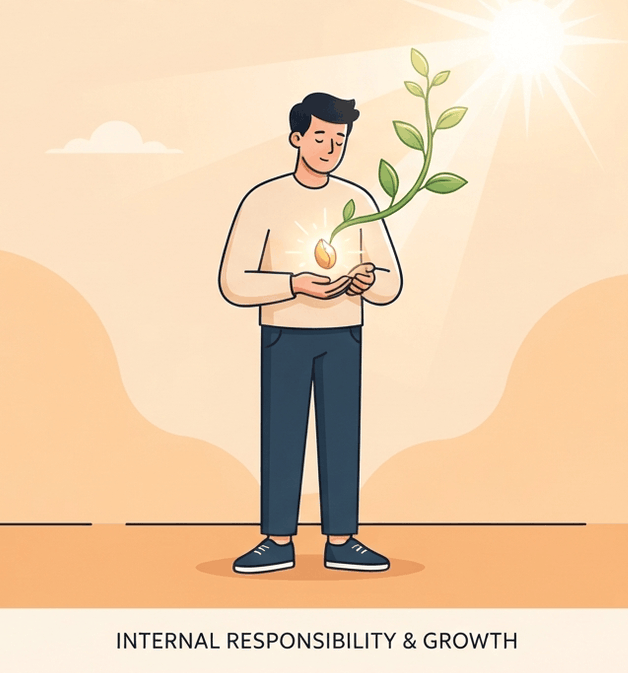 True self-development by Asgar Jafferali Dhanji While physical growth is easy to see, your mind, character, and professional capability evolve in ways that are much harder to gauge. If you look back five years, you are likely not the same person you were then. You are constantly evolving, but reaching the next level of your personal development requires conscious, deliberate action.
 Adl by Sheikh Fattah The concept of justice (‘Adl) occupies a foundational position in Islamic theology and ethics, serving as a lens through which the relationship between the Creator and creation is understood. In his insightful essay, “Adl – Justice and Decree,” originally published in the spring 1984 issue of the journal Nuradeen, Sheikh Fattah provides a concise yet profound exploration of this multi-faceted principle. Drawing extensively from the Holy Quran and the narrative traditions (ahadith) of the Ahlul Bayt – specifically Imam Ali and Imam Ja’far as-Sadiq—the author dismantles the complexities surrounding divine decree, free will, individual morality, and structural social justice. The text functions not merely as an academic exposition of theological doctrine, but as an ethical manifesto that bridges metaphysical truths with practical human responsibility.
 Eternal Life by Ayatullah Murtadha Mutahhari Ayatullah Murtadha Mutahhari’s Eternal Life is a concise but profound exploration of one of Islam’s central beliefs: that human life does not end with death. Drawing on the Qur’an, hadith, Islamic philosophy, and rational argument, Motahhari presents the Hereafter not as a distant abstraction but as the destination that gives meaning to every thought, choice, and action in this world. The book is especially valuable for readers seeking a clear, reasoned introduction to Islamic teachings on death, the soul, barzakh, resurrection, and eternal life.


Leave a Reply
You must be logged in to post a comment.