The writer, Hasnain Walji (Texas, USA) is an entrepreneur, investor, technologist, and community volunteer. Born in Moshi, Tanzania, he is a researcher, speaker, and writer involved in developing professional training and e-learning applications in nutrition and integrative healthcare. He is President of Integrative Quest, Inc which specializes in formulating and marketing probiotics. He has authored 26 books, all written from a naturopathic perspective, endorsed by the Natural Medicine Society of England, and translated into several languages including Spanish, French, German, Turkish, Hungarian, Portuguese, and Chinese. A contributor to several journals on environmental and Third World consumer issues, he was the founder and editor of The Vitamin Connection – an International Journal of Nutrition, Health and Fitness, and Healthy Eating. He has written a script for a six-part television series, The World of Vitamins. His institutional work for the Muslim community spans over 30 years, Since 1976 he has served the World Federation of KSI Muslim Communities, as Secretary-General, Vice-President, and then as President of this august body. He is also a founding director and the Current President of the Mulla Asgher Memorial Library and Resource Center (MARC) in Toronto. He has served as editor of Shia International and Living Islam Magazines and is a regular contributor to a number of Islamic Journals. He has traveled worldwide, lecturing and reciting Majlises in English, Urdu, and Gujarati.He has a special interest in the History of the Khojas and currently working on a Documentary called The Khojas – A journey of faith. He is also a founding director of a Social Justice Institute called Penmanship For Peace focusing on the plight of persecuted minorities including the Shia in Pakistan and part of a team compiling a volume on Shia Genocide in Pakistan. His passion is in increasing interfaith understanding to make this world a better place for his five grandchildren. Dr Walji established MARC. He served as the Secretary-General of WF. Dr Hasnian Walji served as the vice president of WF during Mullah’s leadership in the capacity of the president of the World Federation.
I
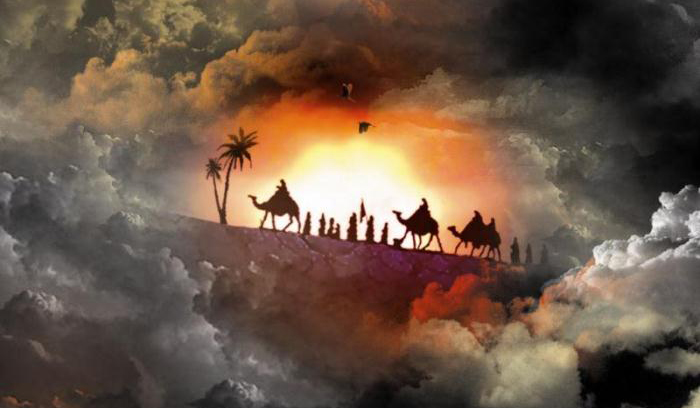
mam Hussein’s story is one of unparalleled courage. His stand against tyranny and injustice is timeless and universal, urging us to strive for justice and truth. His message transcends cultural and temporal boundaries, inspiring people from all walks of life to uphold these values.
In today’s interconnected world, we now have powerful tools at our disposal to spread Imam Hussein’s (AS) legacy far and wide. The internet connects us globally, and social media amplifies our voices.
Initiatives like “Who is Hussein?” exemplify the power of learning and inspiration. This global campaign sparks interest and understanding of Imam Hussein’s stand for justice, inspiring people across continents to reflect on these universal values. The success of “Who is Hussein?” blood drive highlights the significant impact of organized, widespread awareness efforts.
Community Engagements and Educational Workshops
Over the past three years, I’ve had the privilege of participating in Ashura workshops at Harvard Divinity School. These workshops, facilitated at a leading institution of higher learning, have resulted in profound academic discussions and reflections on Imam Hussein’s legacy, attracting over 600 participants each years from diverse faiths and cultures each year. This ongoing series demonstrates how Imam Hussein’s message can resonate within academic circles and beyond, fostering a deeper understanding and appreciation of his stand against injustice.
In our modern society, it is all the more important that we use contemporary means to amplify the message of truth and justice to the wider world. Technology and global networks provide unprecedented opportunities to amplify our message. Social media campaigns, online courses, webinars, and virtual conferences can reach audiences previously inaccessible. By leveraging these tools, we can ensure that Imam Hussein’s legacy is known in every corner of the world. The StandWithDignity organization in New Jersey has been continually spreading the message of Karbala to a wider audience, utilizing modern digital platforms to amplify this timeless message. We can create platforms for dialogue, education, and action that transcend geographical and cultural boundaries. The annual “Roses for Hussein” campaign during the Julus in Manhattan by the same group is a remarkable example. As New Yorkers received the roses they paused for a moment to view a 20-foot truck and a massive screen that depicted the story of Karbala pixel by pixel, creating meaningful messaging.
On the Islamicity platform, this Muharram we launched a series called “Witnesses to Humanity,” honouring 20 individuals who, like Imam Hussein, stood up against injustice at the cost of their lives or livelihood.
This series powerfully illustrated how the spirit of Karbala can raise awareness and inspire action. Our aim was to ensure that Imam Hussein’s message reached beyond the Shia community, touching every heart and mind. Consistent awareness initiatives involving local authorities and the police, like those brilliantly executed by Masjid-al-Hayy in Orlando, highlight the power of community engagement and collaboration.
Last year, at the Islamic Arts Society banquet in Houston, I had an opportunity to address a banquet hall brimming with over 700 people. Among them were political leaders, the city mayor, and a diverse, multi- faith audience. Taking advantage of the Alam that stood tall as an artifact on display, I recounted the heart-wrenching tale of Karbala. The audience sat in awe, deeply moved by the story of Imam Hussein’s (AS) unwavering principled leadership and his refusal to bow to the tyrant Yazid. Through this powerful narrative, we fostered a deeper awareness of the immense courage and steadfastness that defined Imam Hussein’s legacy.
Contains information related to marketing campaigns of the user. These are shared with Google AdWords / Google Ads when the Google Ads and Google Analytics accounts are linked together.
90 days
__utma
ID used to identify users and sessions
2 years after last activity
__utmt
Used to monitor number of Google Analytics server requests
10 minutes
__utmb
Used to distinguish new sessions and visits. This cookie is set when the GA.js javascript library is loaded and there is no existing __utmb cookie. The cookie is updated every time data is sent to the Google Analytics server.
30 minutes after last activity
__utmc
Used only with old Urchin versions of Google Analytics and not with GA.js. Was used to distinguish between new sessions and visits at the end of a session.
End of session (browser)
__utmz
Contains information about the traffic source or campaign that directed user to the website. The cookie is set when the GA.js javascript is loaded and updated when data is sent to the Google Anaytics server
6 months after last activity
__utmv
Contains custom information set by the web developer via the _setCustomVar method in Google Analytics. This cookie is updated every time new data is sent to the Google Analytics server.
2 years after last activity
__utmx
Used to determine whether a user is included in an A / B or Multivariate test.
18 months
_ga
ID used to identify users
2 years
_gali
Used by Google Analytics to determine which links on a page are being clicked
30 seconds
_ga_
ID used to identify users
2 years
_gid
ID used to identify users for 24 hours after last activity
24 hours
_gat
Used to monitor number of Google Analytics server requests when using Google Tag Manager


 The writer, Hasnain Walji (Texas, USA) is an entrepreneur, investor, technologist, and community volunteer. Born in Moshi, Tanzania, he is a researcher, speaker, and writer involved in developing professional training and e-learning applications in nutrition and integrative healthcare. He is President of Integrative Quest, Inc which specializes in formulating and marketing probiotics. He has authored 26 books, all written from a naturopathic perspective, endorsed by the Natural Medicine Society of England, and translated into several languages including Spanish, French, German, Turkish, Hungarian, Portuguese, and Chinese. A contributor to several journals on environmental and Third World consumer issues, he was the founder and editor of The Vitamin Connection – an International Journal of Nutrition, Health and Fitness, and Healthy Eating. He has written a script for a six-part television series, The World of Vitamins. His institutional work for the Muslim community spans over 30 years, Since 1976 he has served the World Federation of KSI Muslim Communities, as Secretary-General, Vice-President, and then as President of this august body. He is also a founding director and the Current President of the Mulla Asgher Memorial Library and Resource Center (MARC) in Toronto. He has served as editor of Shia International and Living Islam Magazines and is a regular contributor to a number of Islamic Journals. He has traveled worldwide, lecturing and reciting Majlises in English, Urdu, and Gujarati. He has a special interest in the History of the Khojas and currently working on a Documentary called The Khojas – A journey of faith. He is also a founding director of a Social Justice Institute called Penmanship For Peace focusing on the plight of persecuted minorities including the Shia in Pakistan and part of a team compiling a volume on Shia Genocide in Pakistan. His passion is in increasing interfaith understanding to make this world a better place for his five grandchildren. Dr Walji established MARC. He served as the Secretary-General of WF. Dr Hasnian Walji served as the vice president of WF during Mullah’s leadership in the capacity of the president of the World Federation.