
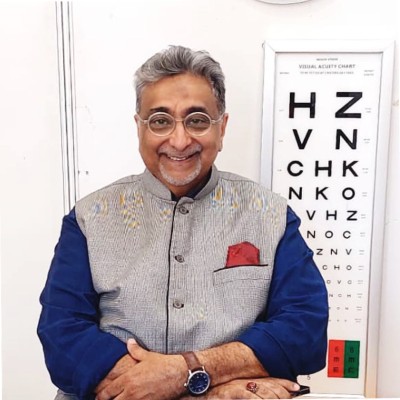
An optometrist running a successful eye care centre for almost 50 years now. He is a Board Member of the Optometric Council of Tanzania. Husseinali has been an active member of the community since his early days, taking a keen interest in the Ithnasheri Union and Jamaat affairs. He is fond of reading and writing.

Embracing Change and Fostering Future Leaders for Sustainable Community Growth
1979 -A year to Remember…
Some 45 years ago, I started my own small clinic in Dar es Salaam.
What I did not know then was that one evening would completely change the direction of my life.
During a Golden Crescent Group (GCG) gathering, I was unexpectedly given the opportunity to serve as Master of Ceremonies. The event was attended by many respected participants, including senior leaders of the DSM Jamaat.
That evening proved far more significant than I could ever have imagined.
My mentor, the late Marhum Rafik Somji (May Allah elevate his soul, Ameen), saw in a young man something beyond enthusiasm – confidence, communication skills, sincerity, and the ability to connect with people. Less than a week later, Rafikbhai approached me and encouraged me to become part of the newly established Ebrahim Haji Dispensary.
He recognised potential in someone with little experience, but with energy, commitment, and a genuine willingness to serve. That invitation became the true beginning of my institutional journey in community service.
Soon after, the Dar es Salaam Jamaat formed an Education Committee, and I had the privilege of serving as its secretary during the formative period when the vision of establishing our own school -Al Muntazir -first began to take shape.
Yet, in truth, the spirit of service had started much earlier. At the age of ten, I had already begun volunteering at Mehfile Asghary (AS), and later at Mehfile Abbas (AS) before leaving for the United Kingdom for further studies.
Community service, therefore, did not arrive suddenly in my life; it became part of my upbringing, my values, and ultimately, my personal philosophy.
I was young, eager to learn, hardworking, and fortunate to be surrounded by mentors and senior Jamaat members who believed in me. They guided me, nurtured my confidence, and helped shape my growth both personally and institutionally. I gradually became involved in various institutions and committees within the Jamaat structure over the years.
Those years taught me discipline, patience, governance, and above all, the value of collective responsibility. Senior leaders took deliberate care to mentor younger members, preparing them gradually for future responsibilities. Leadership transition was viewed as a process of continuity and institutional growth, not competition.
Having served the community in various capacities over the years, I was elected as Honorary Secretary of the Dar es Salaam Jamaat in 2022. I accepted the responsibility with sincerity, humility, and optimism, believing it would allow me to continue learning within an experienced leadership environment while contributing meaningfully to the stability and progress of our institutions.
I believed that, in time, leadership transition would evolve naturally and respectfully, enabling continuity, institutional stability, and the gradual nurturing of a future leader, with an optimism that responsibility within community institutions was something to be shared, developed, and passed forward with dignity and trust.
However, over time, I came to understand an important reality: a large and diverse community such as ours can only flourish when decisions are made collectively, inclusively, and through genuine consultation both within the Managing Committee and across the wider community.
When individuals are excluded from important discussions and institutional processes, confidence begins to weaken and trust gradually erodes. The issue therefore went far beyond personal disappointment; it raised deeper questions about leadership, institutional openness, inclusion, fairness, and the preservation of trust within the community.
Today, our community stands at a crossroads.
We frequently speak of renewal, yet too often we continue recycling the same ideas, structures, and circles of influence. In the 21st century, leadership cannot remain confined to a small group determining who is acceptable to serve.
It is time we encouraged independent thinking, broader participation, institutional openness, and a genuine culture of mentorship.
We must honestly ask ourselves:
Where is the younger generation?
Where are the emerging professionals?
Where are the fresh ideas?
Where is the leadership pipeline for the next generation?
A strong Jamaat must be guided by reason, tranquillity, fairness, and collective consultation free from clique and personality-driven agendas.
Leadership should never become ownership.
Nor can any institution truly thrive when sincere and capable individuals are sidelined. Volunteerism itself cannot survive in an environment where dignity, inclusion, and mutual respect are absent. Indeed, this remains the real concern for the future.
After more than forty years of service, I believe our community possesses immense potential. But that potential can only be realised through courage, openness, and a willingness to embrace younger members alongside experienced elders.
Elections should not merely be viewed as a contest of personalities; instead, they should be seen as an opportunity to renew vision, restore confidence, strengthen institutions, and prepare responsibly for the next generation.
True leadership is measured not by how tightly authority is controlled, but by how wisely responsibility is shared.
The future belongs to institutions that empower the next generation; we have to nurture it.
Recent posts
- True self-development
 True self-development by Asgar Jafferali Dhanji While physical growth is easy to see, your mind, character, and professional capability evolve in ways that are much harder to gauge. If you look back five years, you are likely not the same person you were then. You are constantly evolving, but reaching the next level of your personal development requires conscious, deliberate action.
 - Adl
 Adl by Sheikh Fattah The concept of justice (‘Adl) occupies a foundational position in Islamic theology and ethics, serving as a lens through which the relationship between the Creator and creation is understood. In his insightful essay, “Adl – Justice and Decree,” originally published in the spring 1984 issue of the journal Nuradeen, Sheikh Fattah provides a concise yet profound exploration of this multi-faceted principle. Drawing extensively from the Holy Quran and the narrative traditions (ahadith) of the Ahlul Bayt – specifically Imam Ali and Imam Ja’far as-Sadiq—the author dismantles the complexities surrounding divine decree, free will, individual morality, and structural social justice. The text functions not merely as an academic exposition of theological doctrine, but as an ethical manifesto that bridges metaphysical truths with practical human responsibility.
 - Eternal Life
 Eternal Life by Ayatullah Murtadha Mutahhari Ayatullah Murtadha Mutahhari’s Eternal Life is a concise but profound exploration of one of Islam’s central beliefs: that human life does not end with death. Drawing on the Qur’an, hadith, Islamic philosophy, and rational argument, Motahhari presents the Hereafter not as a distant abstraction but as the destination that gives meaning to every thought, choice, and action in this world. The book is especially valuable for readers seeking a clear, reasoned introduction to Islamic teachings on death, the soul, barzakh, resurrection, and eternal life.


