
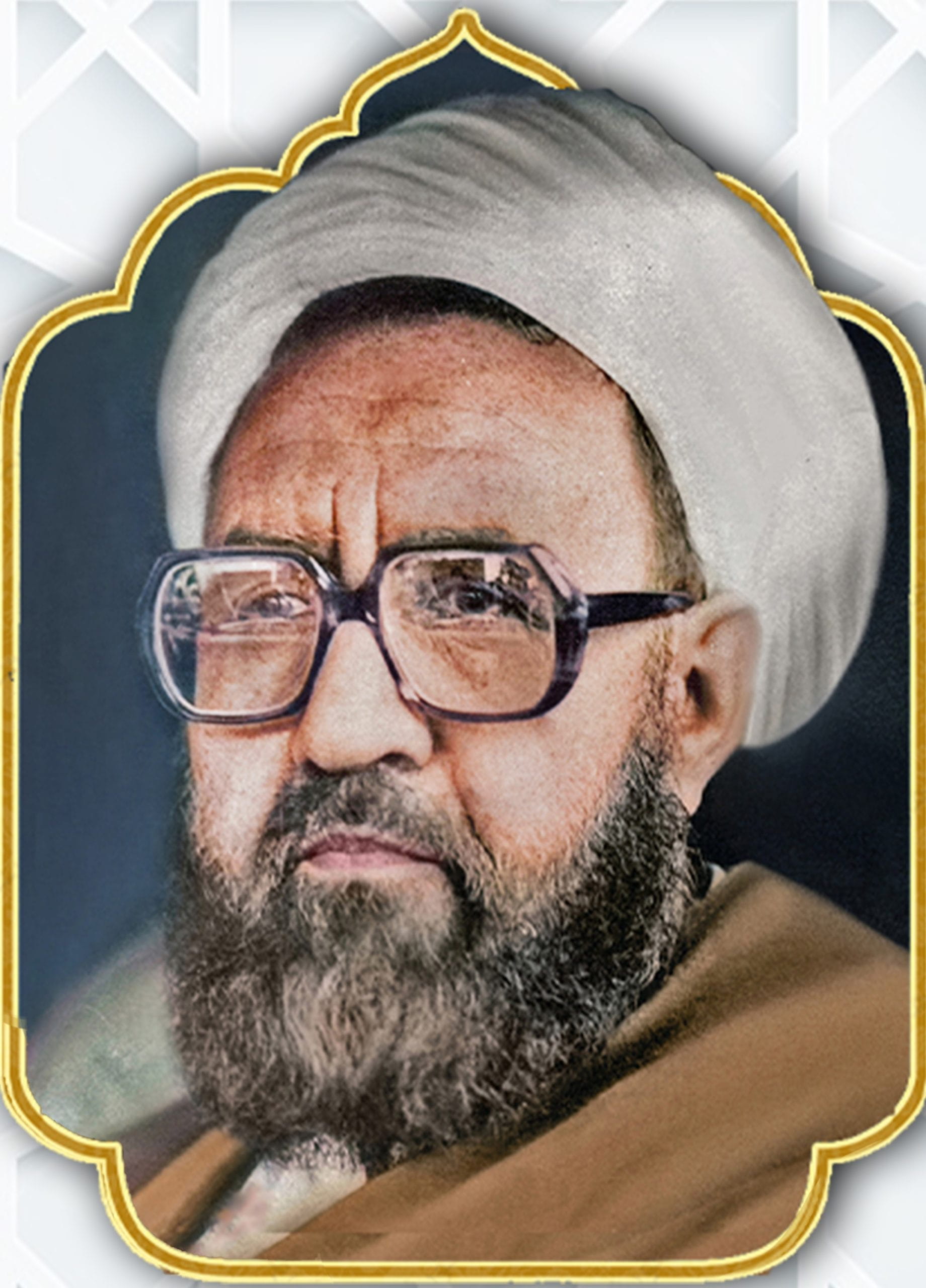
Ayatullah Murteza Mutahhari (1919–1979) was an Iranian Twelver Shia scholar, philosopher, lecturer, and influential author whose work explored Islamic thought, ethics, society, and the meaning of human life. A disciple of Ayatollah Ruhollah Khomeini, he taught philosophy at the University of Tehran for 22 years and was a co-founder of the Hosseiniye Ershad and the Combatant Clergy Association.
Mutahhari wrote extensively on topics including the immortality of the soul, resurrection, freedom, justice, education, and the relationship between religion and modern life. His accessible yet rigorous works – such as Man and Universe – continue to be widely read for their explanation of Islamic views on humanity’s purpose and eternal destiny.
He was assassinated in Tehran on 1 May 1979, shortly after the Iranian Revolution. In recognition of his enduring contribution as an educator, the anniversary of his death is observed in Iran as Teachers’ Day
Life Of The Next World

Ayatullah Murtadha Mutahhari’s Eternal Life is a concise but profound exploration of one of Islam’s central beliefs: that human life does not end with death. Drawing on the Qur’an, hadith, Islamic philosophy, and rational argument, Motahhari presents the Hereafter not as a distant abstraction but as the destination that gives meaning to every thought, choice, and action in this world. The book is especially valuable for readers seeking a clear, reasoned introduction to Islamic teachings on death, the soul, barzakh, resurrection, and eternal life.
Purpose and central argument
Motahhari begins with a bold claim: belief in the eternal life of the Hereafter is not a secondary religious idea, but one of the most fundamental principles of Islam. He places it immediately after belief in God’s oneness, noting that the Qur’an repeatedly links faith in Allah with faith in the Last Day. For him, this belief is essential because it answers the deepest human question: Why do we live, and where are we going?
The book’s central argument is that this world is not the whole of existence. Rather, it is the “first day” of human life, while the Hereafter is the “last day” – a life without end. Mutahhari argues that human deeds do not simply disappear after they are performed. They remain, take on spiritual reality, and shape a person’s eternal future. This makes earthly life morally serious: every action becomes a seed planted for the world to come.
Death as transition, not annihilation
One of the book’s strongest sections concerns the nature of death. Motahhari rejects the idea that death means complete extinction. Using the Qur’anic term tawaffi – often understood as “to receive in full” – he explains death as a transfer from one stage of existence to another. The body decays, but the human soul, the true centre of personality and consciousness, continues.
He supports this view through Qur’anic passages describing consciousness after death, including dialogue between souls and angels. For Mutahhari, these verses show that death is not a sudden disappearance into nothingness. It is a movement into a new realm of awareness, accountability, and experience.
This section is particularly effective because it combines scriptural evidence with philosophical reflection. Motahhari does not merely ask readers to accept the survival of the soul; he explains why the soul must be understood as more than the physical body.
Barzakh and resurrection
The book then examines barzakh, the intermediate realm between death and resurrection. Motahhari explains that human beings do not pass directly into final judgement. Instead, after death they enter a period of conscious life in which they experience the consequences of their earthly conduct.
He presents barzakh as a real and active stage, not a state of unconscious waiting. The righteous experience comfort and divine mercy, while those who lived experience regret and suffering unjustly. Mutahhari also discusses the value of prayers, charity, pilgrimage, and other good deeds performed on behalf of the deceased, showing that the bond between the living and the dead remains spiritually meaningful.
His treatment of resurrection is equally compelling. He describes it as a universal event involving all humanity and the transformation of the entire created order. The Qur’anic imagery of the heavens, earth, mountains, and seas undergoing radical change is used to show that resurrection is not simply the revival of individual bodies, but the birth of a new mode of existence.
The moral meaning of eternal life
The most practical and spiritually powerful part of the book is Mutahhari’s discussion of the connection between this life and the next. He repeatedly stresses that the Hereafter is not separate from present human responsibility. It is the harvest of what a person has cultivated in this world.
He uses the Prophet’s saying that “this world is the cultivation field of the next world” to make the point memorable. Just as one cannot sow thorns and expect to gather flowers, a person cannot build a life on injustice, selfishness, hypocrisy, or cruelty and expect eternal happiness. Faith, sincerity, good character, worship, and service to others are presented as the true provisions for the journey ahead.
Mutahhari also develops the idea of the “embodiment of deeds.” In the Hereafter, human actions will no longer be invisible memories; they will be encountered as realities. Good deeds will appear in beautiful and joyful forms, while evil deeds will become sources of pain and shame. This vivid teaching encourages readers to see morality not as a set of external rules, but as the construction of one’s eternal self.
Strengths of the book
The book’s greatest strength is its clarity. Mutahhari writes with the confidence of a scholar but the accessibility of a teacher. He explains difficult theological ideas through simple comparisons, Qur’anic references, and practical moral lessons. Readers do not need advanced philosophical training to follow his argument.
Another strength is the balance between faith and reason. While Motahhari affirms that belief in resurrection ultimately rests on divine revelation, he also presents rational arguments based on God’s justice and wisdom. He argues that a world in which good and evil receive no ultimate consequence would be morally incoherent. Eternal life, therefore, is not merely a comforting belief; divine justice must be fully realised.
The book is also spiritually uplifting. Rather than using fear alone to motivate belief, Motahhari emphasises hope, purpose, and the soul’s longing for closeness to God. His description of Paradise as a state in which human beings finally find what they have always inwardly sought is especially moving.
Limitations
Some readers may find the language dated in places, particularly where the author contrasts Islamic belief with “Western materialism.” The argument can occasionally become strongly polemical rather than purely explanatory. In addition, readers unfamiliar with Islamic terms such as barzakh, tawaffi, or akhira may need to pause and reflect on the terminology.
However, these limitations do not weaken the book’s overall value. Its core message remains clear, coherent, and relevant.
Final assessment
Eternal Life is a powerful introduction to the Islamic vision of death and the Hereafter. Motahhari succeeds in showing that belief in eternal life is not merely about what happens after death; it transforms how a person lives now. It gives moral weight to everyday choices, offers hope beyond loss, and presents human existence as a purposeful journey rather than a meaningless cycle of birth and decay.
For students of Islamic thought, spiritual seekers, and anyone reflecting on mortality and purpose, this book is a rewarding read. Its lasting message is simple but profound: this life is the journey, and eternal life is the destination.
Read Part 7: Eternal Life here
Recent posts
- Eternal Life
 Eternal Life by Ayatullah Murtadha Mutahhari Ayatullah Murtadha Mutahhari’s Eternal Life is a concise but profound exploration of one of Islam’s central beliefs: that human life does not end with death. Drawing on the Qur’an, hadith, Islamic philosophy, and rational argument, Motahhari presents the Hereafter not as a distant abstraction but as the destination that gives meaning to every thought, choice, and action in this world. The book is especially valuable for readers seeking a clear, reasoned introduction to Islamic teachings on death, the soul, barzakh, resurrection, and eternal life.
 - Marhum Abdulhussein Nurmohamed Kalyan
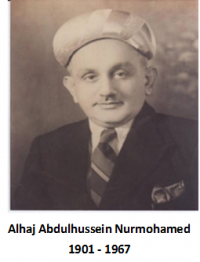 Marhum Abdulhussein Nurmohamed Kalyan was born in Zanzibar in 1901, into one of East Africa’s pioneering families. His father, Nurmohamed Kalyan, travelled from India to the Island of Zanzibar in 1880 at age ten, accompanied by his brothers Esmail Kalyan and Sachedina Kalyan. The Kalyan family stands among the first families to settle in East Africa, laying roots that would span generations across the region.
 - ThoughtCast #13
 ThoughtCast #11 Can the Quran interpret itself? by Hussein Dharsi


