
Identity
 The writer, Dr Hasnain Gulamali Walji (Texas, USA), is the Head of the Khoja Heritage Project of The World Federation of KSIMC. A lifelong educator and historian, he has dedicated over three decades to documenting the rich, socio-religious journey of the Khoja Shia Ithna-Asheri community. His landmark documentary, The Khojas – A Journey of Faith, traces this evolution across 600 years. Over the past 30 years, he has been collecting care Gujarati and Khoji history books housed at the Mulla Asghar Memorial Library in Toronto, which he co-founded with Raza-Aly Hiridjee.
Serving for almost half a century, he had been the former Secretary General, Vice President, and President of The World Federation. Professionally, he is a nutritionist and has also authored 26 books on naturopathic medicine, translated into several languages. As Executive Director of the United Global Initiative and a Trustee of the Jaffer Family Foundation, he leads the CodeGirls project, which empowers underprivileged girls to pursue technology careers. He has also been instrumental in facilitating the ‘Ashura at Harvard’ study track at Harvard Divinity School, promoting academic discourse on Shi’ism through the fully funded Family Foundation.
The psychology of echo chambers is simple: we prefer feeling right over being challenged. We cling to familiar opinions, seek out what confirms our beliefs, and avoid anything that disturbs our certainty. Social pressure keeps everyone aligned, while algorithms feed us more of the same – until repetition begins to sound like truth and dissent slowly disappears.
As the Khoja sage Jignasoo observed:
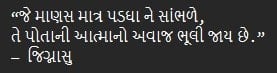
“One who listens only to echoes
eventually forgets the voice of his own soul.”
— Jignasoo
It is difficult to find a more accurate diagnosis of our cultural moment.
Echo Chambers and the Khoja Condition
Human beings crave certainty.
Khojas crave certified certainty, ideally blessed by an elder, circulated via WhatsApp, and garnished with the fragrant pickle of reet-rivaj.
But certainty has a dark side.
It builds comfortable walls around us.
Inside those walls, everything sounds familiar – even if nothing is true.
And that is how an echo chamber begins: not as a conspiracy, but as a comfort.
We don’t hear new ideas. We only hear the padded, repeated, domesticated versions of our own.
Eventually, as Jignasoo warns, we forget the sound of our own soul — because it has been drowned under layers of inherited noise.
Youth Identity: A Crisis of Air, Not Faith
Khoja youth inherit a beautiful history.
But history, when wrapped in plastic, becomes a museum artefact. Not a living narrative.
Our young people are raised in a world moving at the speed of algorithms,
while their community often moves at the speed of “let’s form a committee.”
They want meaning, not maintenance.
Understanding, not recitation.
Dialogue, not directives.
But the echo chamber doesn’t like questions.
It whispers:
- “Don’t think too much.”
- “Don’t ask why.”
- “Don’t disturb the elders.”
And so, the youth walk in circles – caught on the merry-go-round of history,
same music, same horses, same dizzying repetition – mistaking motion for progress.
Pirzada Qasim’s Mirror
It is here that Pirzada Qasim’s melancholy verse hits with surgical accuracy:
“‘Asr-e Hadhir ?h?n?ht? raha hai mujhe,
aur mai magan hu,
‘ahd-e raftagan ki ‘azmaton ke darmiyan.’”
The present age keeps searching for me,
while I remain lost, absorbed in the grandeur of days long past.
This is not just poetry. It is a sociological X-ray of the diaspora mind.
The world calls us forward – yet we remain dazzled by our memories of Zanzibar, Dar-es-Salaam, Karimabad, Lindi, Mombasa… golden ages polished by nostalgia.
But youth cannot live in the shimmering glow of someone else’s yesterday.
Sociology of the Khoja Echo Chamber
Our echo chamber is not accidental.
It was engineered by migration trauma.
From Gujarat to East Africa to the West, each relocation demanded:
- unity
- conformity
- predictability
- sameness
Safety became our virtue. Sameness became our theology.
And when a community worships sameness long enough,
it slowly forgets how to think differently.
This is why Jignasoo’s warning feels prophetic.
The Price of a Closed Circle
A society doesn’t collapse because of silence.
It collapses because its silence is filled with recycled noise.
And so:
- Tradition becomes a script, not a story.
- Ritual becomes muscle memory, not meaning.
- Identity becomes inheritance, not intention.
Youth leave not because they reject faith.
They leave because we leave no space to breathe.
Ask a teenager:
“Why don’t you come to the program?”
Watch their eyebrow perform Olympic gymnastics.
They already know the answer:
- Same speaker.
- Same topic.
- Same aunty counting attendance like FBI surveillance.
We call it “community engagement.” They call it “Groundhog Day with samosas.”
A Path Forward
We don’t burn the echo chamber.
We open a window.
We don’t reject reet-rivaj.
We explain it.
We don’t fear questions.
We cultivate them —
just as our ancestors did when they embraced a new faith centuries ago,
courageously, not cautiously.
Youth don’t need rebellion.
They need resonance.
Not noise.
But meaning.
Not echoes.
But voice.
A Closing Thought
If our grandparents could cross oceans in wooden dhows, surely we can cross the small distance between inherited certainty and earned understanding.
Between past grandeur and present responsibility.
Between the noise of echoes and the rediscovery of the soul’s own voice.
As Jignasoo reminds us: those who listen only to echoes will forget who they are.
The task ahead is simple – and sacred:
Help our youth hear themselves again.
==========
More from this Writer
Latest posts
- True self-development
 True self-development by Asgar Jafferali Dhanji While physical growth is easy to see, your mind, character, and professional capability evolve in ways that are much harder to gauge. If you look back five years, you are likely not the same person you were then. You are constantly evolving, but reaching the next level of your personal development requires conscious, deliberate action.
 - Adl
 Adl by Sheikh Fattah The concept of justice (‘Adl) occupies a foundational position in Islamic theology and ethics, serving as a lens through which the relationship between the Creator and creation is understood. In his insightful essay, “Adl – Justice and Decree,” originally published in the spring 1984 issue of the journal Nuradeen, Sheikh Fattah provides a concise yet profound exploration of this multi-faceted principle. Drawing extensively from the Holy Quran and the narrative traditions (ahadith) of the Ahlul Bayt – specifically Imam Ali and Imam Ja’far as-Sadiq—the author dismantles the complexities surrounding divine decree, free will, individual morality, and structural social justice. The text functions not merely as an academic exposition of theological doctrine, but as an ethical manifesto that bridges metaphysical truths with practical human responsibility.
 - Eternal Life
 Eternal Life by Ayatullah Murtadha Mutahhari Ayatullah Murtadha Mutahhari’s Eternal Life is a concise but profound exploration of one of Islam’s central beliefs: that human life does not end with death. Drawing on the Qur’an, hadith, Islamic philosophy, and rational argument, Motahhari presents the Hereafter not as a distant abstraction but as the destination that gives meaning to every thought, choice, and action in this world. The book is especially valuable for readers seeking a clear, reasoned introduction to Islamic teachings on death, the soul, barzakh, resurrection, and eternal life.
Writers Panel | A Simple Thought | Obituaries | Ziarat Ashura | Islamic Calendar | Facebook | Instagram



Leave a Reply
You must be logged in to post a comment.