
The writer is an LLB with International Relations student at Middlesex University in Mauritius, with a strong interest in community engagement and youth development. Beyond his academic pursuits, he has actively contributed to various initiatives, including serving with the Youth Development Committee (YDC) in Arusha, representing Arusha in the Africa Youth Network (AYN), and participating in ABSOC Mauritius. Through these experiences, Ammar has developed valuable leadership, collaboration, and communication skills while strengthening his commitment to community service and positive social impact.
Engaging the Next Generation Responsibly

A student in Tanzania can learn coding from a professor in Massachusetts without ever setting foot in an American university. A teenager in Kenya can learn graphic design from a teacher in Seoul without ever attending a formal class. And a young programmer from Zanzibar can develop an application using knowledge freely shared by developers worldwide. What a wonderful world we live in, where we are no longer confined by geography, and with just a smartphone, one can access academic journals, databases, digital libraries and all other sorts of information. This groundbreaking transformation over the past few decades is often called the Knowledge revolution and offers extraordinary opportunities with endless potential.
Yet this very same technology, which has a lot to offer, can shape the way we view the world and what we see. Algorithms across various social media platforms monitor the content that we engage with and what keeps us online, after which it recommends more of what is relevant. This personalisation can make learning very efficient and accessible, but when it applies to beliefs, it places us in an echo chamber. This means we constantly stick to what we know, or rather what we prefer to know, and it helps us avoid coming into contact with that which we do not want to learn.
Historically, access to knowledge, especially in specialised fields, meant being physically present within institutions that possessed these resources. The internet has altered this relationship, whereby online resources have enabled youth to become independent learners, having access to an expansive array of information and resources. This, however, poses a new problem: what information and knowledge deserve our attention? The knowledge revolution has solved the problem of access but not attention.
In his book On Liberty, John Stuart Mill presents the idea that people benefit intellectually when they confront opposing opinions to those that they hold. Even if it is engagement with an incorrect opinion, it would help us understand why we believe what we believe. This is why we are often encouraged to study other religions as Muslims, even though we know we are on the path of truth, because it allows us to encounter differing perspectives and test our own understanding.
Keeping up with the knowledge revolution requires youth to go one step beyond being digitally literate and making sure they are intellectually independent. Knowing how to operate technology is no longer sufficient; one has to be able to understand the environment created by this technology and question it. A digitally literate person knows how to search, while an intellectually independent person knows what to search for. The former can identify information while the latter asks who produced it and what evidence supports it. A step further is a genuine learner who would seek information that would challenge their own assumptions and be willing to investigate it. We need to stop placing this responsibility on governments, schools and tech companies and start playing our part. We need to diversify our sources, read beyond personalised feeds and constantly ask “What am I not seeing?”. The greatest achievement within this knowledge revolution is not the freedom to find information; it is the freedom to find what we were never looking for.
Recent posts
- True self-development
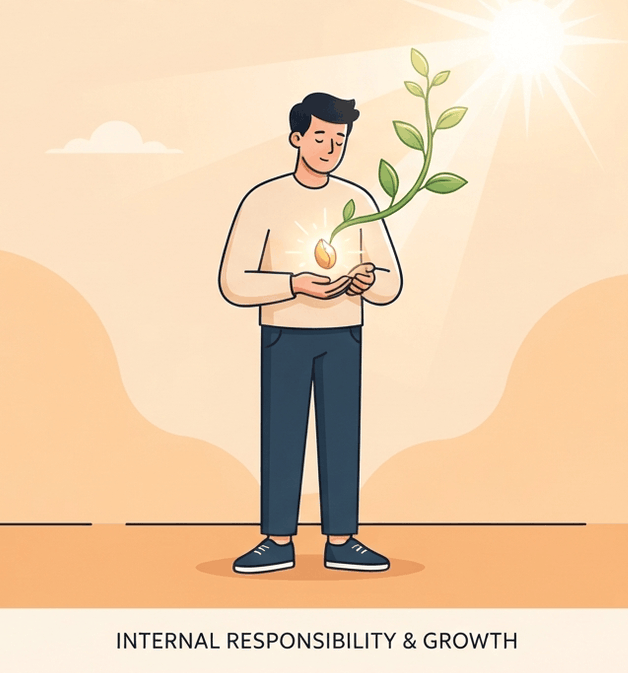 True self-development by Asgar Jafferali Dhanji While physical growth is easy to see, your mind, character, and professional capability evolve in ways that are much harder to gauge. If you look back five years, you are likely not the same person you were then. You are constantly evolving, but reaching the next level of your personal development requires conscious, deliberate action.
 - Adl
 Adl by Sheikh Fattah The concept of justice (‘Adl) occupies a foundational position in Islamic theology and ethics, serving as a lens through which the relationship between the Creator and creation is understood. In his insightful essay, “Adl – Justice and Decree,” originally published in the spring 1984 issue of the journal Nuradeen, Sheikh Fattah provides a concise yet profound exploration of this multi-faceted principle. Drawing extensively from the Holy Quran and the narrative traditions (ahadith) of the Ahlul Bayt – specifically Imam Ali and Imam Ja’far as-Sadiq—the author dismantles the complexities surrounding divine decree, free will, individual morality, and structural social justice. The text functions not merely as an academic exposition of theological doctrine, but as an ethical manifesto that bridges metaphysical truths with practical human responsibility.
 - Eternal Life
 Eternal Life by Ayatullah Murtadha Mutahhari Ayatullah Murtadha Mutahhari’s Eternal Life is a concise but profound exploration of one of Islam’s central beliefs: that human life does not end with death. Drawing on the Qur’an, hadith, Islamic philosophy, and rational argument, Motahhari presents the Hereafter not as a distant abstraction but as the destination that gives meaning to every thought, choice, and action in this world. The book is especially valuable for readers seeking a clear, reasoned introduction to Islamic teachings on death, the soul, barzakh, resurrection, and eternal life.