
A digital marketing specialist and an Educator-cum-Trainer, he has been involved in community organisations and matters from a young age, and through his writings, continues to speak of social and cultural reform to this day.
His community service began in his youth, when he pioneered the Brain of the Madrasah Quizzes in Dar es Salaam and Nairobi, co-founded and chaired the Debating Society, edited Knowledge Magazine, and served as a Public Speaking trainer. In his middle years, he took on the roles of Secretary of the AFED Tabligh Committee, Secretary of the Haydari Madrasah, Secretary of the Nairobi Jamaat, and member of the Education Board. More recently, he has served as a member of the SSC Committee, Federation Samachar Editor, and member of the CRC.
He is also the founding moderator of this forum (1996).
The Soul’s Awareness and Connection to the Living
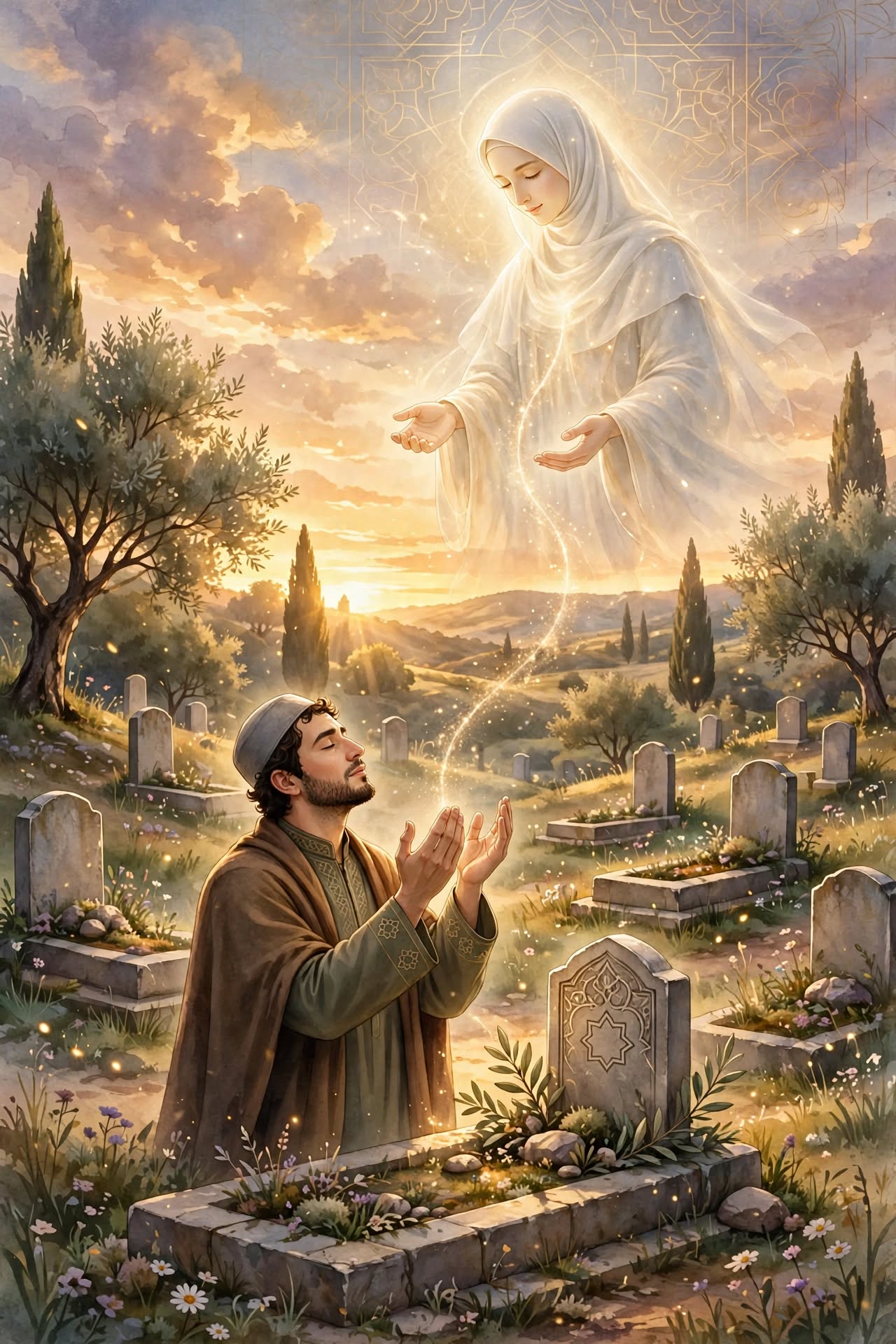
In Shi’i theology, death is not annihilation but transition. The soul leaves the body and enters the Barzakh, an intermediate realm between worldly life and Resurrection. The Qur’an uses barzakh only three times, but only in 23:100 does it carry this meaning: “behind them is a barrier until the Day they are resurrected” 1.
The central question is whether the soul remains aware, perceives the living, and retains any connection across that barrier. The Shi’i answer, drawn from the Qur’an and the narrations of the Prophet and the Imams, is that the dead are separated and cannot return, yet they are not unconscious. Their awareness is real, but it belongs to another order of existence and is governed by Allah.
The locus classicus is Surah al-Mu’minun: “Until, when death comes to one of them, he says, ‘My Lord, send me back, that I might do righteousness in that which I left behind.’ No! It is but a word he is saying; and behind them is a barrier until the Day they are resurrected” (23:99-100).
The soul is conscious enough to speak, regret, and plead, yet the barrier prevents return and further worldly action. Other verses show awareness as differentiated. Martyrs are not to be called dead: “Rather, they are alive, but you perceive [it] not” (2:154), and “they are alive with their Lord, receiving provision” (3:169).
‘Allamah Tabataba’i, in Al-Mizan, rejects reducing this life to mere lasting fame. He argues that the Qur’an describes a real life: martyrs rejoice in what Allah has given them and rejoice for those who have not yet joined them (3:170).
The phrase “but you do not perceive” means the living do not perceive that life by their senses, not that it is unreal. Conversely, Pharaoh’s people are “exposed to the Fire, morning and evening,” before the Day of Judgment (40:46), which, by some accounts, is treated as a penalty in Barzakh before the final punishment.
Shi’i hadith gives the Barzakh a more concrete shape through the grave.
Imam al-Sadiq was asked, “What is Barzakh?” He replied: “It is the grave, from the day a person dies, till Judgment Day.”
‘Allamah Majlisi explains that after burial, two interrogating angels arrive, the soul is returned in a way that permits questioning, and the person is then left in comfort or chastisement. Shaykh al-Mufid likewise reports that after death, two angels named Munkar and Nakir question the person about his Lord, Prophet, faith, and Imam; if he answers truthfully, he is delivered to the angels of bliss, and if he falters, to the angels of punishment.
Al-Mufid adds a rational point: questioning presupposes a living, understanding being, so God quickens the dead for questioning. Shi’i sources describe a subtle Barzakhi body, non-material yet with shape and size, like the forms seen in dreams. This is not a return to earthly biology; it is a mode of life suited to the intermediate world.
The Shi’i practice of talqin presupposes hearing. Before burial, and again after the grave is filled, beliefs are recited near the deceased’s ear: Allah’s oneness, Muhammad’s prophethood, and the imamate of ‘Ali and the Imams. Note that the very order to recite talqin suggests the dead must hear; otherwise it would be useless.
A Shi’i answer on Al-Islam.org states this directly: after death, people remain able to hear, “that’s why Talqeen is recited with loud voice to make the dead person listen,” and the angels then question them. The connection runs in both directions.
Al-Kafi reports from Imam al-Sadiq that a believing deceased person visits his family, sees what he loves, and has what he dislikes hidden from him; some visit every Friday, others according to their deeds. Imam al-Kazim is asked whether the dead visit their families, and replies yes: weekly, monthly, or yearly according to rank, in the form of a fine bird that alights on their walls, rejoicing if they are well and grieving if they are in hardship. Another narration says the believer comes with Allah’s permission, observes his family, and hears their speech. Majlisi adds that when the living visit graves, the dead become aware of it and are pleased by their company, and feel lonely again when they leave.
Visiting graves is therefore recommended in Shi’i practice. And this is grounded in Qur’an and hadith: 4:64 is read as permitting believers to come to the Prophet and ask him to seek forgiveness for them, without limiting the verse to his lifetime; 22:32 connects visiting the graves of great religious personalities to venerating God’s sacraments; and 9:84, by forbidding standing at hypocrites’ graves, implies standing at believers’ graves is good.
Shi’i hadith adds that the dead become familiar with visitors and miss them if visits stop. Shi’i tafsir also gives the Prophet and Imams a distinctive ongoing awareness. Qur’an 9:105 says: “Allah will see your work, and His Messenger and the believers.”
Shi’i exegetes identify “the believers” with ‘Ali and the Imams after him. A narration from Imam al-Sadiq in Al-Kafi states that people’s deeds are presented to the Prophet every morning, and Imam al-Rida tells a visitor that his deeds are presented to him every morning and night. This does not make the Imams independent of Allah; their knowledge is by His permission and presentation.
It does mean that in Shi’i thought, the connection between this world and Barzakh is not merely occasional. The Prophet and Imams remain witnesses over the community.
Because the dead hear and live in Barzakh, Shi’i theology permits tawassul to the dead: seeking an intermediary through the Prophet and Imams after death so that they ask Allah to respond to one’s requests. The Qur’anic basis is 5:35, “seek the means of recourse to Him,” and 4:64, read in its unqualified form as covering both the Prophet’s lifetime and after his death. Tawassul is acceptable only if there is life in Barzakh and the dead can hear the living.
Asking for intercession is not worship: worship belongs to Allah alone, and the intermediary is not believed to act independently. Tawassul is therefore distinct from shirk, which would treat a creature as an independent lord. The connection is not only from Barzakh to this world. The living can benefit the dead. Imam al-Sadiq is reported to have said: “All the prayers, fasts, pilgrimage, charity, good acts and prayers reach the dead and help and reward them.” Another narration says that whoever does a good deed for a deceased person, Allah doubles his reward and benefits the deceased through it. In Shi’i practice, this includes prayer, charity, grave visits, and performing missed prayers and fasts on behalf of the deceased.
In the Shi’i reading, then, life in the Barzakh is conscious, differentiated, and relational, but also bounded. The soul does not return to resume worldly life, cannot change its record by new deeds of its own, and does not possess independent power over the living. Yet it hears in the ways Allah permits, is questioned, recognises visitors, visits its family, anticipates Paradise or punishment, and receives the benefit of prayer and charity. The Prophet and Imams remain witnesses over deeds by His presentation. That combination explains why Shi’i practice centres on talqin, grave visitation, supplication for the dead, charity on their behalf, and tawassul through the Ahl al-Bayt: not summoning or worshipping the dead, but maintaining a God-governed connection across two different modes of life.
Recent posts
- Life in the Barzakh
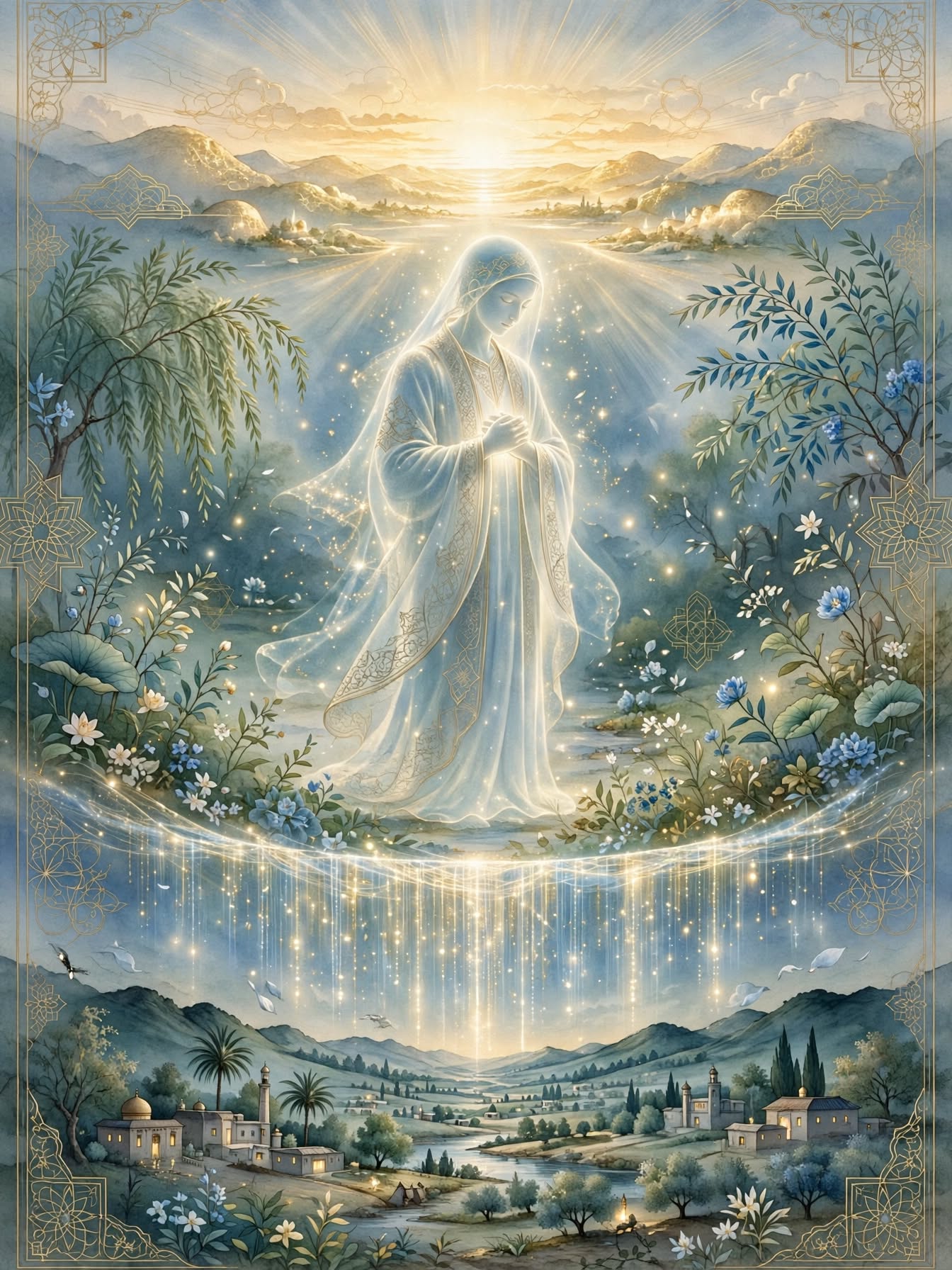 Life in the Barzakh by Mohamedarif Suleman In Shi’i theology, death is not annihilation but transition. The soul leaves the body and enters the Barzakh, an intermediate realm between worldly life and Resurrection. The Qur’an uses barzakh only three times, but only in 23:100 does it carry this meaning: “behind them is a barrier until the Day they are resurrected” 1.
- The Preparation for the Next Destination
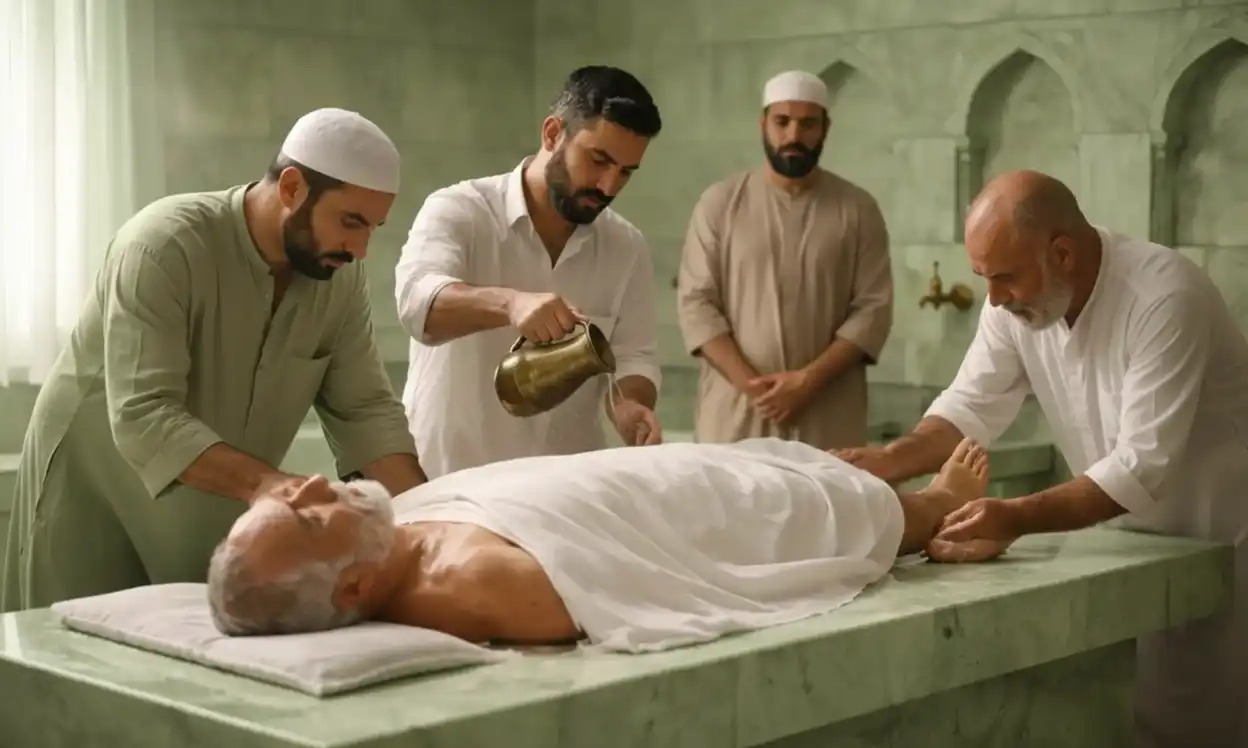 The Preparation for the Next Destination by Tasnim Asgharali Jaffer As the corpse lay upon the mat, entered into the room from the funeral services, a man. Immediately, he went towards the corpse and knelt beside it, moving it slightly so that the feet of the corpse faced the Qibla. Then, he went towards the head, and closed the half-open eyes gently, before bringing out of his pocket a piece of a long rag and placed it below the jaws of the dead man, tying it firmly upon its head such that the jaws remained firmly shut and in place. Thereafter, he turned towards its limbs, placing them all correctly, straight. The two big toes of the feet, he tied them together as well. Thereafter, he took out a booklet from his front pocket and started reciting the verses of the Holy book as he sat to wait for the arrival of his assistants as well.
- Fear Allah, not people´s judgement
 Fear Allah, not people´s judgement by Alhajj Khalil Mohammed Hassan Champsi Sometimes, the way others see us quietly begins to shape the way we live. Their gaze becomes a mirror in which we measure ourselves; their perceptions become questions we carry; their judgements become shadows over choices that were once our own.