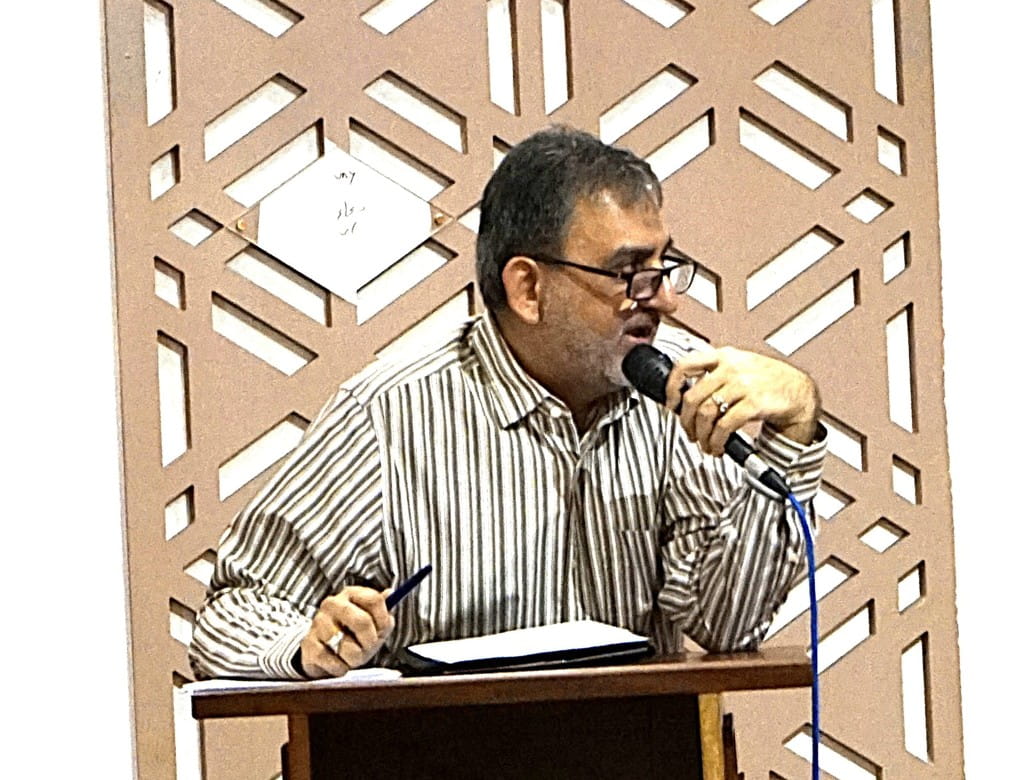
A digital marketing specialist and an Educator-cum-Trainer. He has involved himself in community organisations and matters from a young age, and through his writings, continues to speak of social and cultural reform to this day. He is also the founding moderator of this forum (1996).
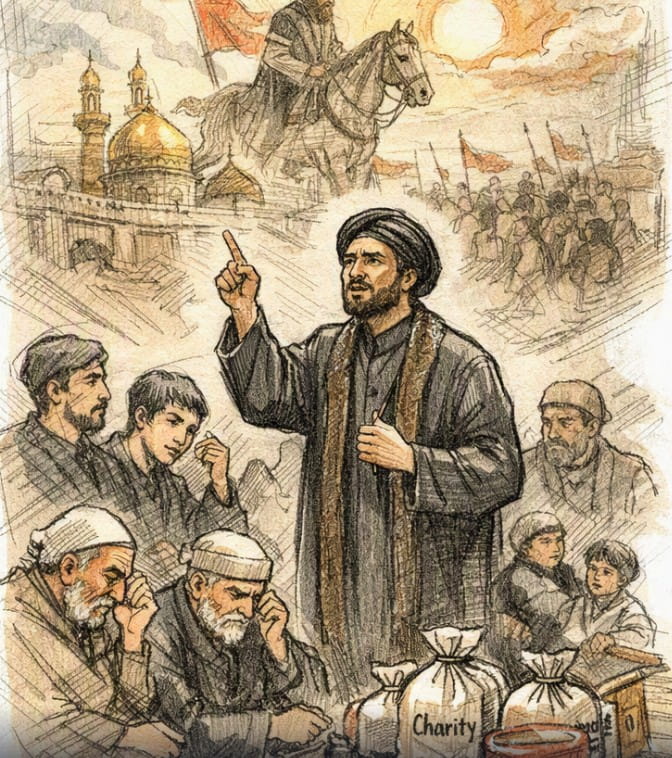
How Preachers Can Evaluate the Effectiveness of Their Teachings
When we gather in the majlis, we are entering a sacred space that was always meant to be more than ritual. It is a place of remembrance, yes, but also a place of transformation. The Prophet Muhammad, peace be upon him and his family, taught that gatherings of remembrance must also be gatherings of knowledge. The majlis is meant to awaken our hearts, sharpen our minds, and strengthen our resolve. Yet we must ask ourselves: are our majlises truly fulfilling this prophetic mission, or have they become limited to emotion without change?
The purpose of the majlis is to revive faith, to guide our morals, and to bind our community together. It is meant to be a school where the lessons of Imam Husayn’s sacrifice are translated into daily life. But too often, we see gatherings where tears flow yet no new understanding is gained, where stories are repeated without being connected to the challenges of today, and where our youth leave uninspired because their realities are not addressed. If the majlis does not increase our knowledge, then we are not reviving the prophetic pursuit – we are reducing it to ritual.
This is why we must speak of measuring real change. A sermon is not successful simply because it moves emotions; it is successful when it moves lives. We must look at the fruits of these gatherings. Do we see more Qur’an recitation, more charity, more justice in our communities? Do people leave saying, “I learned something that changed my life”? Are our young men and women inspired to lead initiatives that embody Husayn’s values in their schools, workplaces, and neighbourhoods? Do our majlises give birth to projects – feeding the poor, educating children, fighting corruption – that extend the spirit of Karbala into the world around us? These are the signs that knowledge has taken root.
For preachers, this means moving beyond eloquence to enlightenment. Every sermon must weave Qur’anic lessons into the narrative, must connect the stand of Karbala to modern struggles against oppression and poverty, must invite dialogue and reflection, and must end with clear moral guidance. The majlis should not be a monologue but a conversation, a place where questions are welcomed, and wisdom is shared. And preachers themselves must continue to learn, refining their skills, adapting their methods, and ensuring that their words remain relevant to the needs of the time.
Imagine a majlis where the story of Imam Husayn’s defiance against tyranny inspires a youth group to study social justice and launch a campaign against corruption. Imagine families leaving determined to feed the hungry and educate the children. Imagine communities where every majlis becomes a fountain of wisdom, producing leaders, thinkers, and servants of humanity. This is what it means to revive the prophetic pursuit of knowledge: to transform grief into guidance, remembrance into resilience, and mourning into moral courage.
Majlis is not just about remembering the past. It is about shaping the present and preparing the future. If we measure real change through knowledge, behaviour, youth involvement, and long-term outcomes, then our gatherings will remain powerful institutions of guidance. Let us honour Imam Husayn not only with our tears, but with our pursuit of knowledge. Let us make our majlises schools of transformation, where every sermon plants a seed of wisdom, justice, and faith.
Respected preachers, your mission is not merely to stir emotions but to illuminate minds and awaken the spirit of inquiry that lies at the heart of Islam. To truly revive the prophetic pursuit of knowledge, your sermons must become bridges between faith and understanding. Each narrative should be infused with Qur’anic wisdom, allowing the divine message to guide reflection and action. The story of Karbala must be presented not as a distant tragedy but as a living lesson – one that speaks to the injustices, corruption, and moral decay of our own time. The majlis should evolve into a dynamic space of dialogue, where questions are welcomed and discussion deepens comprehension. Every story shared must carry a purpose, ending with a clear moral insight and practical direction that listeners can apply in their daily lives. And above all, preachers must remain lifelong students themselves – continuously refining their craft, embracing new methods of communication, and adapting their approach to meet the needs of a changing world. In doing so, they will transform the majlis from a place of ritual remembrance into a vibrant institution of learning, reflection, and renewal.
When we gather in the majlis, we enter a sacred space that was never meant to be confined to ritual alone. It is a place of remembrance, yes, but also a place of transformation, a living classroom where the prophetic pursuit of knowledge is revived. The Prophet Muhammad, peace be upon him and his family, taught that gatherings of remembrance must also be gatherings of learning. The majlis, therefore, is not only a place for tears but a university of the soul, designed to inspire spiritual growth, provide moral guidance, and strengthen community bonds. Yet we must ask ourselves honestly: are our majlises fulfilling this mission, or have they become limited to emotion without enlightenment?
Too often, we see gatherings where tears flow but no new understanding is gained, where stories are repeated without being connected to the challenges of today, and where our youth leave uninspired because their realities are not addressed. If the majlis does not increase our knowledge or change our behaviour, then we are not reviving the prophetic mission – we are reducing it to ritual. The shortfalls are clear: an overemphasis on emotion, repetition without relevance, neglect of youth engagement, and a lack of accountability in measuring whether sermons lead to real change.
So how do we measure effectiveness? We must look at the fruits of these gatherings. Real change is seen when sermons inspire concrete actions – more prayers, more charity, more justice in our communities. It is seen when people leave saying, “I learned something that changed my life.” It is seen when youth are inspired to lead initiatives that embody Husayn’s values in their schools and workplaces. It is seen when majlises give birth to projects – feeding the poor, educating children, fighting corruption – that extend the spirit of Karbala into the world around us. These are the signs that knowledge has taken root.
For preachers, this means moving beyond eloquence to enlightenment. Every sermon must weave Qur’anic lessons into the narrative, must connect the stand of Karbala to modern struggles against oppression and poverty, must invite dialogue and reflection, and must end with clear moral guidance. The majlis should not be a monologue but a conversation, a place where questions are welcomed, and wisdom is shared. And preachers themselves must remain lifelong students – refining their craft, embracing new methods of communication, and adapting their approach to meet the needs of a changing world.
This is how we revive the prophetic pursuit of knowledge – by ensuring that every majlis is not only a place of mourning, but a place of learning, a place of growth, and a place of change.
Of course, challenges remain. Some communities resist change, preferring traditional formats. Smaller centres may lack resources for surveys or structured feedback. And preachers must balance tradition with innovation, respecting cultural expectations while introducing new methods. Yet these challenges must be faced with courage, for the prophetic pursuit of knowledge demands that we strive for growth.
Majlis is not just about remembering the past. It is about shaping the present and preparing the future. If we measure real change through knowledge, behaviour, youth involvement, and long-term outcomes, then our gatherings will remain powerful institutions of guidance. Let us honour Imam Husayn not only with our tears, but with our pursuit of knowledge. Let us make our majlises schools of transformation, where every sermon plants a seed of wisdom, justice, and faith. This is how we revive the prophetic pursuit of knowledge – by ensuring that every majlis is not only a place of mourning, but a place of learning, a place of growth, and a place of change.
Recent posts
- True self-development
 True self-development by Asgar Jafferali Dhanji While physical growth is easy to see, your mind, character, and professional capability evolve in ways that are much harder to gauge. If you look back five years, you are likely not the same person you were then. You are constantly evolving, but reaching the next level of your personal development requires conscious, deliberate action.
 - Adl
 Adl by Sheikh Fattah The concept of justice (‘Adl) occupies a foundational position in Islamic theology and ethics, serving as a lens through which the relationship between the Creator and creation is understood. In his insightful essay, “Adl – Justice and Decree,” originally published in the spring 1984 issue of the journal Nuradeen, Sheikh Fattah provides a concise yet profound exploration of this multi-faceted principle. Drawing extensively from the Holy Quran and the narrative traditions (ahadith) of the Ahlul Bayt – specifically Imam Ali and Imam Ja’far as-Sadiq—the author dismantles the complexities surrounding divine decree, free will, individual morality, and structural social justice. The text functions not merely as an academic exposition of theological doctrine, but as an ethical manifesto that bridges metaphysical truths with practical human responsibility.
 - Eternal Life
 Eternal Life by Ayatullah Murtadha Mutahhari Ayatullah Murtadha Mutahhari’s Eternal Life is a concise but profound exploration of one of Islam’s central beliefs: that human life does not end with death. Drawing on the Qur’an, hadith, Islamic philosophy, and rational argument, Motahhari presents the Hereafter not as a distant abstraction but as the destination that gives meaning to every thought, choice, and action in this world. The book is especially valuable for readers seeking a clear, reasoned introduction to Islamic teachings on death, the soul, barzakh, resurrection, and eternal life.


