
The writer was born and raised in Kenya and moved to the UK in 1972 for higher studies before settling in the USA in 1980. He began serving the Muslim community of Allentown, Pennsylvania, in 1985, holding leadership roles including Program Organiser, Secretary, Assistant Treasurer, and Vice President. In 1996, he was elected President of the SIJPA, where he led the building of the Al-Ahad Islamic Centre.
A committed advocate for social justice and interfaith harmony, he serves on the boards of the Lehigh Valley Justice Institute, the Lehigh Conference of Churches, the Interfaith Action Committee, End Mass Incarceration, and Imamia Medics International, and is Vice Chair of the Lehigh Valley ACLU. He is also active in local election campaigns.
He writes on social justice through his blog and in national and global newspapers, and is the author of Inspirational Insight. He is married and a father of two boys and two girls.
Prophet Muhammad Day
The Noble Prophet – by the resident alim Syed Rizwan Rivi.
When speaking about Prophet Muhammad (SAW) in English, we commonly refer to him as the “Holy Prophet.” This expression has become so familiar that we rarely stop to ask whether it actually reflects the terminology used for him in the Qur’an and Islamic tradition.
A more appropriate expression, I believe, is “the Noble Prophet.”
The reason is simple: in our Islamic vocabulary, the Prophet (SAW) is described as Rasool-e Akram – the Noble, Most Honoured, or Most Generous Messenger.
We do not ordinarily find the title Rasool-e Muqaddas being used for him in our foundational Islamic texts.
The distinction becomes even more meaningful when we consider the history of the word muqaddas in modern Muslim languages.
In Persian and Urdu Christian terminology, muqaddas is commonly used to translate the English word “holy.”
Thus, one encounters expressions such as Holy Gospel/Bible and “Holy Mary. These are well-established Christian expressions for their sacred scripture and revered personalities.
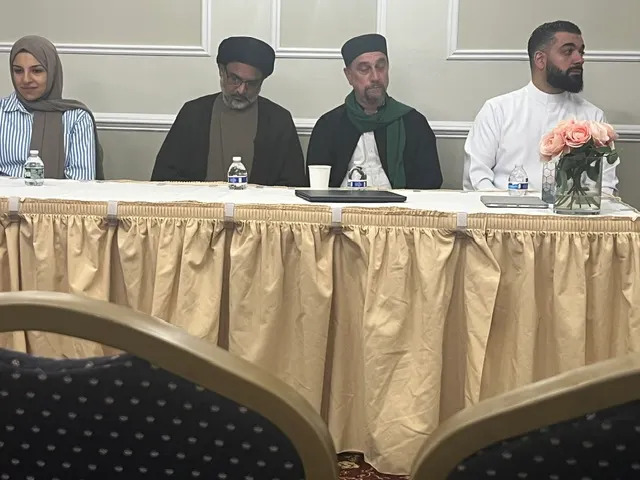
Dr Sami Catovic, Executive Director of NBIC, recounted the story of Jaafar ibn Abi Talib speaking on behalf of the Muslim refugees to the Christian King of Abyssinia about the Prophet Muhammad.
When the early Muslims fled persecution in Mecca and sought refuge in Abyssinia, the Quraysh sent Amr ibn al-Aas and Abdull?h ibn Abi Rabiah to persuade the Negus to return them.
The Negus refused to surrender the Muslims without hearing their side.
Jaafar ibn Abi Taalib spoke on behalf of the Muslim refugees. According to the famous account in the S?rah of Ibn Is?aaq, he described their condition before Islam: they had been a people of ignorance who worshipped idols, ate carrion, committed immoral acts, severed family ties, and mistreated their neighbours.
Then, he said, Allah sent them “a Messenger from among us” whose lineage, truthfulness, trustworthiness, and chastity they knew.
The Messenger called them to worship Allah alone, speak the truth, fulfil trusts, maintain family relations, treat neighbours well, and abandon bloodshed and immorality.
The Negus then asked Jaafar whether he could recite something revealed to their Prophet. Jaafar replied yes and recited from Surat Maryam, describing Mary and the miraculous birth of Jesus.
The Christian king was deeply moved. According to the traditional account, the Negus wept until his beard became wet, and his bishops also wept until their scriptures became wet with their tears.
He then declared that what Muhammad (SAW) had brought and what Jesus had brought came from the same source.
The Quraysh delegation, however, tried once more. They told the Negus that the Muslims held an unacceptable belief concerning Jesus.
The next day the Muslims were summoned again. Jaafar courageously stated their belief:
“We say concerning him what our Prophet (SAW) brought to us: he is the servant of Allah, His messenger, His spirit, and His word which He cast unto Mary, the Virgin, the pure.”
The Negus reportedly picked up a small stick from the ground and said that Jesus, the son of Mary, did not exceed what Ja?far had said by even the measure of that stick. He then granted the Muslims his protection.
Recent posts
- The Preparation for the Next Destination
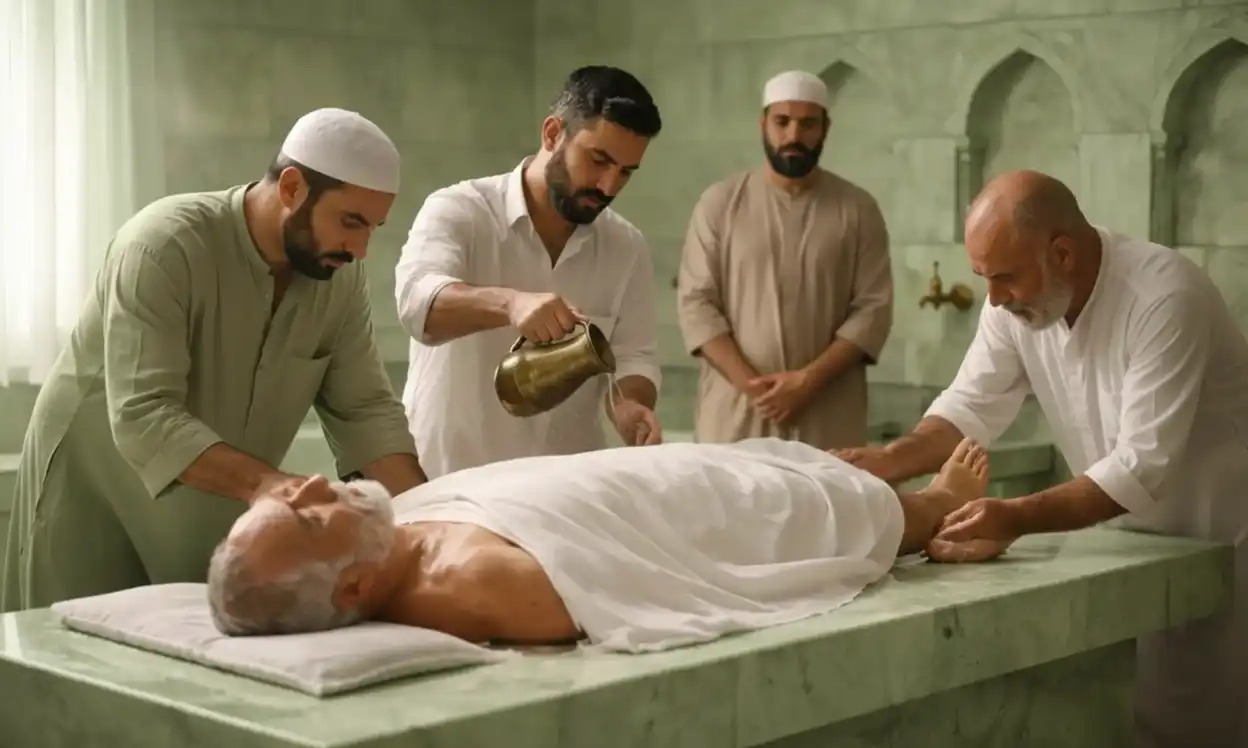 The Preparation for the Next Destination by Tasnim Asgharali Jaffer As the corpse lay upon the mat, entered into the room from the funeral services, a man. Immediately, he went towards the corpse and knelt beside it, moving it slightly so that the feet of the corpse faced the Qibla. Then, he went towards the head, and closed the half-open eyes gently, before bringing out of his pocket a piece of a long rag and placed it below the jaws of the dead man, tying it firmly upon its head such that the jaws remained firmly shut and in place. Thereafter, he turned towards its limbs, placing them all correctly, straight. The two big toes of the feet, he tied them together as well. Thereafter, he took out a booklet from his front pocket and started reciting the verses of the Holy book as he sat to wait for the arrival of his assistants as well.
- Fear Allah, not people´s judgement
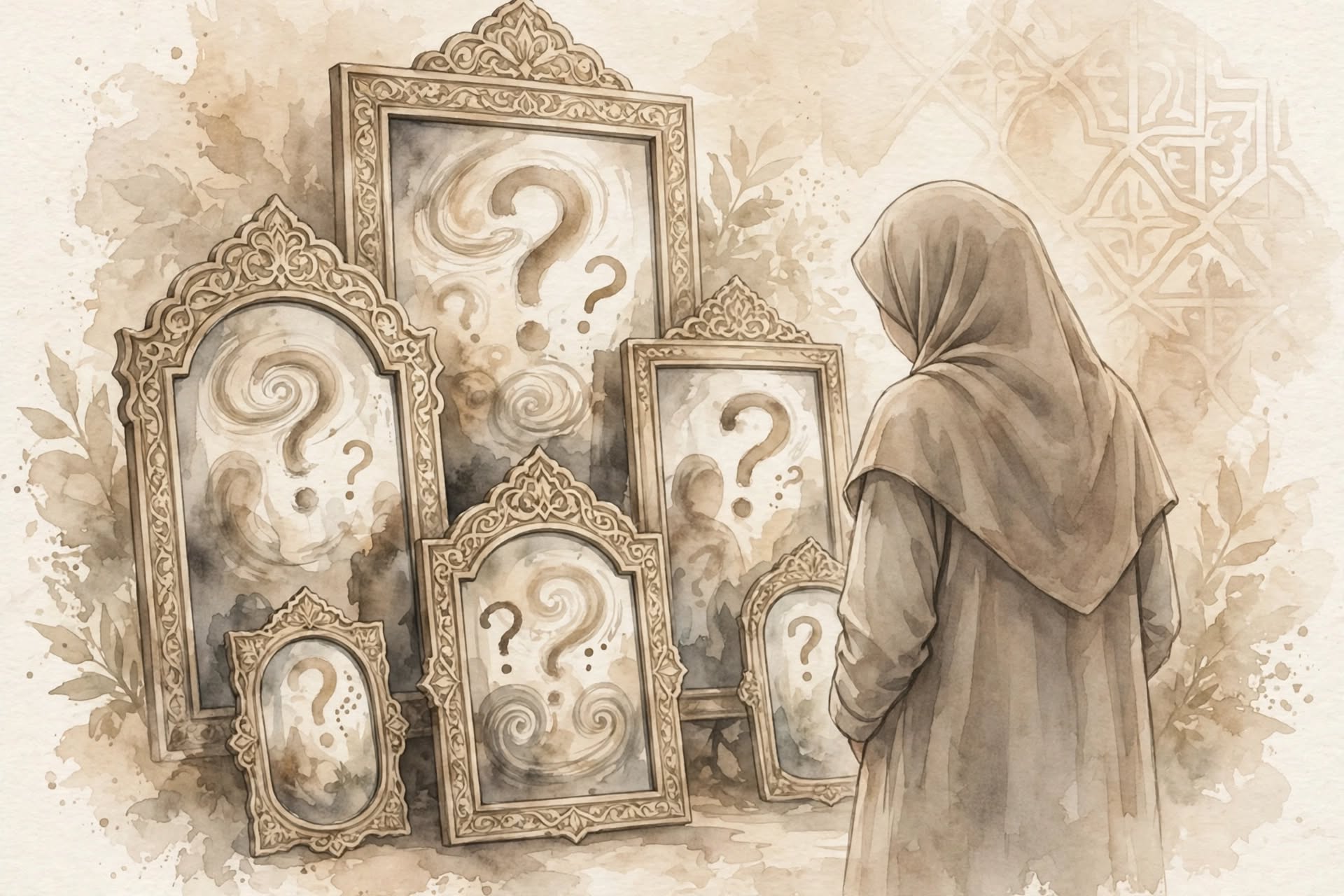 Fear Allah, not people´s judgement by Alhajj Khalil Mohammed Hassan Champsi Sometimes, the way others see us quietly begins to shape the way we live. Their gaze becomes a mirror in which we measure ourselves; their perceptions become questions we carry; their judgements become shadows over choices that were once our own.
- A Garden Without End
 A Garden Without End Review of Chapter 23 of Bihar Al-Anwaar, Volume 8 Author – The Allama Muhammad Baqir Al Majlisi Chapter 23 of Volume 8 of Bihar Al-Anwaar – the encyclopaedic hadith compendium compiled by the Safavid-era scholar Allama Muhammad Baqir al-Majlisi – is entitled “The Paradise and Its Bounties, and Allah Sustaining Us and the Rest of the Believers, Its Houries, Its Castles, Its Joys and Its Cheerfulness.” Spanning roughly one hundred and eighty pages (pp. 106–285), it sits in the volume between the harrowing chapter on the Bridge over Hell and the chapter on the Fire itself, and it functions as a deliberate counterweight: where the preceding chapters describe terror, this one unfolds an almost luxuriant catalogue of delight. Reading it straight through is a peculiar experience – less a sustained argument than a long, liturgical inventory of a world the believer is invited to imagine as already in existence. This review summarises the chapter’s main themes and offers a few observations on its literary and theological texture.