
The writer is the Head of the Khoja Heritage Project of The World Federation of KSIMC. A lifelong educator and historian, he has dedicated over three decades to documenting the rich, socio-religious journey of the Khoja Shia Ithna-Asheri community. His landmark documentary, The Khojas – A Journey of Faith, traces this evolution across 600 years. Over the past 30 years, he has been collecting care Gujarati and Khoja history books housed at the Mulla Asghar Memorial Library in Toronto, which he co-founded with Raza-Aly Hiridjee.
Serving for almost half a century, he had been the former Secretary General, Vice President, and President of The World Federation. Professionally, he is a nutritionist and has also authored 26 books on naturopathic medicine, translated into several languages. As Executive Director of the United Global Initiative and a Trustee of the Jaffer Family Foundation, he leads the CodeGirls project, which empowers underprivileged girls to pursue technology careers. He has also been instrumental in facilitating the ‘Ashura at Harvard’ study track at Harvard Divinity School, promoting academic discourse on Shi’ism, fully funded through the Jaffer Family Foundation.
Karbala as history, grief as awakening, and remembrance as responsibility.
As Muharram comes near once again, the heart begins to hear an old summons.
Not simply the sound of mourning. Not merely the rhythm of majlis, marsiya, noha, and tears. These are sacred forms. They carry memory. They gather the community. They teach the next generation how to remember.
But beneath them is something deeper.
A question.
A wound.
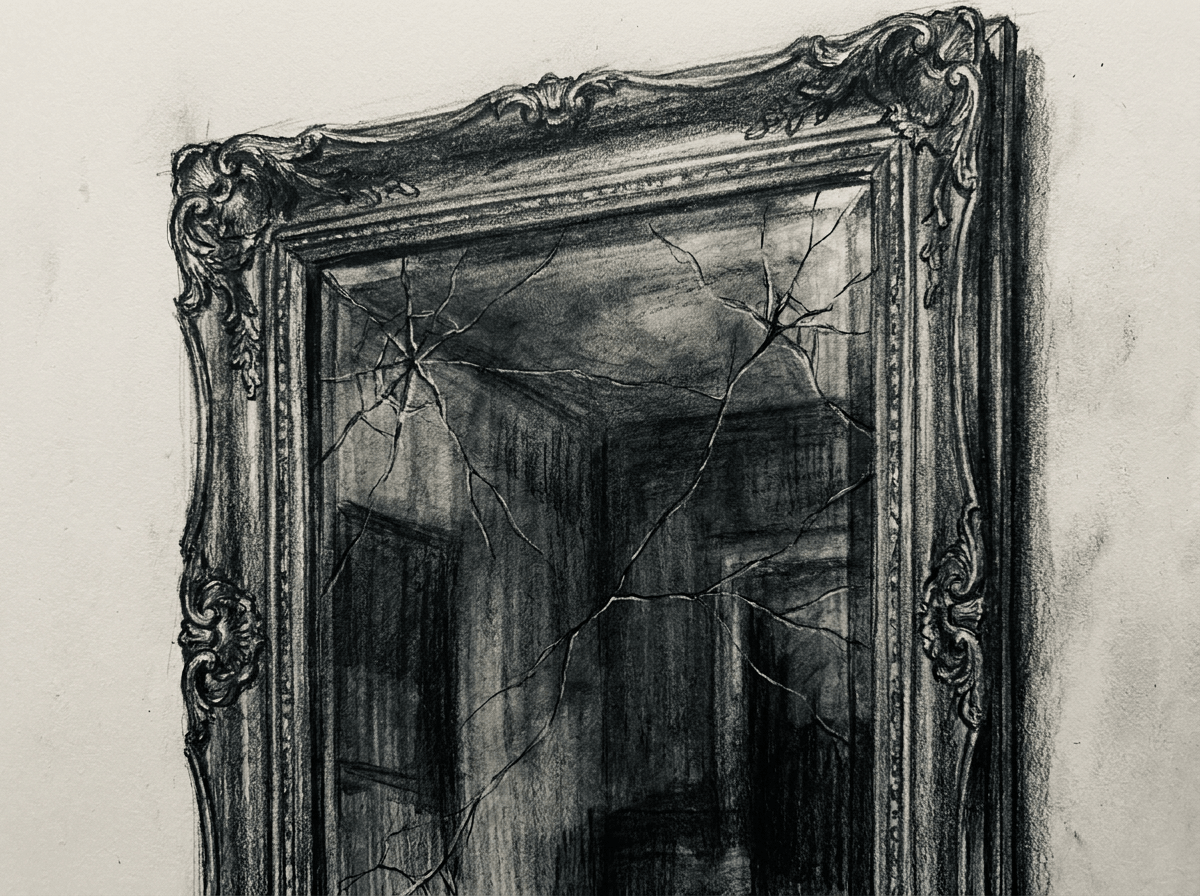
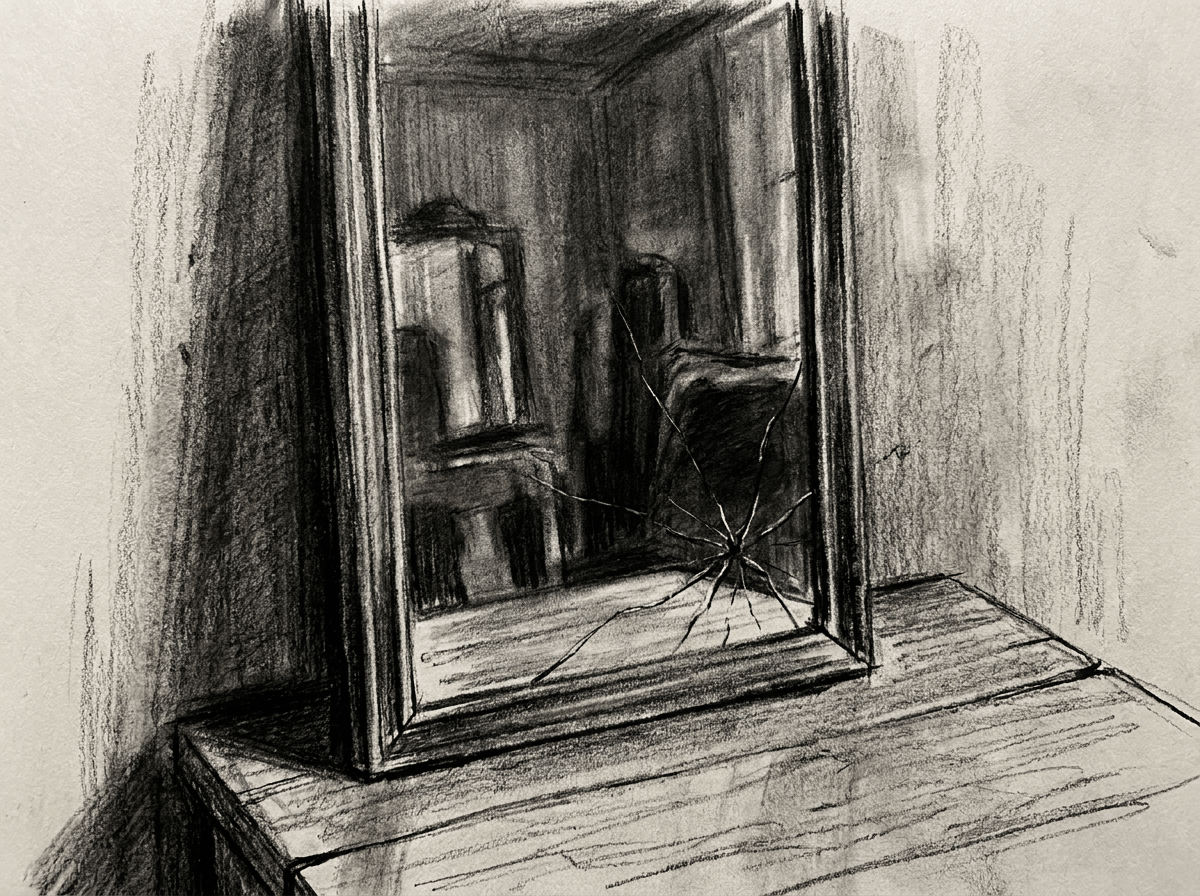
A mirror.
Every year, Karbala returns.
Or perhaps Karbala never left.
We are the ones who drift away. We become busy. We become practical. We become respectable. We learn to make peace with compromise. We develop careful language for silence: strategy, balance, timing, neutrality. Humanity has always known how to give cowardice a respectable vocabulary.
Then Muharram arrives.
And the desert speaks again.
It asks whether we still know the difference between life and survival. Between patience and surrender. Between peace and silence. Between faith and performance.
Karbala is not only a tragedy remembered.
It is a truth repeated.
It returns because power still demands obedience. It returns because injustice still dresses itself in religious language, political necessity, and public order. It returns because the innocent are still denied water, safety, dignity, and voice while the comfortable debate procedure.
And so we return to Husayn (as).
Not because he needs our tears.
We need his clarity.
Iqbal and the Meaning of Grief
Allama Iqbal’s poem “Falsafa-e-Gham,” included in Bang-e-Dara, offers one of Urdu poetry’s most profound meditations on sorrow.
For Iqbal, grief is not mere sadness. It is not an emotional collapse. It is not a weakness. It is not the opposite of life.
Grief is part of life’s hidden architecture.
He writes:
Hai alam ka surah bhi juzv-e-kitab-e-zindagi
The chapter of sorrow, too, belongs to the book of life.
This line could have been written at the edge of Karbala.
Karbala is the chapter of pain in the book of Islam. But it is not a chapter of defeat. It is the chapter that teaches every other chapter how to be read.
Without Karbala, courage becomes theory.
Without Karbala, justice becomes a slogan.
Without Karbala, love becomes sentiment.
Without Karbala, faith risks becoming decoration.
Karbala gives these words blood.
Iqbal does not ask us to run from grief. He asks us to understand it. Sorrow, for him, is not merely something that wounds the heart. It is something that reveals the heart.
If Iqbal gives us the inner meaning of grief, Karbala gives us its most searing historical form.
The grief of Karbala is not passive sorrow. It is not an annual sadness safely contained within a calendar. It is not mourning emptied of meaning.
Karbala refuses to become harmless.
It will not allow tears to replace responsibility.
Grief as Awakening
Iqbal’s philosophy of grief is not gloomy. He does not romanticise pain. He does not pretend that wounds are beautiful in themselves.
He says something more difficult.
Sorrow can deepen the human being.
Pain, when joined with faith and insight, can polish the soul.
He writes:
Hadisat-e-gham se hai insan ki fitrat ko kamaal
Ghaazah hai aa?na-e-dil ke liye gard-e-malaal
Through the shocks of grief, human nature reaches perfection; the dust of sorrow becomes polish for the mirror of the heart.
Dust should cloud a mirror. Iqbal makes it polish one.
That is Karbala.
The grief of Karbala does not darken the heart. It cleans it. It removes the fog of comfort. It allows us to see tyranny as tyranny, courage as courage, and faith as something greater than inherited belonging.
To remember Husayn(as) is to polish the mirror of conscience.
And sometimes the mirror shows us things we would rather not see: our compromises, our silence, our selective outrage, our habit of mourning the dead while ignoring the living.
Iqbal then gives grief wings
Tair-e-dil ke liye gham shahpar-e-parwaaz hai
Raaz hai insaan ka dil, gham inkishaaf-e-raaz hai
For the bird of the heart, grief is the wing of flight; the human heart is a secret, and grief is the unveiling of that secret.
Grief does not have to pull the heart downward. When joined to truth, it gives the heart wings.
Some grief imprisons. Some grief turns bitter. Some grief collapses inward. The grief of Karbala is different because it does not end in despair. It rises into witness.
The sorrow of Husayn(as) reveals what lies hidden within us.
Do we love truth only when it is safe?
Do we stand with justice only when it is popular?
Do we mourn oppression in history while explaining it away in the present?
Karbala reveals to us ourselves.
That is why living truth-tellers are harder to honour than dead martyrs. The dead ask for memory. The living ask for courage.
The Sorrow of Karbala
Karbala was not a performance.
Imam Husayn(as) did not stand in Karbala to create a culture of sadness. He stood to defend truth from being swallowed by power. He stood so that Islam would not become the private property of rulers. He stood so that obedience to corruption would not be mistaken for loyalty to religion.
At the heart of Karbala was Husayn’s refusal.
He refused bay‘ah to a ruler whose authority would have emptied Islam of its moral soul. He refused humiliation. He refused false legitimacy. He refused to let silence become complicity.
The sorrow of Karbala is unlike ordinary sorrow.
Ordinary grief mourns what has been lost.
Karbala mourns what must never be lost again.
It mourns Ali Asghar, the infant whose thirst exposed the cruelty of power without disguise.
It mourns Abbas, who reached the water but would not drink while the tents of Husayn remained thirsty.
It mourns Qasim, the young seeker of martyrdom, whose youth became testimony.
It mourns Ali Akbar, whose beauty and courage carried the echo of the Prophet’s household.
It mourns the companions who chose loyalty when survival was still available.
It mourns Husayn, who stood almost alone, yet was never morally outnumbered.
But Karbala’s grief does not end at the grave.
It becomes a protest.
It becomes memory.
It becomes conscience.
It becomes that strange fire which allows the oppressed to say: we may be crushed, but we will not be owned.
This is why the grief of Husayn(as) has survived empires.
Armies passed. Thrones collapsed. Palaces became dust.
But the name of Husayn (as) remained.
Yazid won the battlefield.
Husayn (as) won the human heart.
That is the verdict history could not overturn.
Love Does Not Die
Iqbal then turns from grief to love. For him, grief is not separate from love. Grief is love continuing after separation.
He writes:
Ishq kuch mahboob ke marne se mar jaata nahin
Ruh mein gham ban ke rehta hai, magar jaata nahin
Love does not die when the beloved dies; it remains in the soul as grief, but it does not depart.
This is the secret of Karbala.
Imam Husayn (as) was killed. But love for Husayn did not die.
It entered the soul of the ummah as grief.
It remained there.
It refused to leave.
It became poetry.
It became resistance.
It became a civilisation of memory.
But love that remains only an emotion is incomplete.
Love must become recognition.
To love Husayn (as) is to recognise what Husayn stood for. To mourn Husayn is to understand what he refused.
He refused humiliation.
He refused corruption dressed as authority.
He refused to bless injustice with silence.
He refused to allow religion to become the servant of power.
Because love does not die.
It becomes a responsibility.
The Martyrs Are Not Gone
Iqbal writes:
Marne waalon k? jabin roshan hai is zulmaat mein
Jis tarah taare chamakte hain andheri raat mein
The brows of the dead shine in this darkness,
just as stars glitter in the dark night.
This is the heart of Karbala’s immortality.
Their bodies were left on the sands, but their meaning entered the conscience of the world. Husayn was separated from us in time, but never in truth.
He remains present wherever power is challenged by principle.
Wherever grief refuses to become despair.
Wherever memory becomes resistance.
Wherever the weak refuse to sell their dignity for survival.
Karbala is not locked in 680 CE. It is not safely buried in the past, where it can inspire us without disturbing us.
Karbala is a living measure.
It asks every generation: where do you stand when truth is costly?
This is why the martyrs are not gone.
They are lights in our darkness.
Ali Asghar shines as innocence.
Abbas shines as loyalty.
Qasim shines as youthful devotion.
Ali Akbar shines as beauty offered to truth.
The companions shine as chosen fidelity.
And at the centre of that night stands Husayn,(as) the lamp that refuses extinction.
Their deaths are not endings.
They are stars.
Muharram and Us
So as Muharram comes near once again, we must ask ourselves: what are we preparing for?
A season of remembrance?
Yes.
A season of tears?
Yes.
A season of loyalty?
Yes.
But also a season of moral examination.
What does it mean to mourn Husayn(as) in a world still full of thirst?
The thirst of Karbala was not only the thirst of bodies. It was the thirst of justice in a world that had forgotten shame.
What does it mean to beat our chests if our hearts remain unmoved by suffering?
What does it mean to curse Yazid while quietly imitating his logic: power first, truth later?
Karbala does not permit us to mourn thirst in the desert while ignoring thirst at our doorstep.
Karbala speaks wherever children are denied water, safety, and shelter. It speaks wherever the oppressed are humiliated by power. It speaks wherever truth-tellers are silenced. It speaks wherever religious language is used to protect authority instead of purifying it. It speaks wherever communities mourn beautifully but act timidly.
Muharram is not a performance of grief.
It is a discipline of conscience.
It teaches us that sorrow is not the opposite of strength. Sometimes sorrow is the only honest form strength can take.
To weep for Husayn is not to escape the world.
It is to re-enter it with clearer eyes.
The tears of Karbala are not a private emotion alone. They are public memory. They are resistance against forgetfulness. They are the refusal to let tyranny control the story.
Iqbal gives us the philosophy.
Karbala gives us the proof.
Zaynab (SA): When Grief Became Speech
No reflection on Karbala’s grief is complete without Sayyida Zaynab (sa) If Husayn showed how to die for truth, Zaynab(sa) showed how to carry truth after devastation.
Karbala did not end on the battlefield.
That is one of the great mistakes in reading Karbala. The swords fell silent, but the message had not ended. It moved to Kufa. It moved to Damascus. It entered the courts of Ibn Ziyad and Yazid. It stood before power without apology.
Zaynab(sa) transformed captivity into testimony.
Her grief did not silence her.
It sharpened her.
In Kufa, she spoke to people who had failed to stand when standing mattered. In Damascus, she confronted the arrogance of power and refused to let Yazid define the meaning of Karbala.
This is the power of sacred grief.
It does not merely remember.
It interprets.
It judges.
It exposes.
It preserves truth.
Yazid could parade captives. He could display victory. He could mistake force for triumph, as rulers have done in every age when power confuses itself with truth.
But Zaynab(sa) gave Karbala its voice.
Without Zaynab(sa) Karbala might have been buried by the empire.
With her, the empire was buried by Karbala.
The Sorrow That Refuses to Die
Iqbal helps us understand why grief can be sacred.
Karbala shows us what sacred grief looks like in history.
It is grief with direction.
Grief with dignity.
Grief with moral fire.
Grief that does not collapse into despair, but rises into witness.
The world tells us to avoid sorrow. Karbala tells us to listen to the right sorrow. The sorrow that purifies. The sorrow that awakens. The sorrow that keeps us human in an age that often rewards becoming something less.
As Muharram approaches, perhaps the question is not simply whether we will mourn.
We will.
We know how to mourn.
The harder question is whether mourning still knows how to change us.
Will it make us braver?
Will it make us more truthful?
Will it make us less willing to bow before the idols of comfort, ego, tribe, and power?
Because Karbala does not ask for tears alone.
It asks what those tears have awakened.
And if nothing has awakened, then perhaps we have not yet understood grief.
We have only decorated it.
Karbala is the sorrow that refuses to die because conscience must not die. Husayn’s blood did not sink into the desert. It rose into history. It became a lamp. It became a cry. It became the standard by which every age must measure its courage.
Muharram does not return to ask whether Husayn is alive.
He is.
It returns to ask whether we are.
Recent posts
- True self-development
 True self-development by Asgar Jafferali Dhanji While physical growth is easy to see, your mind, character, and professional capability evolve in ways that are much harder to gauge. If you look back five years, you are likely not the same person you were then. You are constantly evolving, but reaching the next level of your personal development requires conscious, deliberate action.
 - Adl
 Adl by Sheikh Fattah The concept of justice (‘Adl) occupies a foundational position in Islamic theology and ethics, serving as a lens through which the relationship between the Creator and creation is understood. In his insightful essay, “Adl – Justice and Decree,” originally published in the spring 1984 issue of the journal Nuradeen, Sheikh Fattah provides a concise yet profound exploration of this multi-faceted principle. Drawing extensively from the Holy Quran and the narrative traditions (ahadith) of the Ahlul Bayt – specifically Imam Ali and Imam Ja’far as-Sadiq—the author dismantles the complexities surrounding divine decree, free will, individual morality, and structural social justice. The text functions not merely as an academic exposition of theological doctrine, but as an ethical manifesto that bridges metaphysical truths with practical human responsibility.
 - Eternal Life
 Eternal Life by Ayatullah Murtadha Mutahhari Ayatullah Murtadha Mutahhari’s Eternal Life is a concise but profound exploration of one of Islam’s central beliefs: that human life does not end with death. Drawing on the Qur’an, hadith, Islamic philosophy, and rational argument, Motahhari presents the Hereafter not as a distant abstraction but as the destination that gives meaning to every thought, choice, and action in this world. The book is especially valuable for readers seeking a clear, reasoned introduction to Islamic teachings on death, the soul, barzakh, resurrection, and eternal life.