

The writer is a professional engineer, PMP-certified, and a community volunteer.
Living for Allah’s pleasure
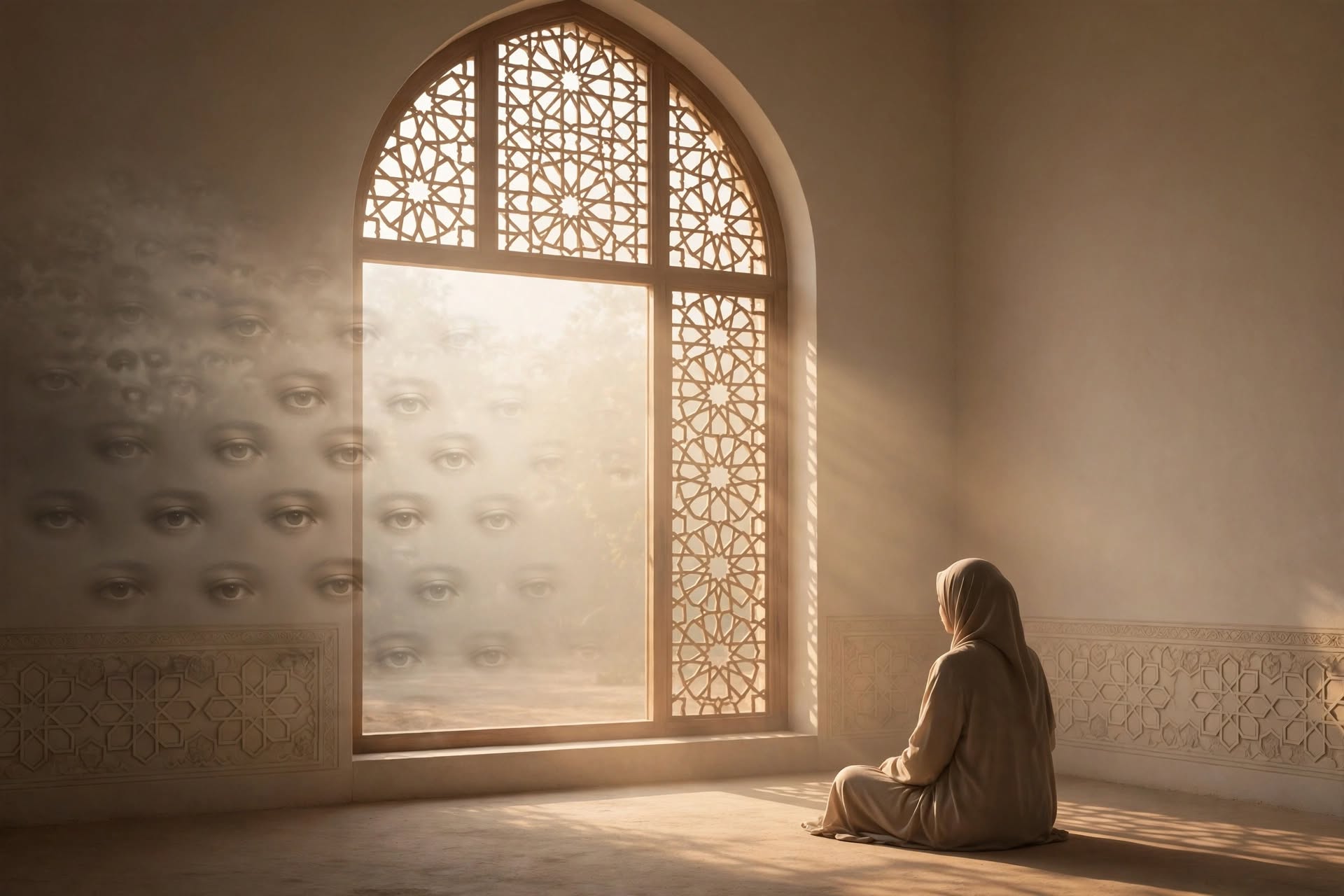
Sometimes, the way others see us quietly begins to shape the way we live. Their gaze becomes a mirror in which we measure ourselves; their perceptions become questions we carry; their judgements become shadows over choices that were once our own.
What will they think? How will they see me? Will I be enough? And almost imperceptibly, we begin living for an audience that may not even be watching.
The more we surrender to the gaze of others, the more restless our hearts become. We overthink, hesitate, seek approval, and sometimes silence the deepest voice within us. We begin choosing not what feels right, but what feels acceptable. The fear of being misunderstood becomes greater than the courage to remain true to ourselves.
The Qur’an offers a profound reminder: “And you feared the people, while Allah has more right that you fear Him.” – Surah Al-Ahzab, 33:37.
This verse carries a powerful lesson: the human gaze is limited, uncertain and ever-changing; Allah’s knowledge is complete. When we become overly conscious of people’s eyes, we lose sight of the One whose knowledge reaches beyond appearances, into intentions and hearts.
Perhaps freedom begins when we stop asking, “How will they see me?” and start asking, “Am I living in a way that is right before Allah?” We cannot control the lenses through which people see us. But we can choose whose gaze governs our hearts. And when that gaze becomes Allah’s, the noise of judgment grows quieter, anxiety loosens its grip, and we find the courage to live with sincerity, dignity and peace.
Recent posts
- Fear Allah, not people´s judgement
 Fear Allah, not people´s judgement by Alhajj Khalil Mohammed Hassan Champsi Sometimes, the way others see us quietly begins to shape the way we live. Their gaze becomes a mirror in which we measure ourselves; their perceptions become questions we carry; their judgements become shadows over choices that were once our own.
- A Garden Without End
 A Garden Without End Review of Chapter 23 of Bihar Al-Anwaar, Volume 8 Author – The Allama Muhammad Baqir Al Majlisi Chapter 23 of Volume 8 of Bihar Al-Anwaar – the encyclopaedic hadith compendium compiled by the Safavid-era scholar Allama Muhammad Baqir al-Majlisi – is entitled “The Paradise and Its Bounties, and Allah Sustaining Us and the Rest of the Believers, Its Houries, Its Castles, Its Joys and Its Cheerfulness.” Spanning roughly one hundred and eighty pages (pp. 106–285), it sits in the volume between the harrowing chapter on the Bridge over Hell and the chapter on the Fire itself, and it functions as a deliberate counterweight: where the preceding chapters describe terror, this one unfolds an almost luxuriant catalogue of delight. Reading it straight through is a peculiar experience – less a sustained argument than a long, liturgical inventory of a world the believer is invited to imagine as already in existence. This review summarises the chapter’s main themes and offers a few observations on its literary and theological texture.
- Marhum (Maalim) Ibrahim Husseinali Nathoo
 Marhum (Maalim) Ibrahim Husseinali Nathoo 1942-2024 The Khoja Shia Ithna-Asheri Jamaat of Dar es Salaam mourns the loss of Ibrahim Husseinali Nathoo, who passed away on 23rd October 2024. Ibrahim bhai was a true pillar of our community, a dedicated teacher, and an inspiring example of humility, commitment, and selfless service. Born on 23rd November 1942 in Zanzibar, Ibrahim bhai devoted his life to the service of others. His journey of community service began early and spanned decades, touching countless lives. He served as a teacher and mentor at Husayni Madrasah, where he shaped the minds and souls of multiple generations, always with a kind smile and a humble spirit. His commitment went beyond teaching; he was a guardian, a guide, and a fatherly figure to all who passed through the Madrasah doors.


