

Ghusl of Mayyit
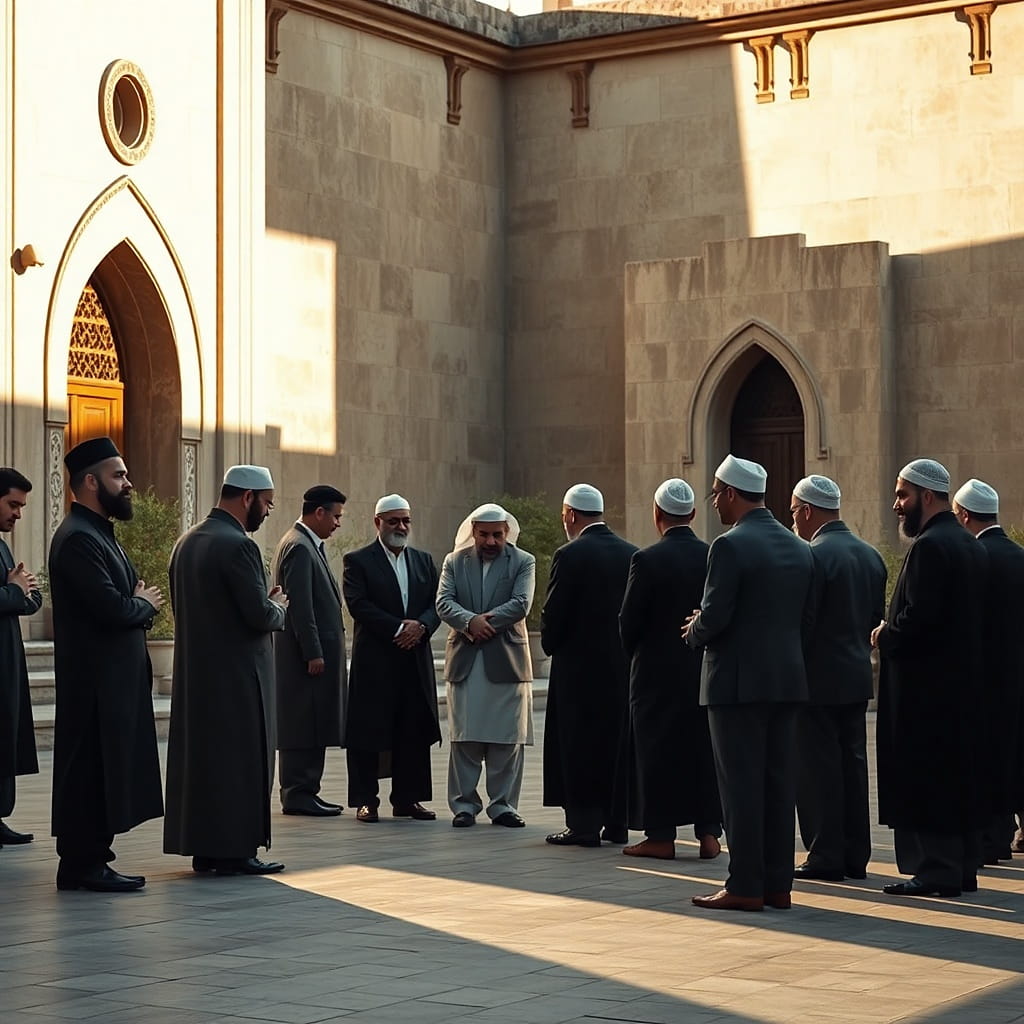
As the corpse lay upon the mat, entered into the room from the funeral services, a man. Immediately, he went towards the corpse and knelt beside it, moving it slightly so that the feet of the corpse faced the Qibla. Then, he went towards the head, and closed the half-open eyes gently, before bringing out of his pocket a piece of a long rag and placed it below the jaws of the dead man, tying it firmly upon its head such that the jaws remained firmly shut and in place. Thereafter, he turned towards its limbs, placing them all correctly, straight. The two big toes of the feet, he tied them together as well. Thereafter, he took out a booklet from his front pocket and started reciting the verses of the Holy book as he sat to wait for the arrival of his assistants as well.
With the arrival of his assistants, together they carried away the corpse, reciting the astaghfars and salawaats as they went away.
The corpse was now placed under a shade, upon a board to be washed before being dressed for the burial process. Its feet were laid such that the Qibla they faced. The board was placed such that the head was at a slightly higher position than the feet so that when water was poured over the body, it would easily flow down without any hindrance to its flowing away.
One serviceman was busy grinding the camphor cubes in a small mortar with its pestle, khandri, whereas another one was preparing three pots of water, all separate.
Another man came with the berri leaves, also called sidr leaves, or lote leaves in the English language. Now, these sidr leaves were mixed into one pot of fresh water to such an extent that the colour of the water did not change, nor was there any odour of them, but still the slight tinge of scent was felt. In the second pot of water, the ground camphor was added, again being careful that it did not change the colour of the water nor was it too scenty, but just a tinge was felt. The third pot was left as it was, pure and plain
Now came the second step of the ghusl process. Removing the garments which the corpse had on its body. They began by removing the lower garment so that it could also be utilised to cover the private parts of the dead man, giving due respect to him.
The upper garments were then gently removed, and the service men, all wearing their gloves, firstly sought forgiveness from the corpse for any pain they may cause it in this delicate process.
Please note here that if there is a need to tear the clothes during the removing process, permission must be sought from the first inheritor, waris, of the dead man. In fact, from the very beginning of the process of handling the dead body, this permission must be observed throughout the process.
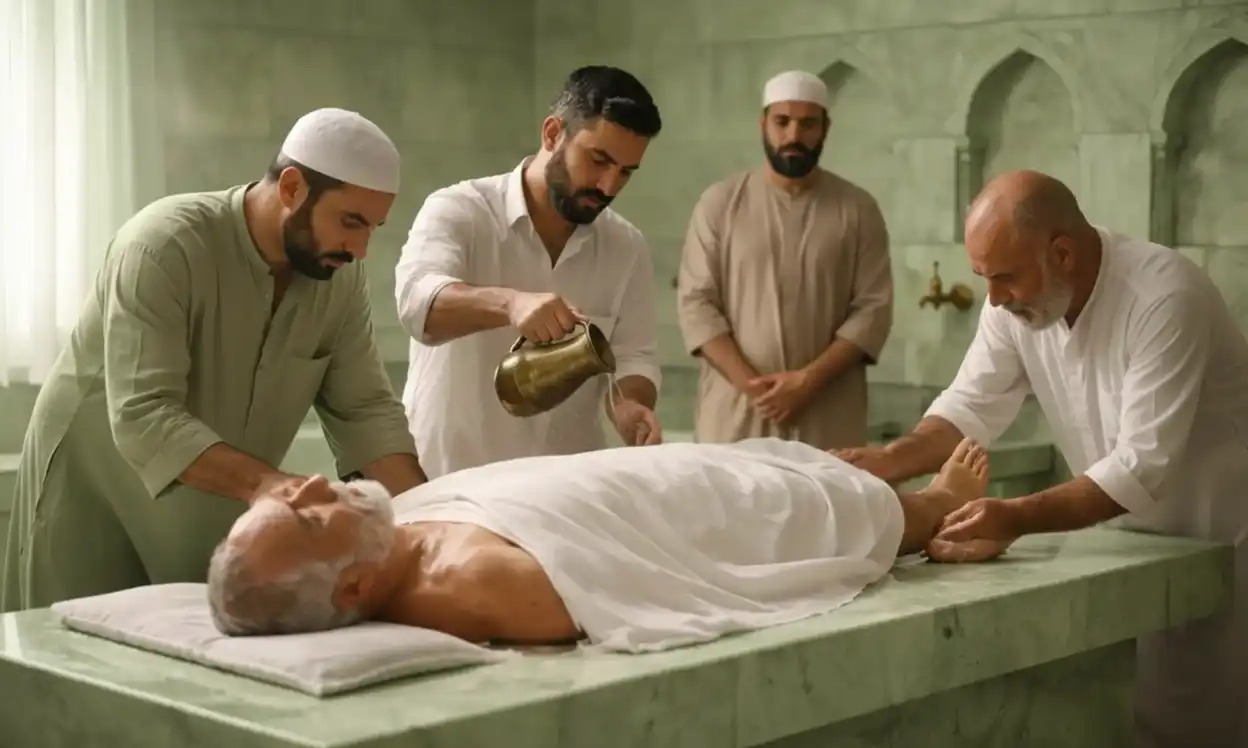
Now the washing process began. All the servicemen washed their arms and hands, beginning from their elbows up to their fingertips. The one who was going to pour the water upon the corpse stood on its right side. Some water was poured upon the corpse, and it was thoroughly washed with soap before rinsing it off.
When the body was completely cleaned, and no doubt about any impurity upon it remained, the process of three ghusls or washings began. All servicemen washed their arms and hands again. This procedure should follow before each of the three wajib/obligatory washings required for the body before it is finally declared as purified and ready to be buried after the ritual prayer upon it is said.
Now the serviceman on the right side of the corpse took the vessel of water mixed with lote leaves and gently started to pour it upon the right side of the body of the dead man. He first poured it upon the head and the neck of the dead man. Assisted by his companions, the head was slightly raised, and water was made to reach the backside of the head and neck as well. Now the water was poured upon the right side of the body, making sure that it reached each and every spot of the body, including the toes and the soles of it as well.
After seeing that the right side had been washed, the attention was turned towards the left side. Thereafter, the body was slightly raised and turned over to complete the procedure for the backside in this similar manner as well.
This completed the first ghusl of the dead man.
The second ghusl with the camphor water was similarly performed by the servicemen, and upon its completion, the third ghusl with pure water was performed as well.
Please note that niyyat is compulsory to be made by every member performing this duty of washing /handling the dead body.
In case the lote leaves or the camphor is not available, then the body is washed with pure water with the intention of its replacement, such that if lote leaves are not available, then niyyat is made before ghusl with pure water that it is in place of lote leaves and so on. But before this procedure, a tayammum has to be performed upon the dead body; a single tayammum will suffice for all the washings, but it is better to have separate tayammums in case of the unavailability of both camphor and lote leaves.
With these three ghusls completed, the body now becomes pure and is ready to be dressed with kafan before being produced for the namaz-e-mayyit and finally buried till it’s day of resurrection.
The body has to be dried well after these ghusls with a clean, pure cloth or towel, and all those who attended to this washing procedure must seek forgiveness from it again.
Please note that ghusl massé mayyit becomes obligatory upon all those who handle the dead body with their bare hands after it has become cold and the three ghusls have not been performed upon it.
May we all learn the correct manner of giving ghusl-e-mayyit to our dead. Ameen
Recent posts
- The Preparation for the Next Destination
 The Preparation for the Next Destination by Tasnim Asgharali Jaffer As the corpse lay upon the mat, entered into the room from the funeral services, a man. Immediately, he went towards the corpse and knelt beside it, moving it slightly so that the feet of the corpse faced the Qibla. Then, he went towards the head, and closed the half-open eyes gently, before bringing out of his pocket a piece of a long rag and placed it below the jaws of the dead man, tying it firmly upon its head such that the jaws remained firmly shut and in place. Thereafter, he turned towards its limbs, placing them all correctly, straight. The two big toes of the feet, he tied them together as well. Thereafter, he took out a booklet from his front pocket and started reciting the verses of the Holy book as he sat to wait for the arrival of his assistants as well.
- Fear Allah, not people´s judgement
 Fear Allah, not people´s judgement by Alhajj Khalil Mohammed Hassan Champsi Sometimes, the way others see us quietly begins to shape the way we live. Their gaze becomes a mirror in which we measure ourselves; their perceptions become questions we carry; their judgements become shadows over choices that were once our own.
- A Garden Without End
 A Garden Without End Review of Chapter 23 of Bihar Al-Anwaar, Volume 8 Author – The Allama Muhammad Baqir Al Majlisi Chapter 23 of Volume 8 of Bihar Al-Anwaar – the encyclopaedic hadith compendium compiled by the Safavid-era scholar Allama Muhammad Baqir al-Majlisi – is entitled “The Paradise and Its Bounties, and Allah Sustaining Us and the Rest of the Believers, Its Houries, Its Castles, Its Joys and Its Cheerfulness.” Spanning roughly one hundred and eighty pages (pp. 106–285), it sits in the volume between the harrowing chapter on the Bridge over Hell and the chapter on the Fire itself, and it functions as a deliberate counterweight: where the preceding chapters describe terror, this one unfolds an almost luxuriant catalogue of delight. Reading it straight through is a peculiar experience – less a sustained argument than a long, liturgical inventory of a world the believer is invited to imagine as already in existence. This review summarises the chapter’s main themes and offers a few observations on its literary and theological texture.


