

Islam
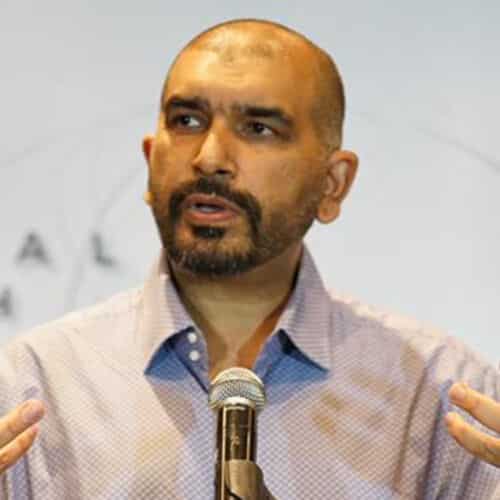 Abbas Mohamed Bandali (Texas, USA) currently works full-time for a Bay Area startup, and his passion is software. Abbas is also an Entrepreneur, and owns several car washes, storage facilities and NNN properties in and around Austin, TX. He currently serves on the board of 3 non-profits, and often leads the Friday prayer at IABA (Austin, TX) where he has served in various roles for the past 20+ years, and is actively engaged in inter-faith and intra-faith initiatives.
[tta_listen_btn]
Islamic values form the core of a Muslim’s character – it is through these values that thoughts form, and behaviour is shaped. It is also how we influence others, and in turn are influenced by them. These values become the foundation from which we build ourselves, our families, and eventually, societies.
This responsibility is even greater on those who take on the mantle of leadership of Islamic organisations and entities – the challenge to organise, collaborate and grow based on Islamic values rests heavily upon those who accept this role. If fulfilled correctly, with integrity and vision, this can propel a community forward and lift its people in ways that raise the overall dignity and well-being of the society.
As Muslims who live in the West, we have most likely studied in secular institutions and often find ourselves working in a secular (corporate/professional) environment. In these spaces, we strive hard to maintain our Islamic values, and are constantly trying to balance out the dunya (world) and the akhira (afterlife). In our Islamic institutions, because they are naturally aligned with the akhira, we often overlook the professional aspects. What if we strived to apply corporate professionalism or meritocracy to our Islamic environments – perhaps they could elevate our faith organisations to an even better state?
This article attempts to explore just this – how can we bring a corporate/professional mindset into our Islamic leadership, thereby cementing a gap that we often recognise but don’t actively consider. We risk the unfortunate reality of building large yet unprofessional Islamic organisations that do not inspire the next generation to get involved because they view them as lacking a grounded, sustainable structure, the kind they experience in the corporate/professional world. It is second nature to them when they go to work, but it seems to be missing when they visit the mosque. The calibration between the religions and professional aspects could be improved in our religious centres. If our leaders adopt a higher standard of execution, this could potentially pivot our institutions towards more efficient systems, which could better support our efforts towards building our akhira, the ultimate goal of this dunya.
This higher standard of expectation is not antithetical to Islamic principles. In fact, the Quran has several lessons that implore us to raise the bar and not be satisfied with the bare minimum. We have, in the lives of Prophet Yusuf and Dhul-Qarnain, very interesting, deep and relevant examples:
- Prophet Yusuf, from the early stages of his life, is imbued with strategies to ensure that his outcomes bear fruit: Be wary of the echo-chamber – Prophet Yusuf’s brothers, who conspired to kill hi,m relied on this justification: Nahnu Usbah. This was their argument – we are the larger group. We have the numbers, we must be correct. We are powerful and so can exert this power on others. This echo chamber concept is dangerous, and every leader must be mindful of its potential detrimental impact. Adopting an attitude of openness, seeking counsel and wisdom from all areas, especially those that may seem contrary to ours, is imperative to gain a full picture and give due consideration. Surrounding ourselves with only those who agree with us stunts growth and serves only a few. Welcoming critics and engaging in dialogue, with a mind to listen (not just to respond) but to understand and appreciate the perspectives being offered, is a reflection of effective leadership.
- Having a vision – very quickly into the narration of Sura Yusuf, Prophet Yusuf has a dream, a vision. A vision defines purpose, it charts out a path, and helps develop goals. Having a clear vision provides direction for the leader, so that everyone can arrive at the intended goal. This in itself is the principle foundational task for a leader: one must start with a vision.
- Awareness of evil – Prophet Yakub, upon hearing of this vision, immediately warns Prophet Yusuf against telling his brothers. He says: “Indeed Satan, to man, is a manifest enemy” (Yusuf, 5). The brothers were one family, but Satan will use any means to sow division and hatred. Being aware of this does not mean cultivating suspicion or creating distance – Prophet Yusuf went with his brothers, he kept relations, but he was also aware of Satan’s ways, and so he was alert to that even as he continued to live amongst them. God has granted us with an intellect, the ability to perceive, reason, calculate and conclude. As a leader, using this God-given intellect to acknowledge the good and the evil, and be able to separate the two, is critical, for with any God-centric intention, such as a leader’s vision for the community, the task for Satan will be to derail and sow seeds of discord. Mindfulness and trust in God provide clarity and steadfastness against this challenge.
- Having a guide, a moral compass – the quran, the Sunnah of the Prophet, and the teachings of the Imams, are valuable guidance for us, and provide the correct direction. If we follow in the footsteps of our noble leaders on how to be a leader within our own spheres, we can be assured that the path we trace will lead us to God. And any path that leads us towards the Almighty, which is the ultimate vision, encompassing and surpassing all other visions, is sure to be successful and blessed.
- Accepting struggle as part of the process – Prophet Yusuf found himself in many dark places, inside the well and behind prison bars, to name two. And yet, where did he finally end up? In Egypt, as the most influential advisor to the King. The underlying theme of his life was marked by struggle – flung into the well and left to perish, abandoned by those he loved and trusted, sold into slavery and shipped to a strange country, falsely accused of indecency, shunned from the world and forgotten by others; the challenges seemed unending. And yet, he practised patience and persisted in preserving his faith and hope in God. Accepting that struggle is part of life, and even more pronounced for a leader who takes the responsibility of not just himself and close ones, but of a larger group of people, is a necessary first step. Taking on the mandate to strive and lead with justice and courage becomes the ethos of leadership. With power comes great responsibility, and even greater struggles. Taking this into one’s stride better prepares one for the leading task ahead.
More from this writer:
Writers Panel | A Simple Thought | Obituaries | Ziarat Ashura | Islamic Calendar | Facebook | Instagram