

The writer is a mother of four whose goal in life is to empower individuals with skills following the Seerah of our Ahlulbayt (AS).
We send salutations on the best of His creations, the healer of the sick, the intercessor Prophet Muhammad saaw
And We send salutations on the Holy Progeny especial the Master of our Time Al Hujjat ibne Hassan Wamma baad faqad qalallahu fi kitabil Hakeem wal furqanil Hameed wa QAWLUL Haqq
And the tears have fallen.
“And they fall upon their faces weeping, and it increases them in humility.”
(Qur’an 17:109)
AAZAMUL LAHU UJOORANA WA UJORAKUM BIMASIBINA ABA ABDILLAH AL HUSSEIN AS.
First and foremost, I thank Allah (swt) for blessing me with the opportunity to be with you all once again this year. It is truly a privilege and a blessing to gather together in remembrance of the Ahlul Bayt (?a).
I would also like to sincerely thank all of you for your warm invitation and gracious hospitality. It is always a joy to return to your beautiful community, and I pray that Allah (swt) accepts our humble efforts, unites our hearts in His love and the love of Muhammad and ?le Muhammad (?), and grants us the tawf?q to leave these gatherings spiritually enriched.
We have just completed the first 19 days of Muharram; each of us, to our own ability and capacity, participated to the best of our ability. The question remains: what is the purpose of all these gatherings?
Imam Hussain (a.s) is the third Imam and the last of the Ahlul Kissa. His life can inspire all the people who want to be free in their lives.
The holy Prophet Muhammad (PBUH) said about Imam Hussain:
Surely, there exists in the hearts of the believers, with respect to the martyrdom of Hussain, a heat that never subsides.”
(This saying was quoted from the holy prophet Muhammad in Mustadrak-al-wasa’il, V.10, p. 318.)
Imam Hussein is a Universal personality he has inspired by many who have changed and reformed.
Salwaat
The Objectives of This Afternoon’s Session
Together, we will reflect on three important questions:
- Why do people fall on their faces in moments of profound faith and emotion?
- Why did Lady Zaynab (a) address the people of Kufa in the manner that she did?
- Was her powerful message intended only for the people of Kufa, or does it continue to speak to us today?
By exploring these questions, we hope to discover not only the historical significance of her sermon but also the timeless lessons it offers for our own lives and relationship with Allah.
- Why do people fall on their faces in moments of profound faith and emotion?
And they fall upon their faces,
Question: Why do they FALL UPON THEIR FACES?
The Arabic word (yakhirroon) means to fall suddenly, not because of physical weakness, but because one is overwhelmed by something great.
The Qur’anic expression describes a spontaneous act of humility and complete surrender before Allah.
Think of the World Cup. When a player scores the winning goal, we often see them immediately fall into prostration. At that moment, they are not thinking about the cameras or the crowd. Their heart overflows with gratitude, and their body instinctively responds in humility and thankfulness.
The Qur’an portrays something even more profound. It speaks of people who are so deeply moved by the words of Allah that they can no longer remain standing in pride or self-importance. Their hearts surrender before their bodies do.
Their prostration is not a ritual of habit; it is the natural response of a heart that has recognised the greatness of its Lord. When the truth penetrates the heart, humility follows. The body simply expresses what the soul has already embraced.
This is the beauty of the Qur’an – it does not merely inform the mind; it transforms the heart. And when the heart is transformed, the body responds with submission, humility, and complete surrender before Allah (swt).
2 – Imam al-Sadiq (a.s.) said, ‘Prostration is the highest degree of worship that man can perform.’[al-Da’aawat, p. 33, no. 70]
Reflection: True tears soften the heart and increase khush?? (humility before Allah)
The Arrival of the Captives in Kufa
After the tragedy of Karbala, the enemies of Allah believed that their victory was complete. Imam al-Husayn (a) had been martyred, his companions had been slaughtered, and his family was now taken captive. They imagined that by parading the Ahl al-Bayt (a) through the streets, they would humiliate them and celebrate Yazid’s triumph.
Yet Allah had another plan.
The battlefield had ended, but the mission of Karbala had not. The sword of Imam Husayn (a) had now become the tongue of Lady Zaynab (a) and Imam Zayn al-Abidin (a).
Tied with ropes and forced to ride upon lean, unsaddled camels, the daughters of Rasulullah (s), together with the orphaned children, were taken toward Kufa. Every step of the journey was designed to inflict pain and humiliation. The rough backs of the camels wounded their bodies, while iron chains burdened the men.
Soldiers around them celebrated their apparent /visible victory. Trumpets sounded, banners fluttered, and crowds gathered as though witnessing a military parade rather than the suffering of the Prophet’s own family.
One of the most powerful eyewitness accounts comes from a man known as Muslim, the plasterer. This is from the book Lady Zaynab by Badr Shahin
Muslim, the Plasterer narrates:
“While I was plastering the doors of the Governor’s Palace in Kufa, I heard the sound of trumpets and loud commotion throughout the city. I asked one of the servants, ‘Why is Kufa so excited today?’
He replied, ‘The head of a rebel who fought against Yazid is entering the city.’
I asked, ‘Who is this rebel?’
He answered, ‘Al-Husayn ibn Ali.'”
At that moment, the Muslim says:
“Those words struck me like a thunderbolt.”
He immediately realised the terrible deception that had spread throughout the city. Imam Husayn (a)—the beloved grandson of the Messenger of Allah (s) – was being introduced to the people as a rebel against the state.
This was a complete contrast as to how the Prophet Himself had introduced/presented Imam Hussein in Madina.
“Husayn is from me, and I am from Husayn. May Allah love whoever loves Husayn. Husayn is one of the grandsons
The narrative which was presented in Kufa was completely false.
How often does falsehood succeed simply because it controls the narrative?
The Umayyad government had a plan,
- Remember, they had terrorised the people of Kufa when Muslim ibn Aqeel visited them
- The plan was still the same; they wanted to character assassinate the grandson of the Holy Prophet before the entry of the Ahle Haram.
- They projected that the festival mode was simply to celebrate the defeat of a rebel.
The motto was
If people believed he was a political rebel rather than the grandson of the Prophet, they would accept his murder.
The lesson for our own time is profound. We live in an age where truth is often buried beneath propaganda, selective reporting, and misinformation. As followers of the Ahl al-Bayt (a), we have a responsibility to verify what we hear, seek authentic knowledge, and never allow public opinion to replace truth.
Muslim, the plasterer, continues:
“I rushed toward the crowd. Then I saw nearly forty camels carrying women and children.”
Imagine that scene.
Not prisoners of war from a foreign land.
Not criminals.
These were the daughters of Fatimah al-Zahra (a), the grandchildren of Rasulullah (s), and the children who only days earlier had watched their fathers and brothers being massacred.
Among them was Imam Ali ibn al-Husayn (Imam Zayn al-Abidin) (a).
Muslim says:
“I saw Ali ibn al-Husayn riding upon a camel without a saddle. Chains had wounded his neck until blood flowed down both sides. His hands were tied.”
Despite his own illness, grief, and physical suffering, the Imam’s greatest concern was not himself but the guidance of the people.
He cried out:
“O evil nation! Woe unto you! You showed no regard for us because of our grandfather. What will you say when Allah gathers you with the Messenger of Allah on the Day of Resurrection? As though we had never guided you to the religion, you now drag us upon bare-backed camels.”
Notice that the Imam did not appeal to tribal loyalty or family pride.
He reminded them of their accountability before Allah.
He redirected their gaze from the streets of Kufa to the Day of Judgment.
Reflection
This teaches us a timeless principle.
Believers judge every event through the lens of the Hereafter.
People may wrong us.
People may misunderstand us.
People may spread lies about us.
But our greatest concern should always be: “How will this matter appear before Allah?”
As the caravan passed, many women of Kufa began to cry uncontrollably.
One woman approached a captive lady and gently asked,
“Who are you?”
The reply shook her world.
“We are from the Ahl al-Bayt.”
Suddenly, everything changed.
The propaganda collapsed.
These were not rebels.
These were the family of the Prophet (s).
Overcome with grief and shame, the women hurried back into their homes, bringing shawls and garments to cover the noble ladies so that strangers would not continue looking at them.
Others brought food and dates for the hungry children whose faces reflected days of thirst and exhaustion.
Yet even in this moment of desperate hunger, the dignity of the Ahl al-Bayt remained untouched.
Lady Umm Kulthum (a) immediately called out:
“Charity (sadaqah) is forbidden for us, the Ahl al-Bayt.”
The children, though starving for days, removed the food from their hands—even from their mouths.
Reflection
This scene is extraordinary.
The children had witnessed Karbala.
They had suffered from thirst.
They had buried their fathers.
They had been dragged through the desert.
Yet they would not consume a single morsel that Allah had prohibited.
This is the true meaning of taqwa.
Obedience to Allah is not dependent upon convenience.
It is not suspended because life is difficult.
True faith means that even in our hardest moments, we refuse to compromise Allah’s commands.
Today, many of us are tested not by hunger but by comfort.
Will we compromise our principles for wealth?
For acceptance?
For convenience?
For social approval?
The children of Karbala teach us that obedience to Allah remains non-negotiable, regardless of our circumstances.
Finally, this episode reminds us that the enemies could chain their bodies, but they could never imprison their faith.
Now, the captives entered Kufa as prisoners in the eyes of the people, but in reality, they were the victors. Through their patience, dignity, and unwavering commitment to truth, they exposed the falsehood of the Umayyads and transformed what was meant to be a victory parade into the beginning of Yazid’s downfall.
Karbala teaches us that victory is not always measured by who remains alive or who possesses worldly power. Sometimes the true victor is the one who remains faithful to Allah even when stripped of everything else.
Bibi Zaynab’s sermon is timeless because it is not merely a speech to the people of Kufa – it is a speech to every generation. Rather than presenting it as history.
“If Lady Zaynab (a) stood before us today, what would she say to us?” In this gathering?
Bibi Zaynab saw the crowds blocking all streets of Kufa and surrounding the caravan, She decided to deliver a speech aiming to unite the public opinion, referring to the grand misfortune that the Umayyad gang brought to the Islamic ummah by killing the actual leader, Imam al-Husayn (a), and charging people of Kufa with that crime, because it was they who breached their promises of supporting the Imam (a) and protecting him. Nevertheless, they, as if it was not they who caused that massacre, mourned for the Imam (a) and wept for the captivity of his harem and children.
Lady Zaynab asked everybody to keep silent. Then she stood calm, composed, and courageous and said:
All praise is due to Allah. Blessings be upon my father Muhammad (S) and upon his good and righteous progeny (a). Well, now do you weep, O people of Kufa – people of deception? May your tears never cease, and may the resounding of this calamity never stop.
Lady Zaynab (a) begins her sermon with a question that pierces the hearts of the people of Kufa:
– “Do you weep?”
At first glance, this may seem surprising. We know that crying for Imam al-Husayn (a) is a highly meritorious act in the teachings of the Ahlul Bayt (a). Countless traditions speak about the reward for shedding tears over the tragedy of Karbala.
So why does Lady Zaynab rebuke the people for crying?
The answer lies in the difference between sincere tears and empty tears.
The people of Kufa were not condemned because they cried. They were condemned because their tears came only after they had abandoned their responsibility.
They invited Imam al-Husayn (a), pledged their loyalty, and promised to defend him. Yet when the moment came to stand for truth, fear overcame faith.
They remained silent while injustice prevailed.
Their tears flowed only when the battle was over, and the opportunity to support the Imam had passed.
Lady Zaynab (a) teaches us that emotion without commitment is incomplete. Tears that do not lead to change cannot undo a life of inaction.
Moomenen as we sit here and mourn the tragedy of Karbala, let us introspect within. My actions speak volumes.
We live in an age where we express our feelings and emotions
- We cry during Muharram
- We post beautiful quotes
- We attend majalis
But what is the ask of Bibi Zaynab for you and me in 2025?
Our behaviour truly reflects what we value, so someone close to you. Your mother, father or someone very close to you would you be celebrating birthdays, engagements or even laughing right after the program?
For most people, depending on their relationship, the answer is usually NO
This is not because somebody told you not to, but because Love naturally changes your behaviour.
So here is the reflection “ If our own loved ones are influenced during the times of grief then why not the family of the Prophet saaw?
So remember, sometimes the deepest statements we make in our lives are not words but choices, and these right choices will help us make the best choices in life.
I will leave you with this profound narration on the turba
Imam Ja’far al-Sadiq (a) is reported to have said:
“Prostration upon the soil of al-Husayn pierces the seven veils.”
(Bih?r al-Anw?r, vol. 101; Misb?? al-Mutahajjid and other Shi’a sources)
This hadith emphasises the spiritual excellence of prostrating on the soil associated with Imam al-Husayn’s sacrifice.
The Spiritual Meaning
When we place our forehead upon the soil of Karbala, we remind ourselves of three profound truths:
1. Ultimate Humility Before Allah
Suj?d is the highest act of worship, and it belongs to Allah alone. By placing our forehead—the noblest part of the body – upon the earth, we acknowledge our complete servitude before Him.
The turbah deepens this humility by reminding us of the one who demonstrated perfect submission to Allah.
2. A Covenant with Imam al-Husayn (a)
The soil of Karbala symbolises sacrifice, justice, patience, and unwavering obedience to Allah.
Every sajdah asks us:
- Will I stand for truth as Husayn stood?
- Will I obey Allah even when it is difficult?
- Will I sacrifice my desires for His pleasure?
The turbah becomes a silent reminder that faith demands action.
3. Remembering Karbala During Every Prayer
Imam al-Husayn (a) gave his life so that prayer itself would survive. Even on the Day of Ashura, despite arrows raining down upon him and his companions, he insisted that the noon prayer be established.
It is said that when Bibi Zaynab as was born in Madina, her grandfather placed his cheek over hers for he knew what would befall her in 61 hijra
It is said on the night of Ashura
Recent posts
- ThoughtCast #8
 ThoughtCast #8 Testing of Wisdom and Knowledge – Imam Ali (AS)´s approach to Knowldge by Sheikh Dr Imranali Sibtain Panjwani
 - Believers Weep Out of Humility and Recognition of Truth
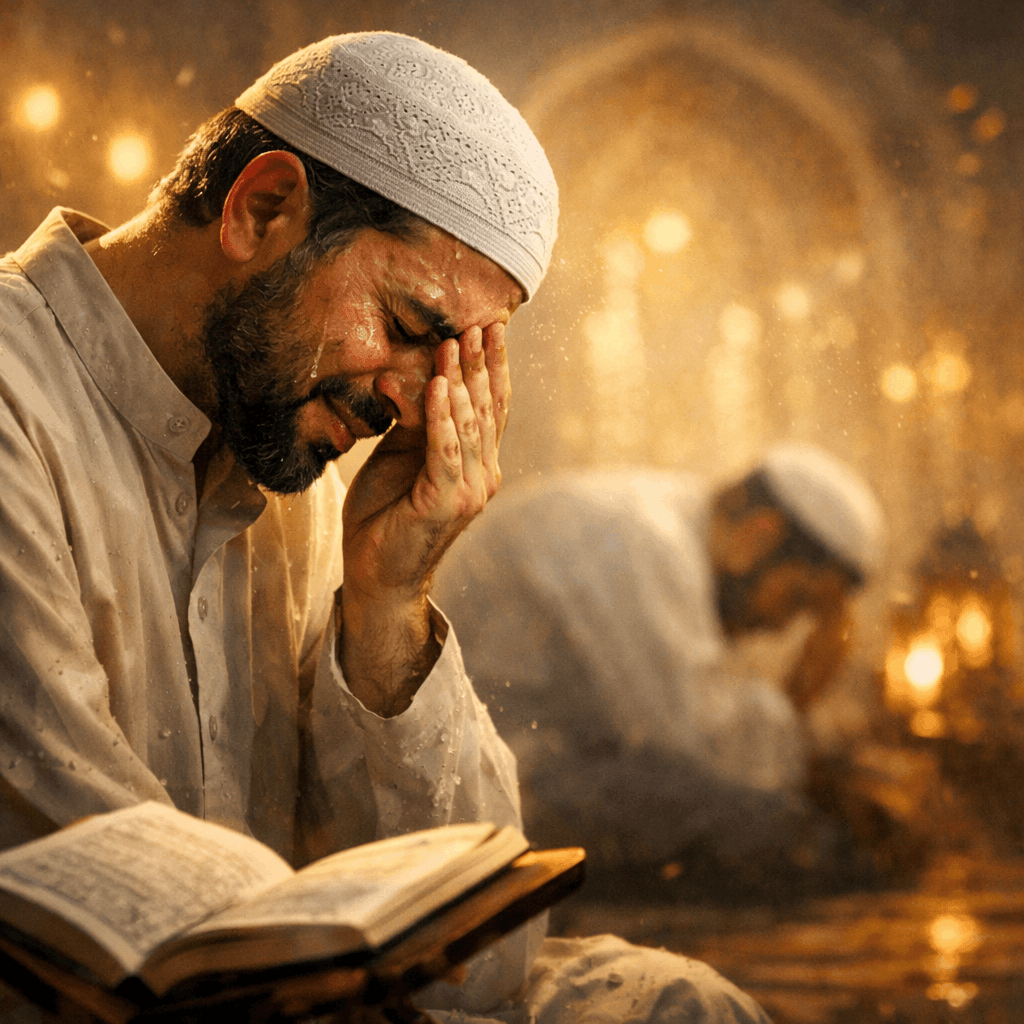 Believers Weep Out of Humility and Recognition of Truth by Hasina Khalil Champsi
 - When Tears Fall, but the Heart Stays Dry
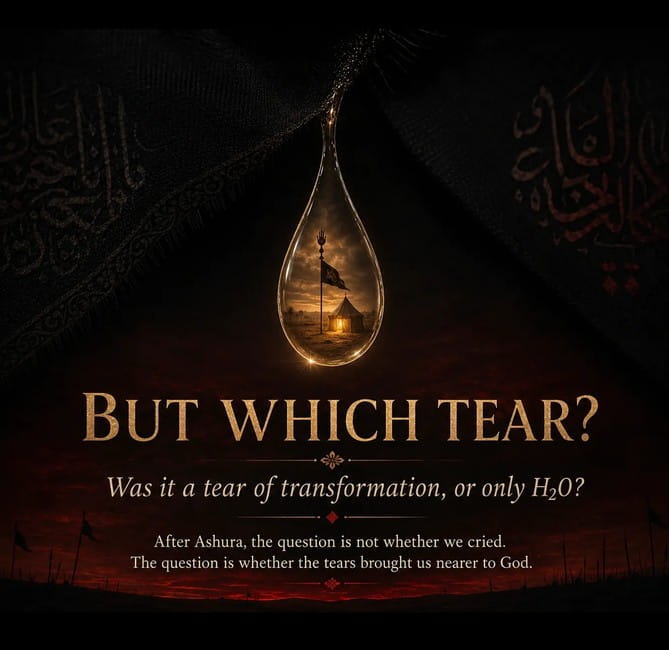 When Tears Fall but the Heart Stays Dry by Dr Hasnain Gulamali Walji As Muharram comes near once again, the heart begins to hear an old summons. Not simply the sound of mourning. Not merely the rhythm of majlis, marsiya, noha, and tears. These are sacred forms. They carry memory. They gather the community. They teach the next generation how to remember.


